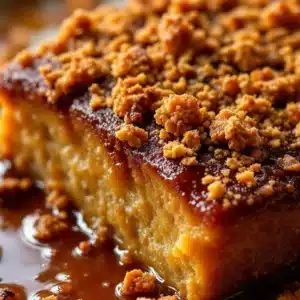
The plate was empty. Just a few crumbs scattered across the rim of the ceramic dish, swirling in the scent of cinnamon and reduced apple juice. That was the third batch gone in as many days. My husband actually texted me from the grocery store aisle, asking if I had bought the apple cider concentrate because he was craving “those magic cookies” again. It’s funny how a simple swap of liquid can turn a familiar treat into something that feels like a memory you didn’t know you had. I honestly didn’t think it would work at first. Mixing thick, tangy cider into a delicate cookie dough seemed like a recipe for disaster—too wet, too dense, or just plain weird. But then I took that first bite. The texture was impossibly soft, the center chewy, and the flavor was pure autumn in a single bite. Now, I make them constantly, and they always disappear before I can even finish plating them.
There is something deeply comforting about the smell of cinnamon and sugar filling the house while the oven hums. These cookies bridge the gap between a classic snickerdoodle and a seasonal favorite, bringing the warm, tart notes of apple cider into every crumb. It’s not just about the taste; it’s about the nostalgia. You know that feeling when you step outside on a crisp fall morning and wrap your hands around a warm mug? These cookies capture that exact sensation. They are soft, pillowy, and coated in a cinnamon-sugar crunch that dissolves on your tongue. People always ask me for the recipe, and I’m happy to share it. It’s become a staple in my kitchen, especially when I want to impress guests without spending hours in the kitchen. The simplicity of the ingredients belies the complex flavor profile that develops as the cider reduces and concentrates. It’s a quiet triumph in baking, one that leaves everyone asking for seconds.
Why You’ll Love This Recipe
I have tested this recipe more times than I care to admit. There was a version where the cookies spread too thin, another where they were dry as a brick, and one where the cider flavor was lost entirely. But this final version? It’s the one. It’s the result of trial, error, and a lot of tasting. I’ve refined the ratio of wet to dry ingredients to ensure that the cookies stay soft and chewy for days, which is rare for cider-based treats. This isn’t just another snickerdoodle; it’s an upgraded version that takes advantage of the natural pectin and acidity in the apple cider to create a tender crumb. The texture is what really sets it apart. You get that classic snickerdoodle crackle on the outside, but the inside is dense, moist, and incredibly flavorful.
- Quick & Easy: Most of the time is hands-off chilling. The active prep time is under 30 minutes, making it perfect for busy weeknights or last-minute holiday prep.
- Simple Ingredients: You likely already have the basics in your pantry. The star ingredient, apple cider, is easy to find in the fall, and the rest is standard baking staples.
- Perfect for Holidays: These cookies are ideal for holiday parties, gift-giving, or cozy winter nights. They pair beautifully with hot cocoa or mulled wine.
- Crowd-Pleaser: Kids love the sweet cinnamon sugar, while adults appreciate the subtle tartness of the apple. It’s a flavor profile that appeals to almost everyone.
- Unbelievably Delicious: The combination of tangy cream of tartar and sweet apple cider creates a balanced flavor that is next-level comfort food. It’s not just sweet; it has depth.
What makes this recipe different is the technique. By reducing the cider first, we concentrate the flavor and remove excess water, which prevents the cookies from spreading too much. This ensures a thicker, chewier cookie. It’s a small step that makes a huge difference. I also use a mix of brown and white sugar to get that perfect chewiness. The cream of tartar isn’t just for the tang; it helps with the rise and texture, giving you that classic snickerdoodle snap. This isn’t just a cookie; it’s a carefully balanced equation of flavor and texture that I’m confident you’ll love.
What Ingredients You Will Need
This recipe relies on simple, wholesome ingredients to deliver bold flavor and satisfying texture without the fuss. The key to success lies in the quality of your ingredients, especially the apple cider. You want a fresh, unfiltered cider that tastes good on its own. If it’s too sweet or artificial, your cookies will be cloying. I also recommend using high-quality butter for the best flavor and texture. Here is what you will need to make these cookies:
For the Dough
- Unsalted butter, softened: 1 cup (2 sticks / 226g). Using room temperature butter is crucial for creaming it properly with the sugars. I prefer Kerrygold for its rich flavor.
- Granulated sugar: 1 cup (200g). This provides structure and crispness.
- Light brown sugar, packed: 1 cup (220g). This adds moisture and chewiness. Dark brown sugar works too if you want a deeper molasses note.
- Eggs, large: 2 large eggs, room temperature. Eggs bind the dough and add richness. Bring them to room temperature for a smoother batter.
- Vanilla extract: 2 teaspoons. Use pure vanilla extract for the best flavor.
- Reduced apple cider: ½ cup (120ml). This is the star ingredient. See notes below for how to reduce it.
- All-purpose flour: 3 cups (375g). Spoon and level the flour to avoid dry cookies.
- Baking soda: 1 teaspoon. Helps the cookies spread and rise.
- Cream of tartar: 2 teaspoons. Essential for the classic snickerdoodle tang and texture.
- Salt: 1 teaspoon. Balances the sweetness.
For the Coating
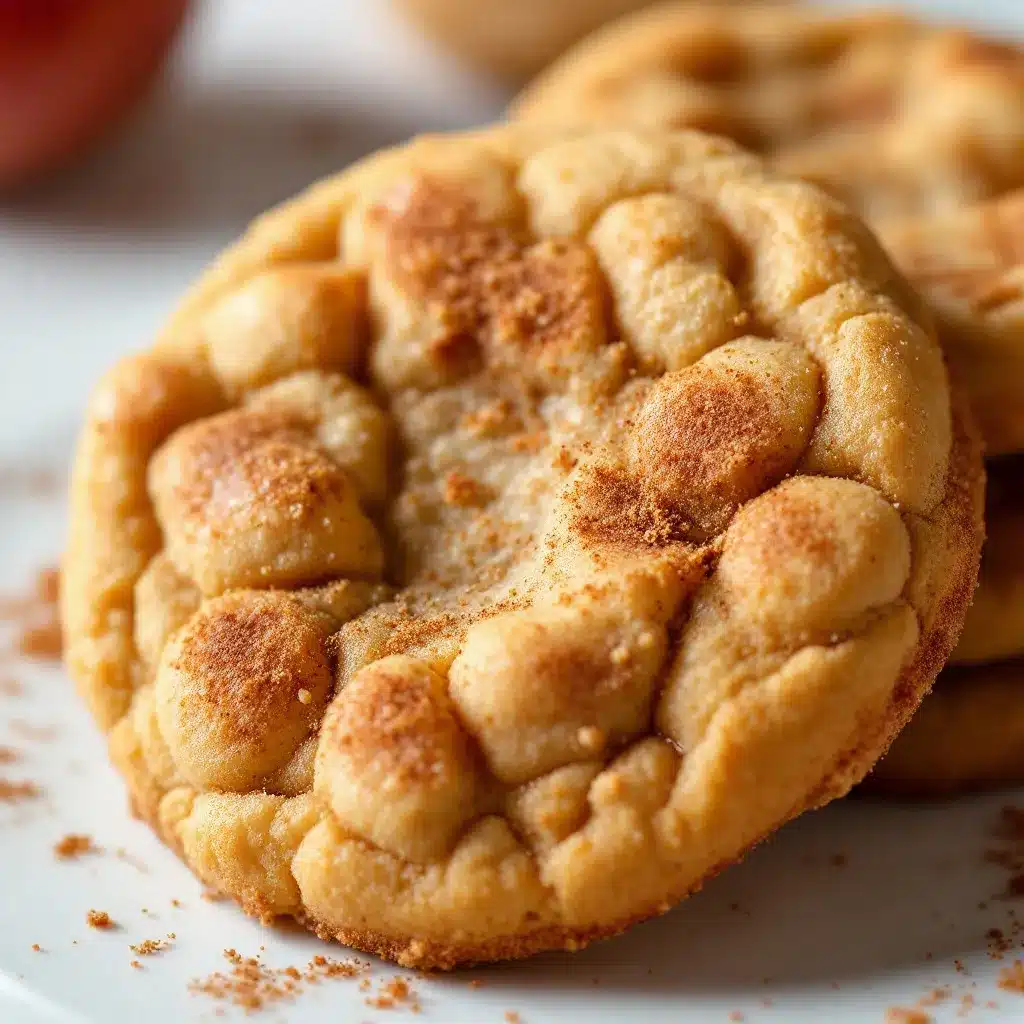
- Granulated sugar: ½ cup (100g).
- Ground cinnamon: 2 teaspoons. Use a good quality cinnamon for a stronger flavor.
Ingredient Tips: If you can’t find fresh apple cider, you can use apple juice, but you will need to boil it down to reduce the water content significantly. The flavor won’t be as complex, but it will still work. For a gluten-free option, you can substitute the all-purpose flour with a 1:1 gluten-free baking flour blend, though the texture may be slightly different. Also, ensure your baking soda and cream of tartar are fresh; old leavening agents can result in flat cookies.
Equipment Needed
You don’t need much fancy equipment to make these cookies, but having the right tools makes a big difference. A heavy-bottomed saucepan is essential for reducing the apple cider evenly without burning it. I use a stainless steel one because it heats evenly and is easy to clean. A stand mixer or a hand mixer will save you time when creaming the butter and sugars, but you can do it by hand if you have the arm strength. A cooling rack is crucial for letting the cookies set properly. If you don’t have one, a clean kitchen towel can work in a pinch. I also recommend using a cookie scoop for uniform sizing. This ensures that all cookies bake at the same rate, so you don’t end up with some burnt and some raw. A digital kitchen scale is helpful for accuracy, especially when measuring flour, but a standard measuring cup works fine if you spoon and level.
Preparation Method
- Reduce the Apple Cider (15 minutes): Start by pouring 2 cups of fresh apple cider into a heavy-bottomed saucepan. Bring it to a boil over medium-high heat, then reduce the heat to medium-low. Let it simmer until it reduces by half, about 1 cup. This should take 15-20 minutes. Stir occasionally to prevent sticking. Let it cool completely before using. This step concentrates the flavor and removes excess water, which is key for chewy cookies.
- Cream the Butter and Sugars (3 minutes): In a large mixing bowl, beat the softened butter, granulated sugar, and brown sugar together until light and fluffy. This usually takes about 3 minutes on medium-high speed. If you are mixing by hand, this will take longer, so be patient. Proper creaming incorporates air, which helps the cookies rise.
- Add Wet Ingredients (1 minute): Add the eggs one at a time, beating well after each addition. Mix in the vanilla extract and the cooled, reduced apple cider. Beat until just combined. Do not overmix here.
- Combine Dry Ingredients (30 seconds): In a separate bowl, whisk together the flour, baking soda, cream of tartar, and salt. Sifting these ingredients helps remove lumps and ensures even distribution.
- Mix Dough (1 minute): Gradually add the dry ingredients to the wet ingredients, mixing on low speed until just combined. Be careful not to overmix, as this can make the cookies tough. The dough should be thick and slightly sticky.
- Chill the Dough (30 minutes): Cover the bowl with plastic wrap and refrigerate the dough for at least 30 minutes. This step is crucial for preventing the cookies from spreading too much and helps develop the flavor.
- Preheat Oven and Prepare Sheets (5 minutes): Preheat your oven to 350°F (175°C). Line two baking sheets with parchment paper. In a small bowl, mix the ½ cup sugar and cinnamon for the coating.
- Shape Cookies (10 minutes): Scoop the dough into balls, about 1.5 tablespoons each. Roll each ball in the cinnamon-sugar mixture until fully coated. Place them on the prepared baking sheets, spacing them about 2 inches apart.
- Bake (10-12 minutes): Bake the cookies for 10-12 minutes, or until the edges are set and lightly golden, but the centers still look soft and slightly underbaked. They will continue to cook on the hot baking sheet after you remove them from the oven.
- Cool (10 minutes): Let the cookies cool on the baking sheet for 5 minutes, then transfer them to a wire rack to cool completely. This allows them to set properly.
Cooking Tips & Techniques
One of the most common mistakes I see is overbaking these cookies. Because they are soft and chewy, it’s tempting to leave them in longer, but that will result in a crisp cookie instead of a chewy one. Pull them out when they still look slightly underdone in the center. They will firm up as they cool. Another tip is to ensure your butter is at the right temperature. If it’s too soft, the cookies will spread too much. If it’s too hard, you won’t be able to cream it properly. Room temperature butter should be cool to the touch but yield slightly to pressure. Also, don’t skip the chilling step. Chilling the dough solidifies the fat, which slows down spreading in the oven. This results in a thicker, chewier cookie. If you are in a hurry, you can freeze the dough balls for 15 minutes instead of refrigerating for 30. Finally, rotate your baking sheets halfway through baking if your oven has hot spots. This ensures even baking across all cookies.
Variations & Adaptations
While the classic apple cider flavor is delicious, there are many ways to customize these cookies. For a spicier kick, add a pinch of nutmeg or allspice to the dough. You can also fold in ½ cup of chopped pecans or walnuts for added crunch and flavor. If you want a more pronounced apple flavor, add ½ cup of finely grated apple to the dough. For a dairy-free version, use a plant-based butter alternative and ensure your apple cider is vegan-friendly. You can also make these cookies gluten-free by using a 1:1 gluten-free flour blend. Another fun variation is to dip half of each cooled cookie in melted white chocolate. This adds a nice contrast to the cinnamon sugar. I once tried adding a swirl of apple butter to the dough, which made them even moister, but it required adjusting the flour slightly. Experimenting with these variations can keep the recipe fresh and exciting.
Serving & Storage Suggestions
These cookies are best served at room temperature, where their soft texture is most apparent. They pair wonderfully with a hot cup of coffee or a glass of cold milk. For a festive touch, serve them on a platter with a dusting of powdered sugar. To store, keep the cookies in an airtight container at room temperature for up to 5 days. If you want them to stay extra soft, place a slice of bread in the container; the cookies will absorb the moisture from the bread. For longer storage, you can freeze the baked cookies for up to 3 months. Simply thaw them at room temperature when you’re ready to eat. You can also freeze the dough balls for up to 3 months. Just bake them from frozen, adding 1-2 minutes to the baking time. The flavors actually develop and meld together over the first day, making them even better on day two.
Nutritional Information & Benefits
Each cookie contains approximately 180 calories, 2g of protein, 24g of carbohydrates, and 9g of fat. These values are estimates and may vary based on exact measurements and ingredient brands. The apple cider adds a small amount of vitamin C and antioxidants, though the reduction process concentrates the sugars. These cookies are not particularly low-carb or gluten-free unless modified. They are best enjoyed as an occasional treat. The cinnamon in the coating may offer some anti-inflammatory benefits, and the apples provide a hint of fiber. However, the primary appeal is the indulgent taste and texture. Moderation is key when enjoying these delicious cookies.
Conclusion
These Soft Chewy Apple Cider Snickerdoodle Cookies are a wonderful way to bring the flavors of autumn into your baking. They are easy to make, incredibly delicious, and always a hit with family and friends. I love how they transform a simple cookie into a seasonal specialty. The combination of tangy cream of tartar and sweet apple cider is unique and satisfying. I encourage you to try this recipe and see for yourself. Feel free to customize it with your favorite add-ins or spices. I’d love to hear how they turn out for you. Leave a comment below with your thoughts or share your variations. Happy baking!
Frequently Asked Questions
Can I use apple juice instead of apple cider?
Yes, you can use apple juice, but you will need to boil it down significantly to reduce the water content. The flavor won’t be as complex, but it will still work. Aim for a thick, syrupy consistency similar to the reduced cider.
Why did my cookies spread too much?
This usually happens if the butter was too soft, the dough wasn’t chilled, or the oven temperature was too low. Ensure your butter is room temperature but not melted, chill the dough for at least 30 minutes, and verify your oven temperature with a thermometer.
Can I freeze the cookie dough?
Absolutely. Scoop the dough into balls, freeze them on a baking sheet, then transfer to a freezer bag. Bake from frozen, adding 1-2 minutes to the baking time.
What is the difference between snickerdoodles and sugar cookies?
Snickerdoodles contain cream of tartar and baking soda, which gives them their characteristic tang and soft, chewy texture. Sugar cookies typically use baking powder and do not have the same tang.
How do I know when the cookies are done?
The edges should be set and lightly golden, but the centers should still look soft and slightly underbaked. They will firm up as they cool on the baking sheet.
Pin This Recipe!
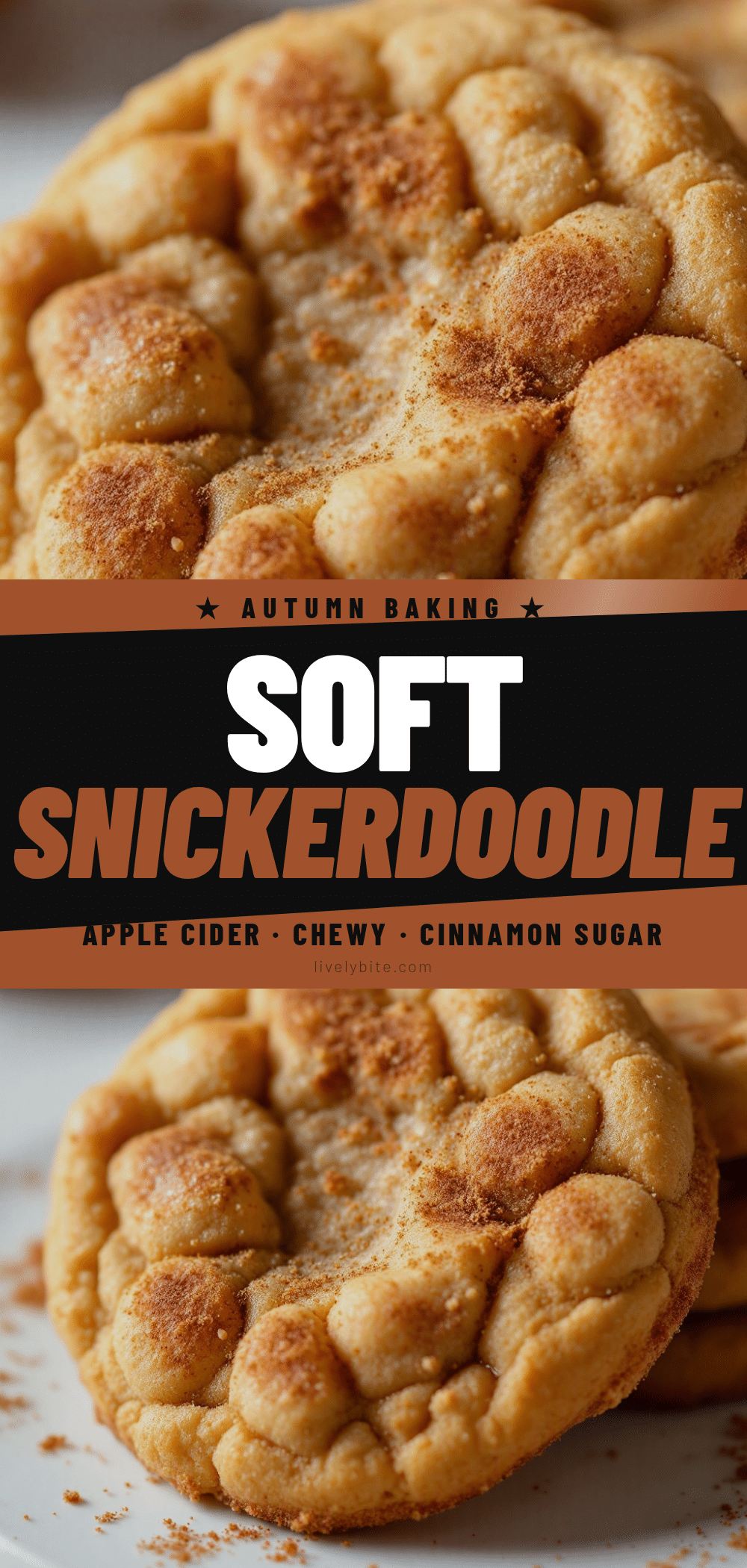
Soft Chewy Apple Cider Snickerdoodle Cookies

These soft, chewy cookies combine the classic tang of snickerdoodles with the warm, tart flavor of reduced apple cider, creating a perfect autumn treat.
- Prep Time: 30 minutes
- Cook Time: 10-12 minutes
- Total Time: 45 minutes
- Yield: Approximately 24 cookies 1x
- Category: Dessert
- Cuisine: American
Ingredients
- 1 cup (2 sticks / 226g) unsalted butter, softened
- 1 cup (200g) granulated sugar
- 1 cup (220g) light brown sugar, packed
- 2 large eggs, room temperature
- 2 teaspoons vanilla extract
- 1/2 cup (120ml) reduced apple cider
- 3 cups (375g) all-purpose flour
- 1 teaspoon baking soda
- 2 teaspoons cream of tartar
- 1 teaspoon salt
- 1/2 cup (100g) granulated sugar (for coating)
- 2 teaspoons ground cinnamon (for coating)
Instructions
- Pour 2 cups of fresh apple cider into a heavy-bottomed saucepan. Bring to a boil over medium-high heat, then reduce to medium-low. Simmer until reduced by half (about 1 cup), which takes 15-20 minutes. Stir occasionally and let cool completely.
- In a large mixing bowl, beat the softened butter, granulated sugar, and brown sugar together until light and fluffy, about 3 minutes.
- Add the eggs one at a time, beating well after each addition. Mix in the vanilla extract and the cooled, reduced apple cider until just combined.
- In a separate bowl, whisk together the flour, baking soda, cream of tartar, and salt.
- Gradually add the dry ingredients to the wet ingredients, mixing on low speed until just combined. Do not overmix.
- Cover the bowl with plastic wrap and refrigerate the dough for at least 30 minutes.
- Preheat oven to 350°F (175°C). Line two baking sheets with parchment paper. In a small bowl, mix the 1/2 cup sugar and cinnamon for the coating.
- Scoop the dough into balls (about 1.5 tablespoons each). Roll each ball in the cinnamon-sugar mixture until fully coated. Place on prepared baking sheets, spacing them 2 inches apart.
- Bake for 10-12 minutes, or until edges are set and lightly golden but centers still look soft. Rotate sheets halfway through if needed.
- Let cookies cool on the baking sheet for 5 minutes, then transfer to a wire rack to cool completely.
Notes
Ensure butter is room temperature but not melted. Do not skip the chilling step to prevent excessive spreading. If using apple juice instead of cider, boil it down significantly to concentrate flavor. Cookies can be stored in an airtight container for up to 5 days or frozen for up to 3 months.
Nutrition
- Serving Size: 1 cookie
- Calories: 180
- Sugar: 16
- Sodium: 200
- Fat: 9
- Saturated Fat: 5
- Carbohydrates: 24
- Fiber: 1
- Protein: 2
Keywords: apple cider cookies, snickerdoodle, holiday baking, fall recipes, soft cookies, chewy cookies, cinnamon sugar