That first whiff of slow-cooked beef and caramelizing onions—the kind that hits you before you even open the front door on a cold Tuesday evening—still takes me straight to my grandmother’s tiny kitchen in Ohio. I remember standing on a wobbly stool, watching her sear a chuck roast in a cast iron skillet that had seen more meals than I’d ever cook in a lifetime. She’d hum softly, never using a recipe, just knowing by instinct when the meat was ready to meet its fate in that big, avocado-green slow cooker. That machine was practically a member of the family. It sat on the counter year-round, but it truly earned its keep from October through March. I didn’t understand the magic back then. I just knew that the house smelled like safety and warmth and something deeply, unshakeably good.
Years later, I find myself chasing that same feeling in my own kitchen. And honestly? This perfect classic slow cooker pot roast with vegetables is the closest I’ve ever come to bottling it. It’s not fancy. It’s not complicated. It’s the kind of meal that asks you to trust the process—sear the meat, layer the veggies, pour in the broth, and walk away. The slow cooker does the heavy lifting, turning an inexpensive cut of beef into something that melts on your fork. There’s no rushing it, and that’s the whole point. Some things are worth the wait, and this pot roast is one of them. It’s the meal you make when you need a hug from the inside out.
Why You’ll Love This Recipe
Let me tell you why this pot roast has become my go-to for busy weeks, lazy Sundays, and everything in between. I’ve tested this recipe at least a dozen times, tweaking the seasoning, adjusting the cook time, and even trying different cuts of beef. This version? It’s the one that finally made my husband say, “Don’t change a thing.”
- Truly Fall- Apart Tender: The low-and-slow method breaks down the connective tissue in the chuck roast, giving you meat that shreds with a fork. No knife required, I promise.
- Simple, Affordable Ingredients: You don’t need a special trip to a fancy butcher. A good chuck roast, some carrots, potatoes, and a few pantry staples are all it takes. This is budget-friendly comfort at its finest.
- One-Pot Wonder: Everything cooks together in the slow cooker. The vegetables soak up all that rich, beefy broth, so you get maximum flavor with minimum cleanup. It’s basically a complete dinner in one pot.
- Perfect for Meal Prep: This pot roast tastes even better the next day. The flavors have time to meld, making leftovers a genuine treat. I often double the recipe just for this reason.
- Crowd-Pleaser: I’ve served this at family dinners, potlucks, and even a casual dinner party. It always gets rave reviews. Kids love the tender meat and soft carrots, and adults appreciate the rich, savory depth.
What makes this recipe different from all the others out there? It’s the searing step, honestly. I know it’s tempting to skip it and just dump everything in the slow cooker, but that golden-brown crust on the beef is non-negotiable. It adds a layer of flavor that you simply cannot get any other way. Plus, I deglaze the pan with a bit of red wine (or broth, if you prefer) to scrape up all those delicious browned bits. It’s a small extra step that makes a huge difference. This isn’t just another pot roast recipe—it’s the one that will become your family’s new favorite.
What Ingredients You Will Need
This recipe uses simple, wholesome ingredients to deliver bold flavor and satisfying texture without the fuss. Most of these are pantry staples, which makes this perfect for a last-minute Sunday dinner.
- Chuck Roast (3-4 pounds): This is my go-to cut for pot roast. It has just the right amount of marbling and connective tissue, which breaks down during slow cooking to create incredibly tender meat. Look for a roast with good fat distribution—it equals more flavor. If you can’t find chuck, a bottom round or brisket will also work, though the texture will be slightly different.
- Olive Oil (2 tablespoons): For searing the meat. Use a high-quality olive oil or avocado oil, as it has a higher smoke point.
- Yellow Onions (2 large, cut into chunks): Onions add a sweet, savory base to the broth. I use yellow onions for their balanced flavor, but white or sweet onions are fine too.
- Carrots (4 large, peeled and cut into 2-inch pieces): Carrots become incredibly sweet and tender as they cook. I recommend using whole carrots and cutting them yourself—baby carrots just don’t hold up as well over the long cook time.
- Potatoes (1.5 pounds, Yukon Gold or red potatoes, halved or quartered): Yukon Golds are my favorite because they hold their shape and have a buttery texture. Russets will get a bit mushier, which some people prefer. Cut them into uniform sizes so they cook evenly.
- Celery (3 stalks, cut into 2-inch pieces): Celery adds a subtle earthiness and helps round out the flavor profile. Don’t skip it—it’s part of the classic mirepoix trio.
- Beef Broth (2 cups, low-sodium): Use a good quality beef broth. I prefer low-sodium so I can control the salt level. Better Than Bouillon paste is my secret weapon for deep, rich flavor.
- Red Wine (1/2 cup, optional but recommended): A dry red wine like Cabernet Sauvignon or Merlot adds incredible depth. If you don’t cook with wine, just use an additional 1/2 cup of beef broth.
- Tomato Paste (2 tablespoons): Tomato paste adds a touch of acidity and umami that balances the richness of the beef. It also helps thicken the broth slightly.
- Worcestershire Sauce (1 tablespoon): This adds a savory, slightly tangy flavor that enhances the beefiness of the roast.
- Dried Thyme (1 teaspoon): Thyme is a classic herb for pot roast. It’s earthy and aromatic without being overpowering.
- Dried Rosemary (1 teaspoon): Rosemary adds a piney, fragrant note that pairs beautifully with beef. Crush it between your fingers before adding to release the oils.
- Bay Leaves (2): Bay leaves add a subtle, almost floral background note. Remember to remove them before serving!
- Garlic (4 cloves, minced): Fresh garlic is a must. Pre-minced garlic from a jar just doesn’t have the same punch.
- Salt and Black Pepper (to taste): Season generously. The meat and vegetables need a good amount of salt to bring out their best flavors.
- Cornstarch (2 tablespoons, optional): For thickening the gravy at the end. Mix with 2 tablespoons of cold water to make a slurry.
Ingredient Note: For the best texture, I recommend using a chuck roast that’s at least 1.5 inches thick. Thinner roasts can dry out, even in a slow cooker. Also, if you’re using fresh herbs instead of dried, double the amount—fresh herbs are less concentrated than dried.
Equipment Needed
You don’t need a lot of fancy tools for this recipe, which is part of its beauty. Here’s what you’ll need:
- Slow Cooker (6-quart or larger): A 6-quart model is ideal for a 3-4 pound roast with vegetables. If your slow cooker is smaller, you may need to reduce the recipe slightly. I use a programmable slow cooker, which makes it easy to set the time and forget it.
- Large Cast Iron Skillet or Heavy-Bottomed Pan: For searing the meat. Cast iron is perfect because it gets screaming hot and holds heat evenly. A stainless steel skillet works well too. Avoid non-stick for this step—you want those browned bits to stick to the pan so you can deglaze them.
- Sharp Chef’s Knife: For cutting the vegetables and trimming any excess fat from the roast. A good knife makes prep work so much faster and safer.
- Cutting Board: A large, sturdy cutting board is essential. I prefer wood or plastic—both are easy to clean and gentle on knives.
- Tongs: For flipping the roast while searing. Tongs give you better control than a fork, which can pierce the meat and release its juices.
- Wooden Spoon or Spatula: For deglazing the pan and scraping up the browned bits. A wooden spoon won’t scratch your cookware.
- Measuring Cups and Spoons: For accurate measurements. I can’t stress this enough—accuracy matters, especially with the broth and seasonings.
- Small Bowl: For making the cornstarch slurry if you want a thicker gravy.
Budget-Friendly Tip: If you don’t have a cast iron skillet, a regular non-stick pan will work in a pinch. Just be careful not to overheat it. Also, you can use a Dutch oven instead of a slow cooker if you prefer to cook this in the oven at 300°F for 3-4 hours. The result is just as delicious.
Preparation Method
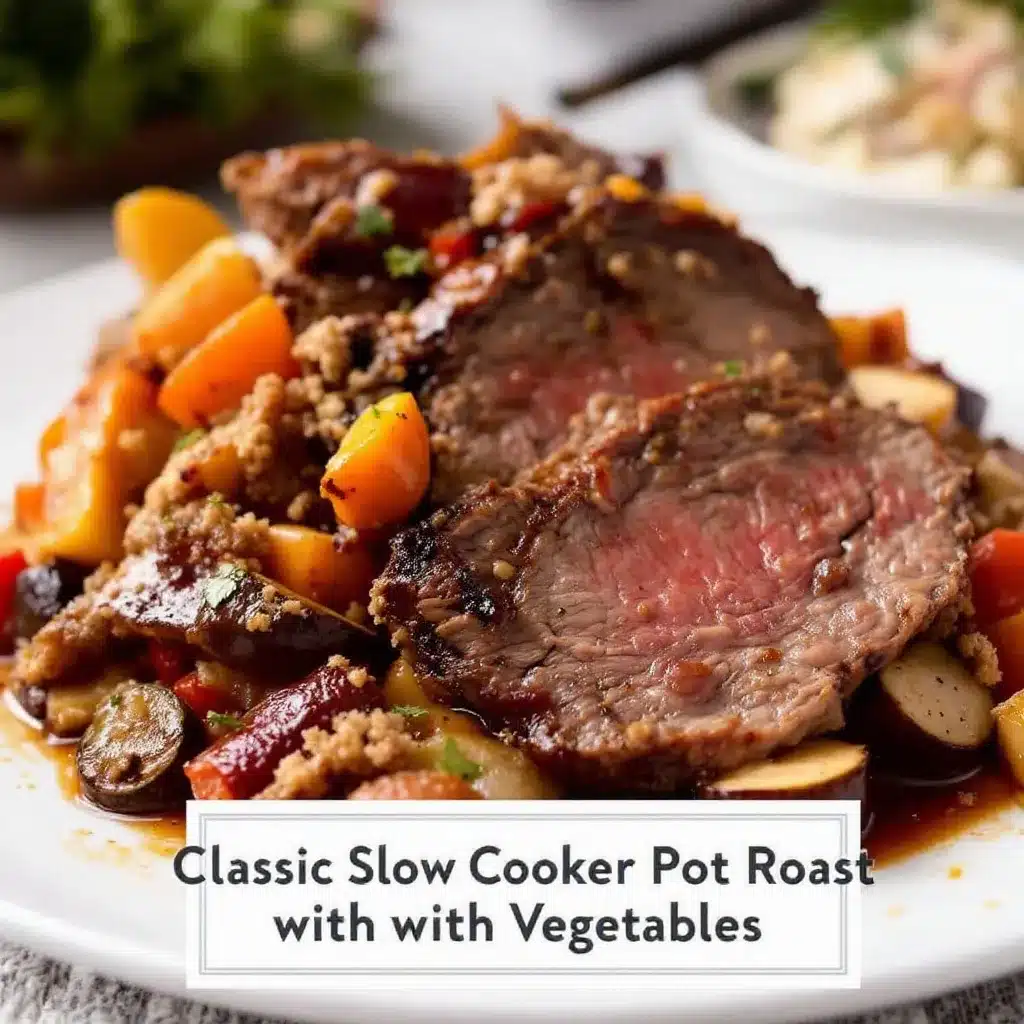
- Prep the Beef (5 minutes): Pat the chuck roast dry with paper towels. This is crucial—moisture is the enemy of a good sear. Season generously on all sides with salt and black pepper. Don’t be shy here; a lot of the seasoning will end up in the broth. Let the roast sit at room temperature for about 20 minutes while you prep the vegetables. This helps it cook more evenly.
- Sear the Roast (10-12 minutes): Heat the olive oil in your large skillet over medium-high heat until it shimmers. Carefully place the roast in the hot pan. Listen for that satisfying sizzle! Sear for 4-5 minutes per side, without moving it, until a deep, golden-brown crust forms. You want all sides browned, including the ends. Use your tongs to hold the roast on its sides if needed. This step builds the foundation of flavor for the entire dish.
- Deglaze the Pan (2 minutes): Remove the seared roast and set it on a plate. Reduce the heat to medium. Pour in the red wine (or extra broth) and use your wooden spoon to scrape up all those browned bits from the bottom of the pan. Let it simmer for about a minute, until the liquid reduces slightly. This is pure flavor gold. Pour this liquid into the bottom of your slow cooker.
- Layer the Vegetables (5 minutes): Place the onion chunks, carrots, celery, and potatoes in the bottom of the slow cooker. Toss them with the minced garlic, dried thyme, and dried rosemary. This isn’t just about flavor—the vegetables also act as a natural rack for the beef, keeping it slightly elevated so it doesn’t sit in liquid and boil.
- Add the Roast and Liquid (3 minutes): Place the seared chuck roast on top of the vegetables. It should be nestled in, not drowning. In a small bowl, whisk together the beef broth, tomato paste, and Worcestershire sauce. Pour this mixture around the roast (not directly over it, to preserve the crust). Tuck the bay leaves into the liquid.
- Cook Low and Slow (8 hours on LOW or 5 hours on HIGH): Cover the slow cooker and cook on LOW for 8 hours or on HIGH for 5 hours. LOW is my preference—it gives the meat more time to break down and become incredibly tender. The roast is done when it shreds easily with a fork. Don’t rush it; if it’s not fork-tender, give it another 30 minutes.
- Make the Gravy (5 minutes, optional): Once the roast is done, carefully transfer it and the vegetables to a serving platter. Tent loosely with foil to keep warm. Strain the remaining liquid through a fine-mesh sieve into a saucepan, or simply use a ladle to skim the fat from the surface. Bring the liquid to a simmer over medium heat. In a small bowl, whisk the cornstarch with 2 tablespoons of cold water until smooth. Slowly whisk the slurry into the simmering liquid. Cook for 2-3 minutes, stirring constantly, until the gravy thickens to your liking. Season with additional salt and pepper to taste.
- Serve and Enjoy (2 minutes): Spoon the rich gravy over the pot roast and vegetables. Serve immediately, with a sprinkle of fresh parsley if you’re feeling fancy. Watch everyone at the table go quiet as they take their first bite—that’s the sign of a successful pot roast.
Troubleshooting Tip: If your pot roast is tough after the recommended cook time, it likely needs more time. The connective tissue in chuck roast needs prolonged heat to break down. Give it another 30-60 minutes on LOW and check again. Patience is key here.
Cooking Tips & Techniques
After making this recipe more times than I can count, I’ve learned a few tricks that make all the difference. Let me share them with you so you can avoid my early mistakes.
Don’t Skip the Searing Step. I know it’s tempting to just throw everything in the slow cooker and walk away. I’ve done it. And every single time, I’ve regretted it. The Maillard reaction—that browning process—creates hundreds of flavor compounds that you simply cannot replicate. It’s the difference between a good pot roast and a memorable one. Trust me on this. It takes ten extra minutes and it’s worth every second.
Use Room Temperature Meat. Pull your chuck roast out of the fridge about 30 minutes before you plan to sear it. Cold meat sears unevenly and can cool down your pan too much. A room-temperature roast will develop a better crust and cook more evenly in the slow cooker.
Layer Wisely. I learned this the hard way: don’t just dump everything in the slow cooker at once. Put the heartier vegetables (onions, carrots, potatoes) on the bottom. They take longer to cook and benefit from being submerged in the liquid. The roast goes on top, where it can steam and braise without getting waterlogged. This also helps the vegetables cook at the same rate as the meat.
Resist the Urge to Peek. Every time you lift that lid, you release heat and steam, which adds about 20-30 minutes to your cook time. I know it’s hard, but trust the process. If you’re using a glass lid, you can check visually without opening it. If your slow cooker has a clear lid, you’re in luck—use it.
My Biggest Failure: The first time I made pot roast in my slow cooker, I used a lean cut of beef (top round) because I was trying to be “healthy.” It came out dry and stringy, and I was so disappointed. Now I know that a little fat is your friend. Chuck roast has just the right amount of marbling to keep the meat moist and tender during the long cook. Don’t be afraid of the fat—you can always trim it after cooking if you prefer.
Timing Strategy: I often start this recipe in the morning before work. It takes about 20 minutes of active prep time (searing, deglazing, layering), then I set the slow cooker on LOW and let it do its thing for 8 hours. Dinner is ready when I walk in the door. If I’m home on a Sunday, I’ll start it after lunch and have a perfect 6 PM dinner. The slow cooker is truly a set-it-and-forget-it tool for this recipe.
Variations & Adaptations
One of the best things about this pot roast recipe is how adaptable it is. I’ve tried several variations over the years, and here are my favorites:
- Herb and Garlic Lover’s Version: Add a whole head of garlic (cut in half crosswise) to the slow cooker along with the vegetables. Roast the garlic alongside the beef—it becomes sweet and spreadable. I also like to add a few sprigs of fresh rosemary and thyme instead of dried. The flavor is more delicate and aromatic.
- Mushroom and Red Wine Pot Roast: Add 8 ounces of cremini mushrooms (halved) to the slow cooker with the vegetables. Use a full cup of red wine instead of half, and add a tablespoon of balsamic vinegar for extra depth. The mushrooms release their own liquid, making the gravy even richer. This version feels a little more elegant, perfect for a dinner party.
- Spicy Southwest Twist: Swap the thyme and rosemary for 1 teaspoon of cumin, 1 teaspoon of smoked paprika, and 1/2 teaspoon of chili powder. Add a can of diced tomatoes with green chiles (undrained) and a handful of fresh cilantro at the end. Serve with warm tortillas and a dollop of sour cream. This is my go-to when I’m craving something with a little kick.
- Low-Carb / Keto Adaptation: Simply omit the potatoes and add more low-carb vegetables like cauliflower florets, turnips, or radishes. The rest of the recipe is naturally low in carbs and high in protein. I’ve made this for friends on a keto diet and they couldn’t tell the difference—the cauliflower absorbs the broth beautifully.
- Dairy-Free / Gluten-Free: This recipe is naturally dairy-free and gluten-free as written. Just make sure your Worcestershire sauce is gluten-free (some brands contain malt vinegar). The cornstarch slurry is also gluten-free. It’s one of those rare recipes that accommodates multiple dietary needs without any special substitutions.
Personal Favorite: I love the mushroom and red wine version for a cozy winter dinner. I serve it with a side of crusty bread to soak up every last drop of that incredible gravy. It’s the kind of meal that makes you want to light a fire and stay in for the night.
Serving & Storage Suggestions
This pot roast is a complete meal in itself, but the way you serve it can make it feel even more special.
Serving Temperature: Serve the pot roast and vegetables hot, straight from the slow cooker. I like to transfer everything to a large, warm platter and spoon the gravy over the top. A sprinkle of fresh parsley or chives adds a pop of color and freshness that contrasts beautifully with the rich, brown gravy.
What to Serve With It: While the pot roast is a full meal on its own, I sometimes add a simple side dish. A crisp green salad with a lemon vinaigrette cuts through the richness beautifully. Crusty bread or dinner rolls are a must for sopping up the gravy. If I’m feeling extra indulgent, I’ll make a batch of creamy mashed potatoes to serve alongside the roasted vegetables. The gravy over mashed potatoes? Pure heaven. For a lighter option, try a side of steamed green beans or roasted asparagus.
Storage Instructions: Leftovers are a gift! Store any leftover pot roast and vegetables in an airtight container in the refrigerator for up to 4 days. The flavors actually deepen and meld overnight, making the leftovers even better than the first meal. I often find myself looking forward to the next day’s lunch more than the original dinner.
Freezing: This pot roast freezes beautifully. Let it cool completely, then transfer the meat, vegetables, and gravy to a freezer-safe container or zip-top bag. It will keep for up to 3 months. To thaw, place it in the refrigerator overnight. Reheat gently on the stovetop or in the microwave, adding a splash of broth if the gravy has thickened too much.
Reheating Methods: The best way to reheat pot roast is on the stovetop over low heat. Place the meat and vegetables in a saucepan with a little extra broth or water, cover, and warm gently for 10-15 minutes. You can also reheat individual portions in the microwave—just cover the bowl with a damp paper towel to keep the meat from drying out. Avoid using high heat, as it can make the meat tough again.
Flavor Development: Here’s a little secret: pot roast is one of those rare dishes that genuinely tastes better the next day. The flavors have time to meld and deepen, and the meat becomes even more tender as it sits in the gravy. I always make a little extra just for this reason. It’s like the dish is giving you a second gift.
Nutritional Information & Benefits
This pot roast is a hearty, satisfying meal that also offers some nutritional benefits. Here’s a rough breakdown per serving (based on 6 servings):
- Calories: Approximately 550-650 per serving
- Protein: 45-50 grams (excellent source of high-quality protein)
- Fat: 25-30 grams (mostly from the beef, with some healthy fats from olive oil)
- Carbohydrates: 30-35 grams (from vegetables, providing fiber and complex carbs)
- Fiber: 5-7 grams (from carrots, potatoes, and celery)
- Iron: 25-30% of the Daily Value (beef is a rich source of heme iron, which is easily absorbed)
- Vitamin A: 200%+ of the Daily Value (carrots are packed with beta-carotene)
- Vitamin C: 15-20% of the Daily Value (from potatoes and carrots)
Health Benefits: This meal is a good source of protein, which is essential for muscle repair and satiety. The vegetables provide a solid dose of fiber, vitamins, and antioxidants. The beef is rich in iron, zinc, and B vitamins, which support energy metabolism and immune function. While it’s not a low-fat meal, the fat from the beef is primarily monounsaturated and saturated fat—moderation is key. If you’re watching your sodium, use low-sodium broth and go easy on the added salt.
Dietary Considerations: This recipe is naturally gluten-free and dairy-free. It’s also low in sugar (the only sugar comes from the vegetables and a tiny bit in the tomato paste). If you’re on a low-carb or keto diet, simply omit the potatoes and add more low-carb vegetables. For a lower-fat version, trim any visible fat from the roast before cooking and skim the fat from the gravy before serving.
Personal Wellness Perspective: I love that this pot roast feels like a treat but is actually a balanced meal. It’s the kind of food that nourishes you on a cold day—both physically and emotionally. There’s something deeply satisfying about a meal that comes together with simple, whole ingredients and fills your home with that incredible aroma. It’s comfort food that I can feel good about serving to my family.
Conclusion
This perfect classic slow cooker pot roast with vegetables is more than just a recipe—it’s a tradition in the making. It’s the meal you turn to when you need something reliable, something that fills your home with warmth and your belly with comfort. The tender, fall-apart beef, the sweet, buttery carrots, the rich, savory gravy—every bite is a reminder that the best food doesn’t have to be complicated. It just has to be made with care.
I hope you give this recipe a try and make it your own. Maybe you’ll add extra garlic, or swap in sweet potatoes, or serve it with a side of my easy lemon herb salmon sheet pan dinner for a surf and turf twist. Or perhaps you’ll keep it exactly as written, passing it down to the next generation just like my grandmother did. That’s the beauty of a great recipe—it leaves room for your own story.
I’d love to hear how yours turns out! Leave a comment below and let me know if you made any changes, what you served it with, or just how good that first bite felt. Don’t forget to share this recipe with a friend who needs a little comfort in their life. And if you’re looking for another set-it-and-forget-it meal, check out my easy slow cooker honey garlic chicken meal prep bowls for another weeknight winner. Happy cooking, friend. You’ve got this.
Frequently Asked Questions
Can I use a different cut of beef for pot roast?
Absolutely. While chuck roast is my top recommendation for its marbling and tenderness, you can also use bottom round, brisket, or even a rump roast. Just be aware that leaner cuts may need a little extra liquid and can be slightly less tender. If you use a lean cut, consider cooking it on LOW for the full 8-10 hours to give it the best chance at breaking down.
Do I have to sear the meat first?
Technically, no. You can skip the searing step and still end up with a tender pot roast. However, you’ll miss out on that deep, rich, caramelized flavor that makes this dish so special. The Maillard reaction from searing adds a complexity that you simply cannot get from the slow cooker alone. I strongly recommend not skipping it—it’s a ten-minute step that elevates the entire dish.
Can I cook this on HIGH instead of LOW?
Yes, you can cook this pot roast on HIGH for about 5 hours. However, I find that cooking on LOW for 8 hours produces a more tender, flavorful result. The longer, gentler heat gives the connective tissue more time to break down, resulting in meat that truly falls apart. If you’re short on time, HIGH will work, but LOW is definitely the better option.
Why is my pot roast tough?
If your pot roast is tough, it likely needs more time. The collagen in the meat needs prolonged, gentle heat to break down into gelatin, which is what makes the meat tender. If it’s not fork-tender after the recommended cook time, give it another 30-60 minutes on LOW and check again. Also, make sure you’re using a well-marbled cut like chuck roast—lean cuts are more prone to drying out.
Can I add other vegetables to the slow cooker?
Definitely! This recipe is very flexible. You can add parsnips, turnips, celery root, or even sweet potatoes along with the carrots and potatoes. Just be mindful of cook times—root vegetables all cook at a similar pace. If you want to add something more delicate like zucchini or bell peppers, add them in the last 30 minutes of cooking so they don’t turn to mush.
Pin This Recipe!
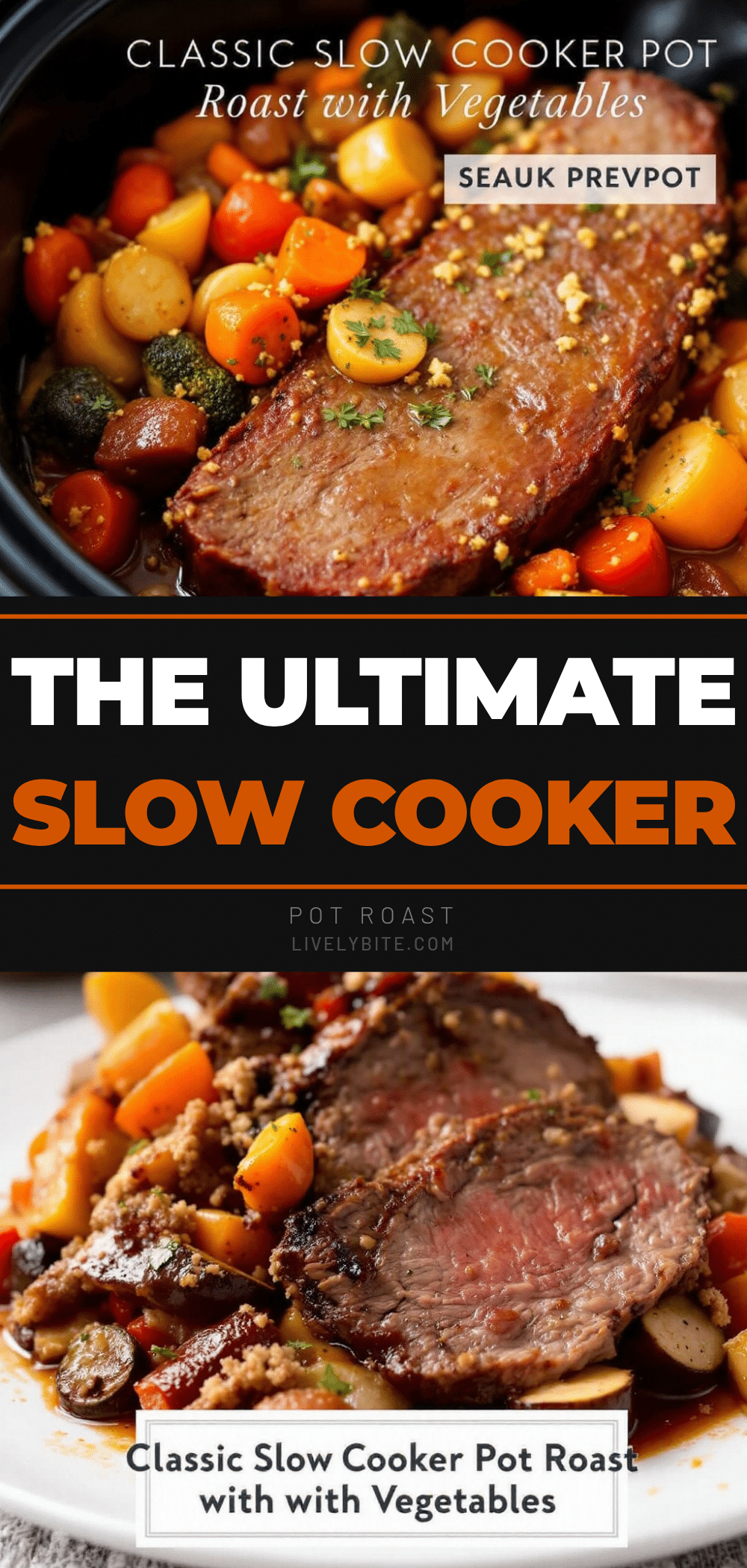
Perfect Slow Cooker Pot Roast: Easy Fall Apart Dinner
A classic slow cooker pot roast with fall-apart tender beef and vegetables, simmered low and slow in a rich, savory gravy. This one-pot wonder is the ultimate comfort food for busy weeknights or lazy Sundays.
- Prep Time: 20 minutes
- Cook Time: 8 hours (LOW) or 5 hours (HIGH)
- Total Time: 8 hours 20 minutes (LOW) or 5 hours 20 minutes (HIGH)
- Yield: 6 servings 1x
- Category: Main Course
- Cuisine: American
Ingredients
- 3–4 pounds chuck roast
- 2 tablespoons olive oil
- 2 large yellow onions, cut into chunks
- 4 large carrots, peeled and cut into 2-inch pieces
- 1.5 pounds Yukon Gold or red potatoes, halved or quartered
- 3 stalks celery, cut into 2-inch pieces
- 2 cups low-sodium beef broth
- 1/2 cup dry red wine (optional, or additional beef broth)
- 2 tablespoons tomato paste
- 1 tablespoon Worcestershire sauce
- 1 teaspoon dried thyme
- 1 teaspoon dried rosemary
- 2 bay leaves
- 4 cloves garlic, minced
- Salt and black pepper to taste
- 2 tablespoons cornstarch (optional, for thickening gravy)
- 2 tablespoons cold water (for cornstarch slurry)
Instructions
- Pat the chuck roast dry with paper towels. Season generously on all sides with salt and black pepper. Let sit at room temperature for about 20 minutes.
- Heat olive oil in a large cast iron skillet or heavy-bottomed pan over medium-high heat. Sear the roast for 4-5 minutes per side until a deep golden-brown crust forms. Use tongs to hold the roast on its sides if needed.
- Remove the seared roast and set aside. Reduce heat to medium. Pour in red wine (or extra broth) and scrape up browned bits from the pan with a wooden spoon. Simmer for about 1 minute, then pour the liquid into the slow cooker.
- Place onion chunks, carrots, celery, and potatoes in the bottom of the slow cooker. Toss with minced garlic, dried thyme, and dried rosemary.
- Place the seared chuck roast on top of the vegetables. In a small bowl, whisk together beef broth, tomato paste, and Worcestershire sauce. Pour this mixture around the roast (not directly over it). Tuck bay leaves into the liquid.
- Cover and cook on LOW for 8 hours or on HIGH for 5 hours, until the meat shreds easily with a fork.
- Optional gravy: Transfer roast and vegetables to a serving platter and tent with foil. Strain the remaining liquid into a saucepan or skim fat from the surface. Bring to a simmer over medium heat. Whisk cornstarch with 2 tablespoons cold water until smooth, then slowly whisk into the simmering liquid. Cook for 2-3 minutes, stirring constantly, until thickened. Season with salt and pepper to taste.
- Serve the pot roast and vegetables with gravy spooned over the top. Garnish with fresh parsley if desired.
Notes
For best results, do not skip the searing step—it adds deep flavor. Use a well-marbled chuck roast for tenderness. If the roast is tough after the recommended cook time, cook for an additional 30-60 minutes on LOW. Leftovers taste even better the next day and can be stored in the refrigerator for up to 4 days or frozen for up to 3 months.
Nutrition
- Serving Size: 1 serving (approxima
- Calories: 600
- Sugar: 8
- Sodium: 800
- Fat: 28
- Saturated Fat: 10
- Carbohydrates: 33
- Fiber: 6
- Protein: 48
Keywords: slow cooker pot roast, fall apart pot roast, easy pot roast, chuck roast, comfort food, one pot meal, beef dinner, Sunday dinner