That first whiff of garlic and rosemary hitting hot butter — the kind that curls through the kitchen before you’ve even pulled the roast from the oven — still takes me straight to my grandmother’s tiny apartment every single time. She wasn’t a fancy cook, not by any stretch. But Christmas Eve? That was her stage. And the prime rib was always the star.
I remember standing on a step stool (I was maybe ten), watching her rub a paste of minced garlic, fresh rosemary, and softened butter all over this massive hunk of beef. She’d mutter something about “not skimping on the fat” and then pop it in the oven without a second glance. No thermometer, no fancy technique. Just instinct, and a whole lot of love.
That roast became the benchmark. For years, I tried to recreate it — sometimes getting close, other times ending up with something that was fine, but not *that*. You know the feeling? When a dish lives in your memory as this perfect, untouchable thing?
This Perfect Garlic Herb Prime Rib Roast with Rosemary Butter is my best attempt at bottling that memory. It’s the recipe I’ve tweaked and tested over countless holiday dinners, finally landing on a method that’s forgiving enough for a nervous cook but impressive enough to steal the show. The rosemary butter isn’t just a topping — it’s the whole point. It melts into every slice, carrying that garlic-herb punch through the entire roast.
Honestly? It’s the kind of recipe that makes you believe you’re a better cook than you actually are. And that’s the best kind of recipe to have in your back pocket.
Why You’ll Love This Recipe
Let’s be real — cooking a big roast can feel intimidating. But this one? It’s practically foolproof. Here’s why it’s become my go-to for every special occasion.
- Bold, Buttery Flavor: The garlic-herb butter seeps into every nook and cranny, creating a crust that’s packed with flavor and a center that stays perfectly tender.
- Simple Ingredients, Showstopper Result: You don’t need a grocery list a mile long. Just good beef, butter, garlic, and a few fresh herbs. That’s it.
- Perfect for Holiday Feasts: Whether it’s Christmas dinner, a New Year’s celebration, or a Sunday supper that demands something special, this roast delivers every time.
- Crowd-Pleaser: I’ve served this to picky eaters, steak snobs, and folks who “don’t really like beef.” Every single plate came back clean.
- Stress-Free Method: The technique here is designed to take the guesswork out. No constant checking, no panicking. Just a beautiful roast that comes out right.
What makes this recipe different from the dozens of other prime rib recipes out there? It’s the butter. Not just any butter, but a generous slather of rosemary-garlic butter that you massage into the meat like you mean it. It’s the kind of simple step that transforms a good roast into an unforgettable one.
This isn’t just another holiday recipe. It’s the one that makes people close their eyes after the first bite. The one that gets requested year after year. And honestly? It’s the one that makes you feel like a kitchen rockstar without all the stress.
What Ingredients You Will Need
This recipe relies on a handful of quality ingredients, each playing a specific role in building that deep, savory flavor. Here’s what you’ll need and why each one matters.
- Prime Rib Roast (bone-in, 4-6 pounds): The bone adds flavor and helps the meat cook more evenly. Look for a roast with good marbling — that’s the fat running through the meat that keeps it juicy. I prefer buying from a local butcher when I can, but a good grocery store cut works just fine. (Let it sit at room temperature for about 2 hours before cooking for even cooking.)
- Unsalted Butter (1/2 cup, softened): The base of our flavored butter. Using unsalted lets you control the salt level. Make sure it’s truly softened — almost spreadable — so it mixes easily with the herbs.
- Fresh Garlic (6-8 cloves, minced): Don’t even think about using the jarred stuff. Fresh garlic is non-negotiable here. It provides that pungent, aromatic kick that infuses the butter and the roast.
- Fresh Rosemary (2 tablespoons, finely chopped): The star herb. Rosemary and beef are a classic pairing for a reason. Use fresh — dried rosemary won’t give you the same bright, piney flavor.
- Fresh Thyme (1 tablespoon, leaves removed from stems): Adds an earthy, slightly floral note that rounds out the rosemary. You can substitute with a teaspoon of dried thyme if that’s all you have, but fresh is better.
- Kosher Salt (2 teaspoons): I use Diamond Crystal brand. It’s less salty by volume than Morton’s, so if you’re using a different brand, start with a little less and adjust. Salt is crucial for drawing out moisture and creating that beautiful crust.
- Freshly Ground Black Pepper (1 teaspoon): Freshly ground makes a real difference in flavor. Pre-ground pepper just doesn’t have the same punch.
- Olive Oil (1 tablespoon): A little oil helps the butter mixture adhere to the meat and encourages browning. Use a good quality extra-virgin olive oil.
Equipment Needed
You don’t need a ton of fancy gadgets for this recipe, but a few key tools make the process smoother.
- Roasting Pan with a Rack: The rack lifts the roast off the bottom of the pan, allowing hot air to circulate evenly. No rack? You can use a few rolled-up balls of aluminum foil to prop the roast up.
- Meat Thermometer: This is non-negotiable. An instant-read thermometer is great, but a leave-in probe thermometer that beeps when the roast hits your target temp? Even better. It takes all the guesswork out.
- Chef’s Knife: A sharp, heavy knife makes slicing the roast into even portions a breeze. Trust me, a dull knife will just shred that beautiful crust.
- Mixing Bowl: For combining the butter, garlic, and herbs.
- Kitchen Twine (optional): If your roast isn’t already tied, you might want to truss it to help it hold its shape. Your butcher can usually do this for you.
- Aluminum Foil: For tenting the roast while it rests — a crucial step for juicy meat.
Preparation Method
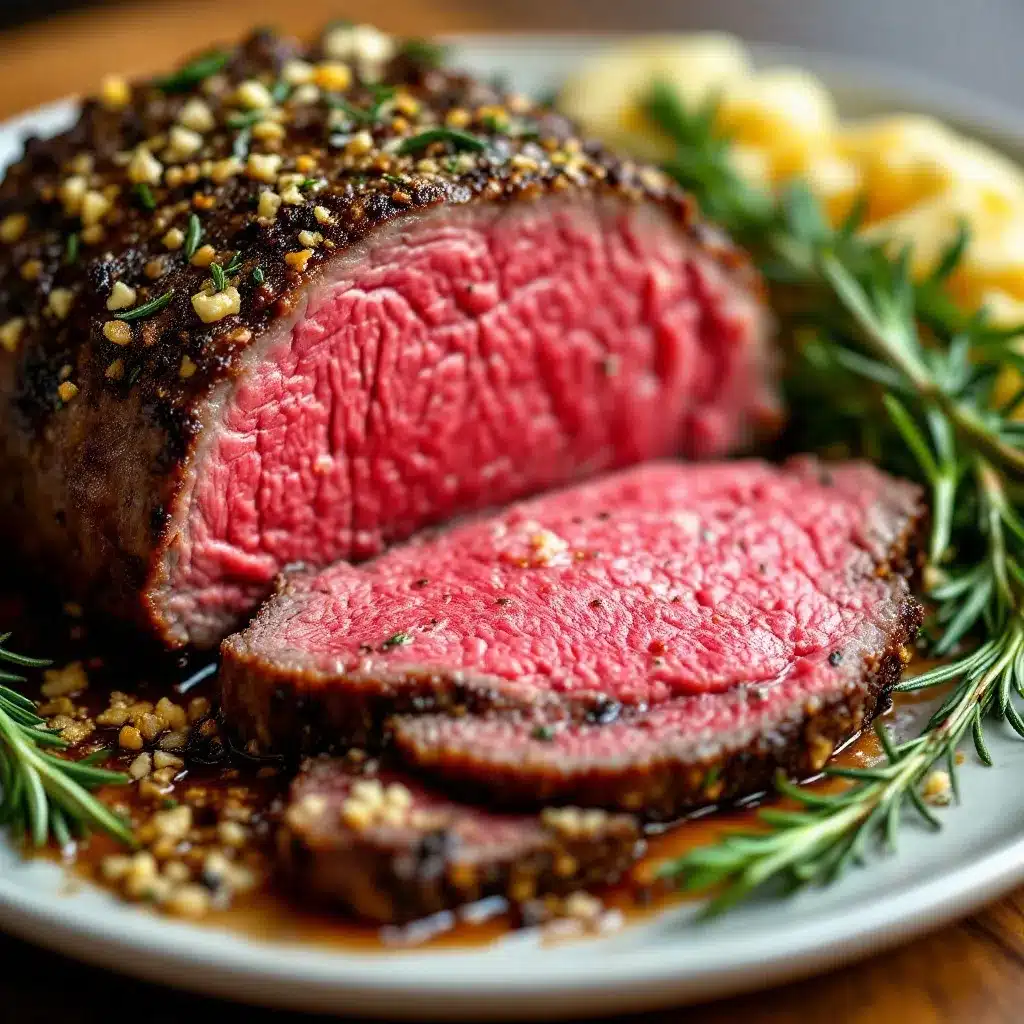
Alright, let’s get cooking. This method is all about low-and-slow for even cooking, followed by a high-heat blast for that gorgeous crust. I’ve broken it down into simple steps.
- Take the Chill Off: About 2 hours before you plan to cook, pull the prime rib out of the fridge and let it sit on the counter, still wrapped. This is a big piece of meat — you want it to come closer to room temperature so it cooks evenly. A cold roast will cook unevenly, with a burnt outside and a raw center.
- Preheat the Oven: Set your oven to 450°F (232°C). You want it screaming hot for that initial sear.
- Make the Rosemary Butter: In a small bowl, combine the softened butter, minced garlic, chopped rosemary, thyme leaves, kosher salt, and black pepper. Mix it all together with a fork until it forms a uniform paste. Give it a taste — it should be punchy and flavorful. (If you’re using salted butter, skip the extra salt for now.)
- Slather the Roast: Pat the prime rib dry with paper towels. This step is important — dry meat browns better. Now, rub the olive oil all over the roast. Then, using your hands, massage the rosemary butter all over the entire surface. Don’t be shy. Get it into every crevice. This butter is your flavor armor.
- The High-Heat Sear: Place the roast, fat-side up, on the rack in your roasting pan. Pop it into the preheated 450°F oven. Roast for 20 minutes. This initial blast creates that beautiful, dark brown crust. You’ll smell the garlic and rosemary filling your kitchen — it’s intoxicating.
- Turn Down the Heat: After 20 minutes, reduce the oven temperature to 325°F (163°C). Do NOT open the oven door for this — just turn the dial. Continue roasting. The total cooking time will depend on your desired doneness and the size of your roast. A general rule of thumb is about 15-20 minutes per pound for medium-rare after the initial sear.
- Use Your Thermometer: Start checking the internal temperature about 30 minutes before you think it’ll be done. Insert the thermometer into the thickest part of the roast, avoiding the bone. For medium-rare, you’re aiming for 120-125°F (49-52°C). For medium, 130-135°F (54-57°C). Remember, the temperature will rise another 5-10 degrees while it rests.
- Rest, Rest, Rest: This might be the most important step. Once the roast hits your target temp, remove it from the oven. Transfer it to a cutting board and tent it loosely with aluminum foil. Let it rest for at least 20-30 minutes. I know it’s hard to wait, but this allows the juices to redistribute throughout the meat. If you cut into it too soon, all those beautiful juices will run out onto the board, leaving you with dry meat.
- Carve and Serve: After resting, remove the twine if your roast was tied. Slice against the grain into 1/2-inch to 3/4-inch thick slices. The bone-in roast will have a few bones on one side — you can cut those off first or leave them attached for a dramatic presentation. Arrange the slices on a platter and spoon any accumulated juices from the cutting board over the top.
Cooking Tips & Techniques
I’ve made this roast more times than I can count, and I’ve learned a few things the hard way. Here’s what I wish someone had told me.
Don’t Skip the Resting Time. I know it’s tempting to carve right away, but I’ve ruined a perfectly good roast by being impatient. That rest period is when the magic happens. The meat relaxes, the juices settle, and every slice stays tender and moist.
Invest in a Good Thermometer. Seriously. I used to rely on those “pop-up” timers that come with some roasts, and they’re notoriously unreliable. An instant-read thermometer is a small investment that pays for itself the first time you nail the perfect medium-rare.
Watch the Butter. The garlic in the butter can burn if the initial sear is too aggressive. That’s why we do a hot blast at 450°F for only 20 minutes. If you notice the butter smoking excessively or the garlic looking dark, your oven might run hot. Just reduce the temperature a bit sooner.
Let the Roast Breathe. Taking the chill off the meat before cooking isn’t just a suggestion — it’s crucial. A cold roast will cook unevenly, with the outside drying out before the center is even warm. Two hours on the counter makes a world of difference.
Use the Pan Drippings. Don’t throw away those glorious juices in the bottom of the pan. They’re liquid gold. You can use them to make a quick au jus or a rich gravy. Just deglaze the pan with a little beef broth or red wine, scrape up the browned bits, and simmer until thickened.
Variations & Adaptations
This recipe is fantastic as-is, but it’s also a great starting point for experimentation. Here are a few ways to make it your own.
- Herb Swap: Not a rosemary fan? No problem. Swap it out for equal parts fresh oregano, sage, or even tarragon. Each herb brings a different personality to the butter. I’ve done a sage-thyme version for Thanksgiving that was incredible.
- Spice It Up: Add a teaspoon of smoked paprika or a pinch of cayenne pepper to the butter for a subtle smoky heat. It doesn’t make the roast spicy, just adds a deeper layer of flavor.
- Garlic-Lover’s Version: Double the garlic. I’m not kidding. Roast a whole head of garlic alongside the beef, then squeeze the soft, caramelized cloves into the butter before slathering it on. It’s a whole different level of savory.
- Wine-Braised Base: Add a cup of dry red wine and a cup of beef broth to the bottom of the roasting pan before you put the roast in. The liquid will steam and keep the meat extra moist, plus you’ll have an amazing jus ready to go.
- Dietary Adaptations: This recipe is naturally gluten-free and low-carb. For a dairy-free version, substitute the butter with a high-quality vegan butter or a generous amount of olive oil mixed with the herbs. It won’t be quite as rich, but it’s still delicious.
Serving & Storage Suggestions
This roast is a meal in itself, but a few thoughtful sides make it a feast. Here’s how to serve it up and store any leftovers (if you’re lucky enough to have any).
Serving: Serve the prime rib hot, right after its rest. Arrange the slices on a warm platter and spoon the pan juices over the top. It pairs beautifully with classic sides like creamy mashed potatoes, roasted asparagus, or a simple Mediterranean stuffed mini peppers for a pop of color. A bold red wine, like a Cabernet Sauvignon or a Syrah, is the perfect companion.
Storage: Leftover prime rib is a gift. Let it cool completely, then wrap it tightly in plastic wrap or aluminum foil, or store it in an airtight container. It will keep in the refrigerator for 3-4 days. The flavor actually gets even better as it sits.
Reheating: The key to reheating is to avoid drying it out. The best method is to place slices in a baking dish with a splash of beef broth, cover with foil, and warm in a 300°F oven for 10-15 minutes. You can also sear slices quickly in a hot skillet with a little butter. Avoid the microwave — it will turn that beautiful, tender meat into shoe leather.
Freezing: You can freeze cooked prime rib for up to 3 months. Slice it first, then wrap individual portions tightly in plastic wrap and place them in a freezer bag. Thaw overnight in the fridge before reheating.
Nutritional Information & Benefits
While this is definitely a special-occasion indulgence, it does offer some nutritional benefits. Here’s a rough breakdown per 6-ounce serving (cooked, lean meat only).
- Calories: Approximately 450-550
- Protein: 45-50 grams (an excellent source of high-quality protein)
- Fat: 30-35 grams (mostly from the marbling and butter)
- Iron: A significant source of heme iron, which is easily absorbed by the body
- B Vitamins: Rich in B12, B6, and niacin, which support energy metabolism
- Zinc: Important for immune function
Dietary Considerations: This recipe is naturally gluten-free, low-carb, and keto-friendly. The main allergens are dairy (butter) and potentially sulfites if you use wine. For a dairy-free option, see the variations section above.
I like to think of this roast as a way to celebrate — not something to eat every day, but something to savor when it counts. Pair it with a big green salad or some roasted vegetables to round out the meal.
Conclusion
This Perfect Garlic Herb Prime Rib Roast with Rosemary Butter isn’t just a recipe — it’s a centerpiece. It’s the dish that turns an ordinary dinner into a memory. The kind of meal where everyone pauses, looks at each other, and says, “Wow.”
I’ve made this for Christmas, for New Year’s, and for quiet Sunday dinners that somehow felt like holidays. And every time, it delivers. The rosemary butter does its magic, the garlic perfumes the whole house, and that first slice — perfectly pink and impossibly tender — makes all the effort worth it.
So go ahead and make it your own. Add extra garlic if that’s your thing. Swap the herbs. Serve it with your favorite sides. The beauty of this recipe is that it’s a foundation, not a cage. You can build on it however you like.
I’d love to hear how it turns out for you. Drop a comment below and tell me about your holiday table. Did you add a twist? Serve it with something unexpected? Or maybe you just ate the leftovers cold out of the fridge at midnight (no judgment here). Whatever you do, enjoy every bite. You’ve earned it.
Frequently Asked Questions
Can I use a boneless prime rib roast for this recipe?
Absolutely. A boneless roast will cook a bit faster since there’s no bone to conduct heat. Start checking the temperature about 10-15 minutes earlier than the recipe suggests. The flavor is still fantastic, but the bone does add a little extra richness and helps with even cooking.
What if I don’t have fresh herbs? Can I use dried?
You can, but the flavor won’t be quite as bright. If using dried rosemary, use about 1 teaspoon (crushed) instead of 2 tablespoons fresh. For dried thyme, use 1 teaspoon. The butter will still be delicious, just more subtle.
How do I know when the prime rib is done without a thermometer?
Honestly, I really recommend using a thermometer. But if you’re in a pinch, you can use the “hand test” — the meat should feel like the fleshy part of your palm when you touch your thumb to your middle finger (for medium-rare). It’s not precise, but it’s a decent backup. For a more reliable method, you can also cut into the center of the roast to check, but you’ll lose some juices.
Can I prepare the rosemary butter ahead of time?
Yes! This is a great make-ahead step. You can mix the butter, garlic, and herbs up to 3 days in advance. Just keep it covered in the fridge. Let it come to room temperature for about 30 minutes before slathering it on the roast so it spreads easily.
My roast came out too well-done. What went wrong?
Don’t beat yourself up — it happens to the best of us. The most common culprit is either an oven that runs hot or not using a thermometer. Next time, try checking the temperature 30 minutes earlier than you think it needs to be done. Also, make sure your roast is at room temperature before cooking. A cold roast will take longer to cook through, leading to an overcooked outside and a raw center. If you end up with a well-done roast, it’s still delicious sliced thin and served with a generous amount of au jus.
Pin This Recipe!
Perfect Garlic Herb Prime Rib Roast
A foolproof prime rib roast slathered with rosemary-garlic butter, slow-roasted to tender perfection, and finished with a high-heat sear for a gorgeous crust. Perfect for holiday feasts and special occasions.
- Prep Time: 20 minutes
- Cook Time: 1 hour 30 minutes
- Total Time: 2 hours 20 minutes
- Yield: 8 servings
- Category: Main Course
- Cuisine: American
Ingredients
- Prime rib roast (bone-in, 4-6 pounds)
- Unsalted butter (1/2 cup, softened)
- Fresh garlic (6-8 cloves, minced)
- Fresh rosemary (2 tablespoons, finely chopped)
- Fresh thyme (1 tablespoon, leaves removed from stems)
- Kosher salt (2 teaspoons)
- Freshly ground black pepper (1 teaspoon)
- Olive oil (1 tablespoon)
Instructions
- Take the Chill Off: About 2 hours before cooking, remove the prime rib from the fridge and let it sit at room temperature, still wrapped.
- Preheat the Oven: Set oven to 450°F (232°C).
- Make the Rosemary Butter: In a small bowl, combine softened butter, minced garlic, chopped rosemary, thyme leaves, kosher salt, and black pepper. Mix into a uniform paste.
- Slather the Roast: Pat the prime rib dry with paper towels. Rub olive oil all over the roast, then massage the rosemary butter over the entire surface.
- The High-Heat Sear: Place the roast fat-side up on a rack in a roasting pan. Roast at 450°F for 20 minutes.
- Turn Down the Heat: Reduce oven temperature to 325°F (163°C) without opening the door. Continue roasting. Total cooking time: about 15-20 minutes per pound after the initial sear for medium-rare.
- Use Your Thermometer: Start checking internal temperature about 30 minutes before you think it’ll be done. For medium-rare, aim for 120-125°F (49-52°C); for medium, 130-135°F (54-57°C).
- Rest, Rest, Rest: Remove roast from oven, transfer to a cutting board, tent loosely with aluminum foil, and let rest for at least 20-30 minutes.
- Carve and Serve: Remove twine if tied. Slice against the grain into 1/2-inch to 3/4-inch thick slices. Arrange on a platter and spoon accumulated juices over the top.
Notes
Don’t skip the resting time—it allows juices to redistribute. Invest in a good meat thermometer for perfect doneness. Watch the butter during the initial sear to prevent burning. Use pan drippings for au jus or gravy.
Nutrition
- Serving Size: 6 ounces cooked lean
- Calories: 500
- Sodium: 600
- Fat: 32
- Saturated Fat: 14
- Carbohydrates: 1
- Protein: 48
Keywords: prime rib, garlic herb prime rib, rosemary butter prime rib, holiday roast, Christmas dinner, beef roast