I had this vision of a soup that would taste like autumn in a bowl—rich, earthy, and deeply comforting. The first time I made this slow cooker version, I was bracing for that flat, one-note flavor you sometimes get with all-day cooking. What came out of the pot was something else entirely. It was the kind of soup that makes you slow down and actually taste each spoonful, not just eat it mindlessly while scrolling your phone.
The funny thing is, I almost skipped this recipe. I figured a vegetable soup in a slow cooker would be, well, boring. All those veggies sitting in liquid for hours—how good could it really be? It took about one bowl for that assumption to fall apart completely. The secret, I learned, isn’t just throwing things in the pot. It’s how you layer the flavors and treat the ingredients before they go in. This Cozy Slow Cooker Fall Harvest Vegetable Soup turned into the kind of meal I actually look forward to making on a chilly Sunday, not just a backup plan for when I don’t feel like cooking.
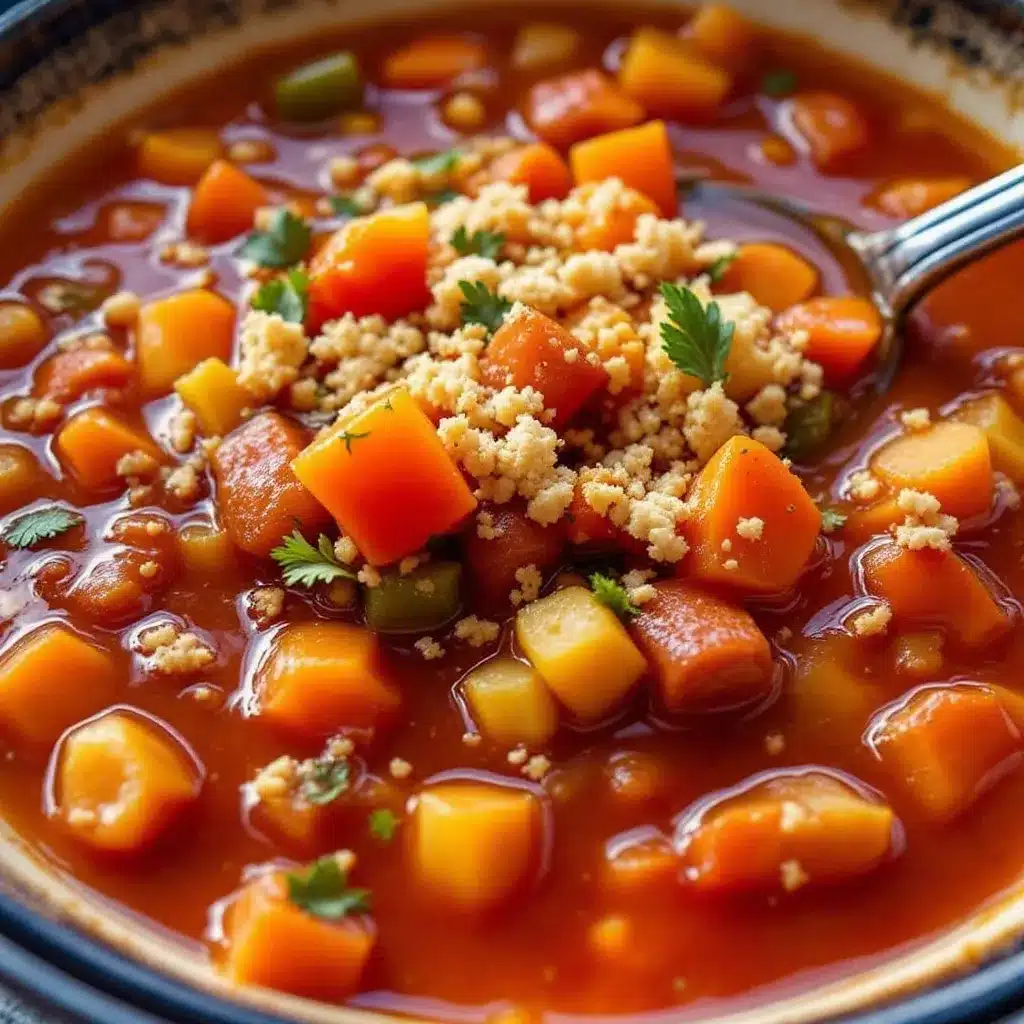
The broth is the real surprise here. It’s not watery or thin. It’s got this silky, almost velvety quality from the butternut squash breaking down just enough, and a savory depth that makes you wonder if there’s meat in it (there isn’t). The sweet potatoes stay tender without turning to mush, the kale keeps a little bite, and the herbs? They actually taste like something, not just background noise. This soup taught me that the slow cooker doesn’t have to be a flavor-killer. It just needs the right approach. And honestly, once you taste it, you’ll see why this one stuck.
Why You’ll Love This Recipe
This isn’t just another vegetable soup recipe. I’ve tested this thing about six times to get the texture and seasoning exactly right, and here’s what makes it stand out from every other fall soup you’ve tried.
- Set It and Forget It Comfort: About 15 minutes of prep work, then the slow cooker does everything. You can go run errands, clean the house, or just curl up with a book while dinner makes itself.
- Real Flavor, No Shortcuts: Most slow cooker vegetable soups taste flat and watery. This one uses a simple trick—sautéing the aromatics first—that builds a broth so rich you’ll swear it simmered on the stove all day.
- Fall Ingredients at Their Best: Butternut squash, sweet potatoes, apples, and kale come together in a way that feels seasonal without being fussy. It’s like a farmers market haul turned into a warm hug.
- Actually Filling Without Meat: The combination of sweet potatoes, white beans, and squash makes this soup hearty enough to be a main dish. My husband, who usually asks “where’s the chicken?” didn’t even notice it was missing.
- Budget-Friendly and Flexible: You can swap in whatever fall veggies you have on hand. This recipe works with what’s in your fridge, no special trips to the store required.
This is the kind of soup that makes you close your eyes after the first bite. It’s comfort food reimagined—healthier, easier, but with the same soul-soothing satisfaction that a good bowl of soup should have. Perfect for meal prep, cozy weeknights, or impressing guests without any stress.
What Ingredients You Will Need
This recipe uses simple, wholesome ingredients to deliver bold flavor and satisfying texture without the fuss. Most of these are pantry staples or easy fall finds at any grocery store.
For the Soup Base:
- 2 tablespoons olive oil (I use extra-virgin for better flavor, but regular works fine)
- 1 large yellow onion, diced (about 1.5 cups)
- 3 cloves garlic, minced (fresh is best here—don’t use the jarred stuff)
- 2 medium carrots, peeled and diced (adds natural sweetness)
- 2 celery stalks, diced (for that savory backbone)
- 1 teaspoon dried thyme
- 1 teaspoon dried rosemary
- 1/2 teaspoon smoked paprika (trust me on this one—it adds a subtle warmth)
- 1/4 teaspoon ground nutmeg (optional, but it really brings out the fall flavors)
- Salt and black pepper to taste
For the Vegetables:
- 1 medium butternut squash, peeled and cubed (about 3 cups—look for one that feels heavy for its size)
- 2 medium sweet potatoes, peeled and cubed (about 2 cups)
- 1 Granny Smith apple, peeled and diced (the tartness balances the sweetness of the squash)
- 1 can (15 oz) cannellini beans, drained and rinsed (adds protein and creaminess)
- 3 cups low-sodium vegetable broth (I prefer Pacific Foods brand for its clean flavor)
- 1 cup water
- 2 cups chopped kale, stems removed (curly kale holds up better than baby kale here)
For the Finishing Touch:
- 1 tablespoon apple cider vinegar (brightens everything at the end)
- Fresh parsley or thyme for garnish
- Grated Parmesan cheese (optional) (adds a salty, umami finish)
Ingredient Tips: For the best texture, use firm, fresh butternut squash rather than pre-cut cubes, which can be dry. If you can’t find cannellini beans, chickpeas or navy beans work great too. For a gluten-free option, this recipe is naturally gluten-free as written. Want to make it oil-free? Just sauté the aromatics in a few tablespoons of vegetable broth instead of olive oil.
Equipment Needed
You don’t need much for this recipe, which is part of the beauty. Here’s what you’ll need:
- 6-quart slow cooker (this size works perfectly for the full batch; a 5-quart will work but fill it almost to the top)
- Large skillet or sauté pan (for softening the aromatics before they go in the slow cooker)
- Sharp chef’s knife (peeling and cubing squash is much easier with a good knife—I use a 8-inch Wusthof)
- Vegetable peeler
- Cutting board
- Wooden spoon or spatula
- Measuring cups and spoons
Budget-Friendly Alternatives: If you don’t have a slow cooker, you can make this soup in a large Dutch oven on the stovetop. Just simmer everything for about 45 minutes to an hour until the vegetables are tender. No need for a fancy knife either—a good sharp paring knife will do the job for the squash.
Maintenance Tip: To keep your slow cooker in good shape, avoid using abrasive sponges on the ceramic insert. A little baking soda paste works wonders for stubborn stains.
Preparation Method
This recipe comes together in about 15 minutes of active prep, then the slow cooker handles the rest. Here’s the step-by-step:
- Sauté the aromatics (5 minutes): Heat the olive oil in a large skillet over medium heat. Add the diced onion and cook until softened, about 3 minutes, stirring occasionally. Add the minced garlic, carrots, and celery, and cook for another 2 minutes until fragrant. This step is non-negotiable—it builds the flavor base that makes the broth taste like it simmered all day.
- Season the base (1 minute): Stir in the dried thyme, rosemary, smoked paprika, nutmeg, and a generous pinch of salt and pepper. Cook for 30 seconds until the spices are fragrant. You’ll smell the difference immediately.
- Layer the vegetables in the slow cooker (3 minutes): Transfer the sautéed aromatics to your slow cooker. Add the cubed butternut squash, sweet potatoes, diced apple, and drained cannellini beans. Give everything a gentle stir to distribute the flavors.
- Add the liquid (1 minute): Pour in the vegetable broth and water. The liquid should just barely cover the vegetables—if it looks a little shy, add another 1/2 cup of water. Don’t overfill, or the soup will be thin.
- Slow cook (6-8 hours on low or 3-4 hours on high): Cover and cook on low for 6-8 hours or high for 3-4 hours. I prefer low and slow—it gives the flavors more time to meld together. The soup is ready when the sweet potatoes and squash are fork-tender but not falling apart.
- Add the kale and finish (5 minutes): About 20 minutes before serving, stir in the chopped kale. Replace the lid and let it cook just until the kale is wilted and tender, about 15-20 minutes. Stir in the apple cider vinegar—this brightens everything and balances the sweetness.
- Taste and adjust (2 minutes): Give the soup a taste. You’ll likely need more salt and pepper than you think—vegetable soups need a fair amount of seasoning. Add salt in small increments, stirring after each addition.
- Serve (2 minutes): Ladle into bowls and garnish with fresh parsley or thyme. A sprinkle of grated Parmesan adds a lovely salty finish if you’re not keeping it vegan.
Sensory Cues: When the soup is done, the broth should look slightly golden and opaque, not watery. The squash should yield easily to a fork but still hold its shape. The kale should be a deep, vibrant green, not olive-colored and mushy. If the soup smells more like raw vegetables than savory goodness, it needs more salt or a longer cook time.
My Personal Tip: I always taste the broth before adding the kale. If it tastes flat at that stage, I add another pinch of salt and a tiny splash of soy sauce (don’t knock it—it adds umami without changing the flavor profile). This little trick has saved many a bland batch.
Cooking Tips & Techniques
After making this soup about eight times (and messing it up a few times), here’s what I’ve learned:
Don’t skip the sauté step. I know it’s tempting to just dump everything in the slow cooker and walk away. I tried that once. The result was a soup that tasted like boiled vegetables and regret. That quick sauté builds the Maillard reaction—the browning that creates deep, savory flavor. It takes five minutes and makes all the difference.
Cut your vegetables the same size. This sounds basic, but it matters. If your sweet potato cubes are twice as big as your squash cubes, one will be mushy while the other is still crunchy. Aim for 1-inch cubes, and try to keep them uniform. I learned this the hard way after serving a bowl with some perfect pieces and some that were basically sweet potato mush.
Add the vinegar at the end. Acid is a finishing touch, not a cooking ingredient in this recipe. If you add the apple cider vinegar at the beginning, it will cook off and you’ll lose that bright, balancing note. Stir it in right before serving for the best effect.
Watch your liquid level. Vegetables release water as they cook, so the soup will seem more liquidy at the start than it will at the end. Don’t be tempted to add extra broth early on, or you’ll end up with a watery soup. If it’s too thick for your liking at the end, just stir in a splash of water or broth.
Season in layers. Add salt at the beginning (just a little), then taste and adjust at the end. Vegetables absorb salt differently depending on their age and variety, so what worked for one batch might not work for another. I’ve under-salted and over-salted this soup more times than I care to admit, and the fix is always the same: taste, adjust, taste again.
Let it rest. Like most soups, this one tastes even better the next day. The flavors continue to meld overnight. If you have time, make it a day ahead and reheat it gently. The difference is noticeable.
Variations & Adaptations
This recipe is forgiving, so feel free to make it your own. Here are some variations I’ve tried and loved:
Make It Heartier: Add 1 cup of cooked lentils or 8 ounces of sliced Italian sausage (cooked and drained) along with the vegetables. It turns this into a full meal that even the biggest eaters will love. I’ve done the lentil version for meal prep and it’s fantastic.
Switch Up the Vegetables: No butternut squash? Use a small sugar pumpkin or acorn squash instead. Swap the sweet potatoes for regular potatoes or parsnips. Add a chopped fennel bulb for a subtle licorice note that pairs beautifully with the apple. The key is keeping the total vegetable volume the same—about 5-6 cups total.
Try a Different Bean: Chickpeas, navy beans, or even red lentils (add them at the beginning, they’ll break down and thicken the broth) all work well. For a lower-carb option, skip the beans entirely and add extra kale or spinach.
Seasonal Swap: In spring, swap the squash and sweet potatoes for asparagus, peas, and new potatoes. Use fresh basil and oregano instead of thyme and rosemary. In summer, use zucchini, corn, and tomatoes. The technique stays the same—just the vegetables change.
Spice It Up: Add 1/2 teaspoon of red pepper flakes along with the dried herbs for a subtle kick. Or stir in a tablespoon of harissa paste at the end for a North African twist. I tried the harissa version last fall and it was a surprising hit.
Dairy-Free Creamy Version: Stir in 1/2 cup of full-fat coconut milk at the end for a creamy, dairy-free version. It adds a subtle richness without tasting like coconut. I’ve also used cashew cream with great results.
Serving & Storage Suggestions
This soup is versatile when it comes to serving. Here’s how I like to enjoy it:
Serving Temperature: Serve piping hot, straight from the slow cooker. If you’re reheating leftovers, warm them gently on the stovetop over medium-low heat, stirring occasionally. The microwave works too, but the stovetop preserves the texture better.
What to Serve With It: A crusty sourdough bread or a simple green salad with a lemon vinaigrette are my go-to pairings. For a heartier meal, serve it alongside my Easy Slow Cooker Honey Garlic Chicken—the sweet-savory combo is surprisingly good together. Or start the meal with my Easy Mediterranean Stuffed Mini Peppers with Feta for a complete fall spread.
Storage Instructions: Store leftovers in an airtight container in the refrigerator for up to 5 days. The flavors actually improve after a day or two. For longer storage, freeze the soup in individual portions for up to 3 months. Let it cool completely before freezing, and leave a little headroom in the container for expansion.
Reheating Tips: Thaw frozen soup overnight in the refrigerator, then reheat gently on the stovetop. If the soup seems too thick after reheating, stir in a splash of vegetable broth or water. The kale will soften more upon reheating, so don’t worry if it’s a bit more tender than the first day.
Flavor Development: This soup is one of those rare dishes that actually gets better with time. The herbs meld, the vegetables become more tender, and the broth deepens in flavor. I often make a double batch on Sunday and eat it for lunches all week—it’s that good on day four.
Nutritional Information & Benefits
This soup is as good for you as it is delicious. Here’s the estimated nutrition per serving (based on 6 servings):
- Calories: 245
- Protein: 8g
- Carbohydrates: 45g
- Fiber: 10g
- Fat: 6g
- Saturated Fat: 1g
- Sodium: 480mg (varies based on broth and added salt)
- Vitamin A: 380% DV (from the butternut squash and sweet potatoes)
- Vitamin C: 45% DV (from the kale and apple)
- Iron: 15% DV (from the kale and beans)
- Calcium: 12% DV (from the kale and beans)
Health Benefits: This soup is packed with immune-boosting vitamins (hello, vitamin A and C), heart-healthy fiber from the beans and vegetables, and antioxidants from the kale and squash. The sweet potatoes provide complex carbohydrates for steady energy, while the cannellini beans add plant-based protein and fiber to keep you full. It’s naturally gluten-free, dairy-free (if you skip the Parmesan), and vegan-friendly.
Dietary Considerations: This recipe is naturally vegetarian, vegan (without Parmesan), and gluten-free. It’s also nut-free and soy-free. If you’re watching sodium, use low-sodium broth and go easy on the added salt—the vegetables provide plenty of natural flavor.
Conclusion
This Cozy Slow Cooker Fall Harvest Vegetable Soup has become my go-to for those days when I need something warm, nourishing, and completely unfussy. It’s the kind of recipe that proves you don’t need complicated techniques or exotic ingredients to make something truly memorable. Just good vegetables, a little patience, and a slow cooker that does the heavy lifting.
What I love most about this soup is how adaptable it is. You can make it exactly as written, or you can riff on it based on what’s in your fridge or what you’re craving. That’s the beauty of a good recipe—it gives you a solid foundation and then trusts you to make it your own.
I’d love to hear how this soup turns out for you. Did you make any substitutions? Add something unexpected? Leave a comment below and let me know—I read every single one and I’m always looking for new ideas to try. And if you loved it, share it with a friend who needs a little comfort this season. Happy cooking, friends!
Frequently Asked Questions
Can I make this soup in an Instant Pot or on the stovetop?
Absolutely! For the Instant Pot, sauté the aromatics using the sauté function, then add the remaining ingredients (except the kale and vinegar). Pressure cook on high for 8 minutes, then do a quick release. Stir in the kale and let it wilt before adding the vinegar. For the stovetop, simmer everything (except the kale and vinegar) in a large pot for about 45 minutes until the vegetables are tender, then stir in the kale and cook for another 5 minutes.
Can I use frozen butternut squash instead of fresh?
Yes, frozen butternut squash works perfectly here. No need to thaw it first—just add it directly to the slow cooker. The cooking time may be slightly shorter, so start checking for tenderness at the 5-hour mark on low. Frozen squash tends to be a bit more watery, so you might want to reduce the added liquid by about 1/4 cup.
How do I prevent the soup from becoming too watery?
The main culprit is overfilling the slow cooker with liquid. Remember that vegetables release water as they cook, so start with just enough broth to barely cover the vegetables. Also, avoid adding extra liquid during cooking—if it looks too thick, resist the urge to add more until the very end. If your soup does end up watery, you can simmer it uncovered on the stovetop for 10-15 minutes to reduce the liquid.
Can I freeze this soup?
Yes, this soup freezes beautifully. Let it cool completely, then transfer to freezer-safe containers or zip-top bags. Leave about an inch of headroom for expansion. It will keep for up to 3 months. When you’re ready to eat it, thaw overnight in the refrigerator and reheat gently on the stovetop. The kale will be softer after freezing, but the flavor will still be delicious.
What can I use instead of kale?
Spinach, Swiss chard, or collard greens all work well as substitutes. Spinach will wilt much faster (add it in the last 5 minutes), while collard greens need a bit more time (add them about 30 minutes before serving). If you use chard, separate the stems from the leaves—add the stems with the other vegetables and the leaves at the end, just like the kale.
Pin This Recipe!
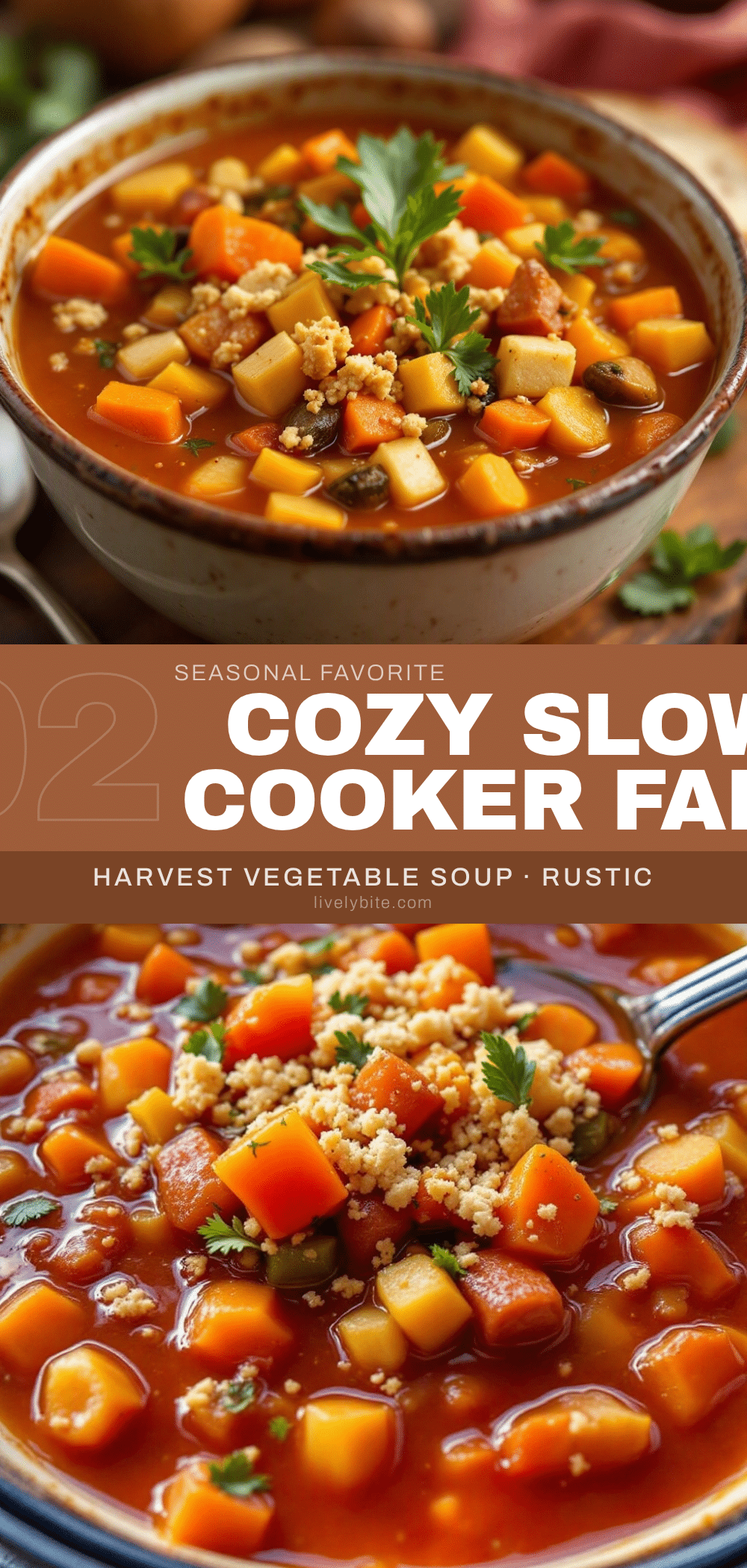
Cozy Slow Cooker Fall Harvest Vegetable Soup

A rich, earthy, and deeply comforting slow cooker vegetable soup featuring butternut squash, sweet potatoes, apples, and kale in a velvety broth. This set-it-and-forget-it recipe delivers real flavor without shortcuts, perfect for cozy fall days.
- Prep Time: 15 minutes
- Cook Time: 6-8 hours on low or 3-4 hours on high
- Total Time: 6 hours 15 minutes to 8 hours 15 minutes
- Yield: 6 servings 1x
- Category: Soup
- Cuisine: American
Ingredients
- 2 tablespoons olive oil
- 1 large yellow onion, diced (about 1.5 cups)
- 3 cloves garlic, minced
- 2 medium carrots, peeled and diced
- 2 celery stalks, diced
- 1 teaspoon dried thyme
- 1 teaspoon dried rosemary
- 1/2 teaspoon smoked paprika
- 1/4 teaspoon ground nutmeg (optional)
- Salt and black pepper to taste
- 1 medium butternut squash, peeled and cubed (about 3 cups)
- 2 medium sweet potatoes, peeled and cubed (about 2 cups)
- 1 Granny Smith apple, peeled and diced
- 1 can (15 oz) cannellini beans, drained and rinsed
- 3 cups low-sodium vegetable broth
- 1 cup water
- 2 cups chopped kale, stems removed
- 1 tablespoon apple cider vinegar
- Fresh parsley or thyme for garnish
- Grated Parmesan cheese (optional)
Instructions
- Sauté the aromatics: Heat the olive oil in a large skillet over medium heat. Add the diced onion and cook until softened, about 3 minutes, stirring occasionally. Add the minced garlic, carrots, and celery, and cook for another 2 minutes until fragrant.
- Season the base: Stir in the dried thyme, rosemary, smoked paprika, nutmeg, and a generous pinch of salt and pepper. Cook for 30 seconds until the spices are fragrant.
- Layer the vegetables in the slow cooker: Transfer the sautéed aromatics to your slow cooker. Add the cubed butternut squash, sweet potatoes, diced apple, and drained cannellini beans. Give everything a gentle stir to distribute the flavors.
- Add the liquid: Pour in the vegetable broth and water. The liquid should just barely cover the vegetables—if it looks a little shy, add another 1/2 cup of water. Don’t overfill, or the soup will be thin.
- Slow cook: Cover and cook on low for 6-8 hours or high for 3-4 hours. The soup is ready when the sweet potatoes and squash are fork-tender but not falling apart.
- Add the kale and finish: About 20 minutes before serving, stir in the chopped kale. Replace the lid and let it cook just until the kale is wilted and tender, about 15-20 minutes. Stir in the apple cider vinegar.
- Taste and adjust: Give the soup a taste. You’ll likely need more salt and pepper than you think—add salt in small increments, stirring after each addition.
- Serve: Ladle into bowls and garnish with fresh parsley or thyme. A sprinkle of grated Parmesan adds a lovely salty finish if you’re not keeping it vegan.
Notes
Don’t skip the sauté step—it builds the flavor base. Cut vegetables into uniform 1-inch cubes for even cooking. Add the apple cider vinegar at the end to brighten the soup. Season in layers, tasting and adjusting at the end. The soup tastes even better the next day.
Nutrition
- Serving Size: 1 serving (about 1.5
- Calories: 245
- Sugar: 12
- Sodium: 480
- Fat: 6
- Saturated Fat: 1
- Carbohydrates: 45
- Fiber: 10
- Protein: 8
Keywords: slow cooker vegetable soup, fall harvest soup, butternut squash soup, vegan soup, gluten-free soup, healthy soup, cozy soup