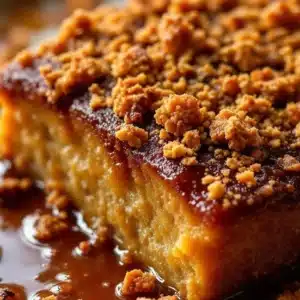
The farmer’s market had a mountain of butternut squash the second week of October, and I bought three of them without a plan. You know how that goes. They sat on my counter for a week, looking beautiful and slightly intimidating, while the weather turned from crisp to genuinely cold. Then my sister called and said she was stopping by in an hour. I stared at those squashes, then at the half-empty fridge, and something clicked. Roast the squash. Brown the butter. Hope for the best.
This wasn’t some meticulously planned recipe. It was a “what do I have and what can I do fast” kind of situation. I’d made plain butternut squash soup before, but it always felt like something was missing. That depth. That little bit of nutty, almost caramelized richness that makes you slow down while you eat. Then I remembered the sage in my fridge, the butter I always have, and the half-used bag of shallots. That’s when the cozy roasted butternut squash soup with sage brown butter idea was born. Honestly, I was just trying not to serve my sister sad takeout.
The first spoonful was a surprise. It wasn’t just good; it was the kind of good where you stop talking and just eat. The roasting brings out the squash’s natural sweetness, and the sage brown butter adds this warm, nutty, almost savory note that plain soup just doesn’t have. It felt like a happy accident. But it’s the kind of accident I’ve made on purpose ever since. This soup has become my go-to for quiet nights and unexpected guests. It’s proof that you don’t need a perfect plan to make something truly memorable. You just need a little trust in the process.
Why You’ll Love This Recipe
This cozy roasted butternut squash soup with sage brown butter isn’t just another fall recipe. It’s the one I keep coming back to, and I think you will too. Here’s why it works so well:
- Deep, Complex Flavor: Roasting the squash isn’t just a step—it’s the secret. It concentrates the sweetness and adds a caramelized edge that simmering can’t touch. The sage brown butter takes it over the top.
- Surprisingly Simple Ingredients: You don’t need anything fancy. Just squash, butter, sage, an onion, some broth, and a little cream. These are all things you can grab without a special trip.
- Perfect for Cozy Evenings: This soup is made for chilly nights. It’s the kind of meal that warms you from the inside out and makes you want to curl up on the couch. It’s also a great starter for a slow cooker honey garlic chicken meal prep bowl dinner.
- Naturally Gluten-Free and Vegetarian: It fits a lot of dietary needs without trying. Just skip the cream or use a plant-based version, and you’re good to go.
- Make-Ahead Friendly: The flavors actually get better after a day in the fridge. Make it on a Sunday, and you have amazing lunches all week.
What makes this different from other squash soups? It’s the technique. Blending roasted squash with that nutty, browned butter creates a texture and taste that feels luxurious without being heavy. It’s not just another soup; it’s the one that makes you close your eyes after the first bite. It’s comfort food reimagined—simpler, richer, and with the same soul-soothing satisfaction you crave when the weather turns.
What Ingredients You Will Need
This recipe uses simple, wholesome ingredients to deliver that bold, cozy flavor. Most are pantry staples or easy fall finds. The magic really comes from how they work together.
- Butternut Squash (1 large, about 3 pounds): This is the star of the show. Look for one that feels heavy for its size with a firm, tan skin. I prefer to buy pre-cut cubes from the store on busy weeks, but roasting a whole squash gives you the best flavor. You’ll need about 5-6 cups of cubed squash.
- Yellow Onion (1 medium, chopped): It adds a savory base that balances the squash’s sweetness. A sweet onion works great here too.
- Garlic (4 cloves, smashed): Roasted garlic becomes sweet and mellow. Don’t skip it; it adds a subtle depth that’s hard to place but easy to miss.
- Olive Oil (2 tablespoons): For roasting the squash and onion. Use a good quality one; it makes a difference.
- Vegetable Broth (4 cups): Use a low-sodium variety so you can control the salt. A good broth is the backbone of the soup.
- Unsalted Butter (4 tablespoons): This is for the sage brown butter. Using unsalted lets you control the final salt level perfectly.
- Fresh Sage Leaves (10-12 leaves): Don’t use dried here. Fresh sage is essential for that earthy, slightly peppery flavor that makes the brown butter sing.
- Heavy Cream (1/2 cup): This adds a velvety richness. You can substitute full-fat coconut milk for a dairy-free version.
- Salt and Black Pepper (to taste): Simple seasonings that let the squash and sage shine.
- Optional Garnishes: Toasted pumpkin seeds, a drizzle of cream, extra crispy sage leaves, or a pinch of red pepper flakes for heat.
Equipment Needed
You don’t need a professional kitchen for this one. Here’s what you’ll need to pull it off:
- Baking Sheet (1 large): For roasting the squash and onion. A rimmed sheet is best to catch any juices.
- Large Pot or Dutch Oven: A 5-6 quart pot works perfectly. I use my trusty enameled cast iron; it holds heat beautifully.
- Immersion Blender or Countertop Blender: An immersion blender is easier (and less cleanup), but a regular blender works just fine. Just blend in batches and be careful with the hot liquid.
- Small Skillet: For browning the butter and sage. A light-colored pan helps you see the butter change color.
- Sharp Knife and Cutting Board: For prepping the squash. A good chef’s knife makes the job much safer and easier.
- Wooden Spoon or Silicone Spatula: For stirring.
A vegetable peeler can also be helpful if you’re peeling the squash yourself. If you don’t have an immersion blender, don’t worry—a standard blender is a great alternative.
Preparation Method

Let’s get cooking. This process is straightforward, but each step builds on the last to create that deep, cozy flavor.
- Preheat and Prep the Squash: Preheat your oven to 400°F (200°C). Carefully peel the butternut squash with a vegetable peeler, cut it in half lengthwise, and scoop out the seeds. Cut the flesh into 1-inch cubes. You should have about 5-6 cups. Toss the cubes with the chopped onion, smashed garlic cloves, olive oil, and a good pinch of salt and pepper. Spread everything in a single layer on your baking sheet.
- Roast Until Golden: Roast for 30-35 minutes, flipping halfway through, until the squash is tender and the edges are starting to brown and caramelize. This is where the flavor builds. The squash should be easily pierced with a fork. Don’t rush this step; the caramelization is key.
- Simmer the Soup Base: Transfer the roasted squash, onion, and garlic to your large pot. Add the 4 cups of vegetable broth. Bring to a simmer over medium heat, then reduce the heat to low and let it gently bubble for 10 minutes. This allows the flavors to meld.
- Blend Until Silky: Remove the pot from the heat. Use your immersion blender to puree the soup directly in the pot until it’s completely smooth and velvety. If using a countertop blender, work in batches, filling the blender no more than halfway. Hold the lid down with a towel and start on low speed. Return the pureed soup to the pot.
- Make the Sage Brown Butter: While the soup simmers, make the magic. In your small skillet, melt the 4 tablespoons of butter over medium heat. Add the fresh sage leaves. Cook, swirling the pan often, for 3-5 minutes. The butter will foam, then the foam will subside, and you’ll see little brown specks form at the bottom. It will smell nutty and amazing. The sage leaves will become crispy. Immediately remove the pan from the heat so the butter doesn’t burn.
- Finish and Season: Stir the heavy cream into the blended soup. Then, pour in the sage brown butter, reserving a few crispy sage leaves for garnish. Stir well to combine. Taste and adjust seasoning with salt and pepper. You might need more than you think—the squash needs it.
- Serve and Garnish: Ladle the soup into bowls. Top with a few of the reserved crispy sage leaves, a sprinkle of toasted pumpkin seeds, and an extra drizzle of cream if you’re feeling fancy. Serve hot.
Cooking Tips & Techniques
I’ve made this soup more times than I can count, and I’ve learned a few things the hard way. Here are my best tips to make sure yours is perfect every time.
- Don’t Crowd the Pan: When roasting the squash, make sure the pieces are in a single layer on the baking sheet. If they’re piled on top of each other, they’ll steam instead of roast, and you won’t get that lovely caramelization. Use two sheets if you need to.
- Watch the Brown Butter Like a Hawk: Brown butter goes from perfect to burnt in about 15 seconds. Once you see the brown specks form and smell that nutty aroma, pull it off the heat immediately. Swirl the pan even after you remove it. I’ve ruined a batch by getting distracted, and it’s a sad, sad thing.
- Season in Layers: Don’t just salt at the end. Season the squash before roasting, and season the soup again after blending. Butternut squash is sweet and needs a good amount of salt to balance it. Taste as you go.
- Save Those Seeds: Don’t throw away the squash seeds! Toss them with a little oil and salt, and roast them on a separate pan while the squash cooks. They make an amazing, crunchy garnish for the soup.
- Blend Safely: Hot liquid expands in a blender. If using a countertop blender, let the soup cool for a few minutes before blending, and always remove the center cap from the lid to let steam escape. Cover the hole with a towel.
Variations & Adaptations
One of the best things about this soup is how easy it is to tweak. Here are a few ways to make it your own.
- Make It Vegan: Substitute the butter with a high-quality vegan butter or coconut oil for the brown butter. Use full-fat canned coconut milk instead of heavy cream. The coconut adds a subtle sweetness that works beautifully with the squash.
- Spice It Up: Add a pinch of red pepper flakes or a small, deseeded jalapeño to the roasting pan with the squash. The heat cuts through the richness of the brown butter perfectly. You could also add a pinch of smoked paprika for a deeper, smokier flavor.
- Add Some Apple: For a sweeter, more complex flavor, peel and cube one large apple (like Honeycrisp or Fuji) and roast it with the squash. It adds a lovely fruity note that pairs perfectly with the sage.
- Try a Different Squash: No butternut squash? No problem. This recipe works just as well with kabocha, buttercup, or even sugar pumpkin. The cooking time might vary slightly, so just check for tenderness.
- Make It a Meal: Stir in a cup of cooked white beans or shredded rotisserie chicken after blending to add protein and make it a heartier dinner. A simple side of crusty bread or a Mediterranean stuffed mini pepper is all you need.
Serving & Storage Suggestions
This soup is wonderful right away, but it’s also a champion of make-ahead meals. Here’s how to serve and store it.
Serving: Serve the soup piping hot. I love it with a generous swirl of cream and a few crispy sage leaves on top. Toasted pumpkin seeds or pine nuts add a wonderful crunch. A side of warm, crusty bread for dipping is non-negotiable in my house. For a special touch, serve it in small cups or mugs as a starter for a fall dinner party. It also pairs beautifully with a refreshing cucumber mint green tea cooler for a light lunch.
Storage: Let the soup cool completely to room temperature before storing. Transfer it to an airtight container. It will keep in the refrigerator for 4-5 days. The flavors actually meld and deepen overnight, so it might taste even better the next day.
Freezing: This soup freezes like a dream. Pour it into freezer-safe bags or containers, leaving a little headroom for expansion. It will keep for up to 3 months. Thaw overnight in the refrigerator before reheating.
Reheating: Reheat gently on the stovetop over medium-low heat, stirring occasionally. You can also reheat individual portions in the microwave. If the soup seems too thick after reheating, just stir in a splash of broth or water to thin it out.
Nutritional Information & Benefits
This soup isn’t just delicious; it’s packed with good-for-you ingredients. Here’s a quick look at what you’re getting in a serving (approximately 1.5 cups).
| Nutrient | Amount Per Serving |
|---|---|
| Calories | ~280 |
| Fat | 18g |
| Carbohydrates | 28g |
| Fiber | 6g |
| Protein | 4g |
| Vitamin A | Over 200% DV |
| Vitamin C | 35% DV |
Butternut squash is a powerhouse of Vitamin A, which is fantastic for your immune system and eye health. It’s also a great source of fiber, which keeps you full and happy. The sage in the brown butter isn’t just for flavor—it’s known for its antioxidant properties. This is a bowl of comfort that’s actually doing you some good. It’s naturally gluten-free and vegetarian, making it a great option for almost any table.
Conclusion
This cozy roasted butternut squash soup with sage brown butter has become a staple in my kitchen for a reason. It’s more than just a recipe; it’s a feeling. It’s the warmth of a good meal on a cold day, the satisfaction of making something beautiful from simple ingredients, and the joy of sharing it with people you love.
I encourage you to make it your own. Add a pinch of cayenne for heat, swap the cream for coconut milk, or pile on the toppings. The base is so forgiving and so delicious that you really can’t go wrong. It’s the kind of soup that makes you proud to say, “I made this.”
I would love to hear how it turns out for you! Please leave a comment below and let me know if you tried any fun variations. Share your photos with us—seeing your creations is the best part of this job. Until next time, happy cooking, and stay warm!
Frequently Asked Questions
Can I use frozen butternut squash for this soup?
Yes, you can! Frozen squash is a great shortcut. Just toss it directly on the baking sheet with the onion and garlic. You might need to roast it for an extra 10-15 minutes to get some caramelization, as it releases more water than fresh squash.
How do I make the soup thicker or thinner?
For a thicker soup, use less broth (start with 3 cups) or let it simmer uncovered for a few extra minutes after blending to reduce it. For a thinner soup, simply stir in more broth or water until it reaches your desired consistency.
Can I make the sage brown butter ahead of time?
You can, but it’s best fresh. If you make it ahead, the butter will solidify. Just reheat it gently in a small pan or in the microwave in short bursts before drizzling it over the soup. The crispy sage leaves will lose their crunch if stored, so make those fresh.
Is this soup spicy?
No, this recipe is not spicy at all. It’s rich, savory, and slightly sweet from the roasted squash. The sage brown butter adds a nutty, earthy flavor. If you want some heat, you can easily add red pepper flakes or a pinch of cayenne pepper.
Can I leave out the heavy cream?
Absolutely. The soup will still be delicious and creamy from the blended squash. You can substitute the cream with full-fat coconut milk for a dairy-free option, or simply leave it out entirely for a lighter soup. The texture will be slightly less velvety but still wonderful.
Pin This Recipe!
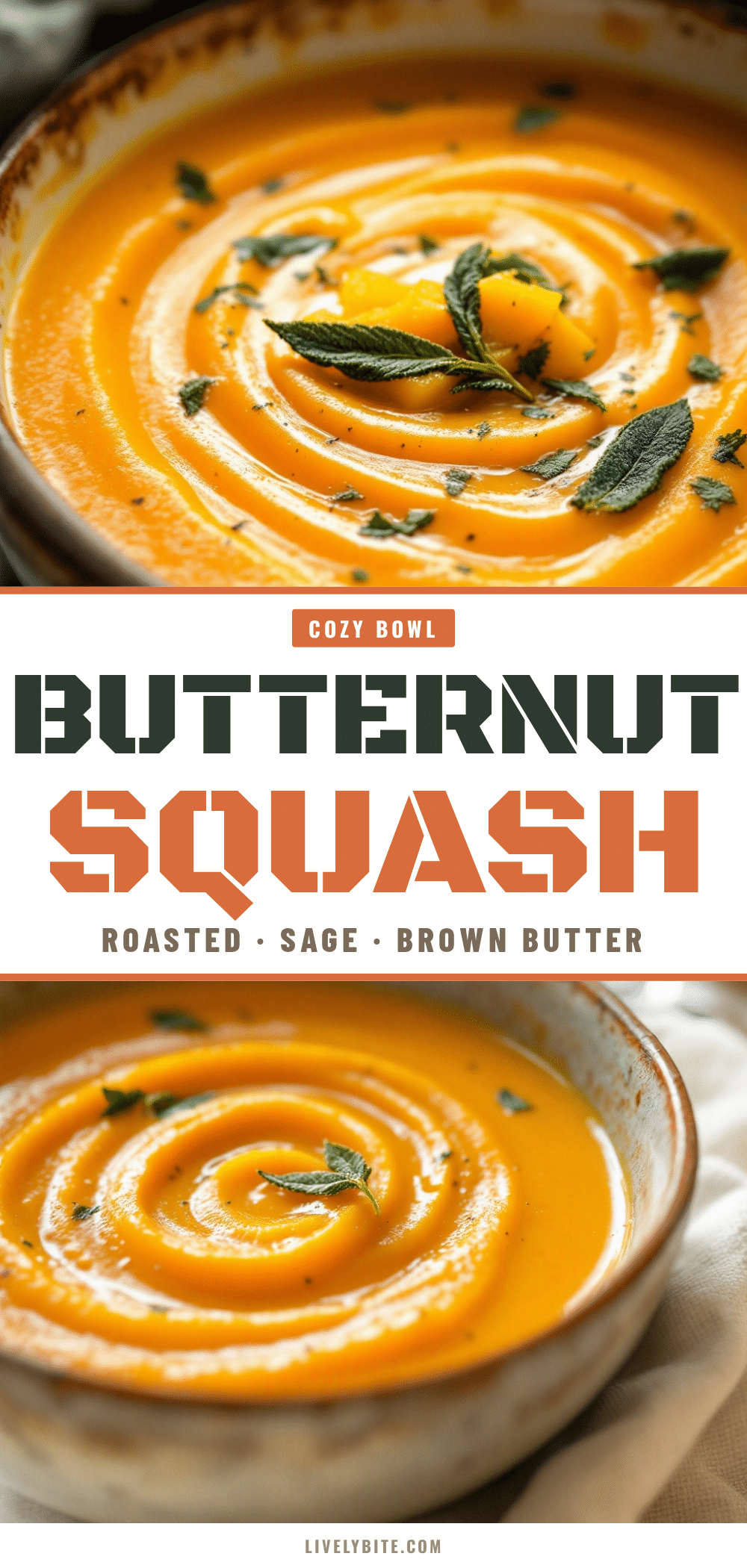
Cozy Roasted Butternut Squash Soup with Sage Brown Butter

This cozy roasted butternut squash soup with sage brown butter is a simple yet deeply flavorful fall recipe. Roasting the squash brings out its natural sweetness, while the nutty sage brown butter adds a warm, savory richness that makes this soup unforgettable.
- Prep Time: 15 minutes
- Cook Time: 45 minutes
- Total Time: 1 hour
- Yield: 4 servings 1x
- Category: Soup
- Cuisine: American
Ingredients
- 1 large butternut squash (about 3 pounds), peeled, seeded, and cut into 1-inch cubes (about 5–6 cups)
- 1 medium yellow onion, chopped
- 4 cloves garlic, smashed
- 2 tablespoons olive oil
- 4 cups low-sodium vegetable broth
- 4 tablespoons unsalted butter
- 10–12 fresh sage leaves
- 1/2 cup heavy cream
- Salt and black pepper to taste
- Optional garnishes: toasted pumpkin seeds, extra cream, crispy sage leaves, red pepper flakes
Instructions
- Preheat oven to 400°F (200°C). Peel butternut squash, cut in half lengthwise, scoop out seeds, and cut flesh into 1-inch cubes. Toss cubes with chopped onion, smashed garlic, olive oil, and a pinch of salt and pepper. Spread in a single layer on a baking sheet.
- Roast for 30-35 minutes, flipping halfway, until squash is tender and edges are caramelized.
- Transfer roasted squash, onion, and garlic to a large pot. Add vegetable broth. Bring to a simmer over medium heat, then reduce to low and cook for 10 minutes.
- Remove pot from heat. Use an immersion blender to puree soup until smooth. (If using a countertop blender, blend in batches, filling no more than halfway, and hold lid with a towel.)
- While soup simmers, make sage brown butter: In a small skillet, melt butter over medium heat. Add sage leaves. Cook, swirling often, for 3-5 minutes until butter foams, then subsides, and brown specks form. Remove from heat immediately.
- Stir heavy cream into blended soup. Pour in sage brown butter, reserving a few crispy sage leaves for garnish. Stir well. Season with salt and pepper to taste.
- Ladle soup into bowls. Garnish with reserved crispy sage leaves, toasted pumpkin seeds, and an extra drizzle of cream if desired. Serve hot.
Notes
Don’t crowd the pan when roasting; use two sheets if needed. Watch brown butter carefully as it can burn quickly. Season in layers—salt the squash before roasting and adjust after blending. Save squash seeds to roast for garnish. For safe blending, let soup cool slightly and remove center cap of blender lid to release steam.
Nutrition
- Serving Size: 1.5 cups
- Calories: 280
- Sugar: 8
- Sodium: 480
- Fat: 18
- Saturated Fat: 10
- Carbohydrates: 28
- Fiber: 6
- Protein: 4
Keywords: butternut squash soup, sage brown butter, fall soup, roasted squash soup, easy soup recipe, gluten-free soup, vegetarian soup