My neighbor actually texted me a photo of her empty plate last November with the caption, “I licked it. No shame.” That was the moment I knew this recipe was a keeper. Not because my feelings were validated by an adult acting like a toddler, but because she is the kind of person who usually picks at her food and never finishes anything. She finished this. She asked for the recipe the next day and has made it three times since, which is honestly more times than I have made it myself.
I was not trying to create a showstopper that night. I had a lonely acorn squash sitting on my counter, some leftover quinoa in the fridge, and a bottle of maple syrup that was almost empty. I just wanted something warm, something that would make my tiny kitchen smell like fall without requiring a trip to the store. The maple syrup was the anchor. I figured if I sweetened the quinoa enough, even my skeptical self would be happy. And honestly? It worked better than I expected. The squash gets all tender and caramelized on the edges, and the filling is this savory-sweet situation with pecans and dried cranberries that just works. It is cozy without being heavy. It is the kind of meal that makes you want to light a candle and sit down slowly.
I call it “cozy” because that is exactly what it feels like to eat it. It is not a fancy dinner party dish, though you could absolutely serve it at one. It is a Tuesday night meal when you need something that feels like a hug. This is the recipe that made me realize stuffed squash does not have to be complicated to be memorable. It just has to be honest.
Why You Will Love This Recipe
I have tested this recipe about seven times now, and I can tell you with confidence that it hits every single note you want in a fall meal. It is not just another stuffed squash recipe—it is the one that makes you forget you are eating vegetables for dinner.
- Quick & Easy: This comes together in about 45 minutes, and most of that is hands-off oven time. You can prep the filling while the squash roasts, which makes it perfect for a weeknight when you are tired but still want something homemade.
- Simple Ingredients: You probably already have most of these in your pantry. Quinoa, maple syrup, pecans, dried cranberries, olive oil, and basic spices. No fancy grocery trips required.
- Perfect for Fall Gatherings: This dish looks impressive on a table, but it is actually low-stress to make. It is great for Thanksgiving, Friendsgiving, or just a cozy Sunday dinner when you want to feel like you have your life together.
- Crowd-Pleaser: I have served this to vegetarians, meat-eaters, and picky kids. The maple flavor and the tender squash win everyone over. My neighbor licked her plate, remember?
- Unbelievably Delicious: The combination of sweet maple syrup, nutty quinoa, crunchy pecans, and soft roasted squash is honestly next-level. It is comfort food that feels good to eat.
What makes this recipe different from other stuffed squash recipes is the balance. A lot of versions are either too sweet or too savory, and they miss the mark. I spent time getting the maple-to-savory ratio just right so that every bite tastes intentional. The quinoa is not dry, the squash is not watery, and the whole thing comes together like it was meant to be. It is the kind of meal that makes you close your eyes after the first bite. I am not being dramatic—I have watched people do it.
What Ingredients You Will Need
This recipe uses simple, wholesome ingredients to deliver bold flavor and satisfying texture without the fuss. Most of these are pantry staples, which means you can make this on a whim without a special shopping trip.
- 2 medium acorn squashes (look for ones that feel heavy for their size and have firm, unblemished skin)
- 1 cup quinoa, rinsed (I prefer white quinoa for its fluffier texture, but tri-color works too)
- 2 cups vegetable broth or water (broth adds more flavor, but water is fine in a pinch)
- 1/3 cup pure maple syrup, plus extra for drizzling (use the real stuff—not pancake syrup. I like Grade A for its lighter flavor)
- 1/2 cup pecans, roughly chopped (toast them lightly for extra crunch)
- 1/2 cup dried cranberries (unsweetened if you prefer less sugar, but the sweetened kind are great too)
- 1 small yellow onion, diced
- 2 cloves garlic, minced
- 3 tablespoons olive oil, divided
- 1 teaspoon ground cinnamon
- 1/2 teaspoon ground nutmeg
- 1/2 teaspoon salt, plus more to taste
- 1/4 teaspoon black pepper
- 2 tablespoons fresh sage, chopped (optional but highly recommended)
- Fresh parsley, for garnish
The acorn squash is the star here, so choose them carefully. Look for ones with a deep green color and orange patches—that orange color means they are ripe and sweet. If you can only find the all-green ones, they will still work, they just might need an extra few minutes of roasting.
For the quinoa, I recommend rinsing it thoroughly before cooking. Quinoa has a natural coating called saponin that can taste bitter if you do not wash it off. I just put mine in a fine-mesh strainer and run cold water over it for about 30 seconds while rubbing the grains together with my fingers. Easy.
If you want to make this gluten-free, it already is! Quinoa is naturally gluten-free, and none of the other ingredients contain gluten. Just double-check your vegetable broth if you are sensitive. If you need a nut-free option, swap the pecans for pumpkin seeds or sunflower seeds. They add a similar crunch without the allergen.
Equipment Needed
You do not need a lot of fancy equipment for this recipe, which is part of why I love it. Here is what you will need:
- Baking sheet (a rimmed one works best to catch any drips from the squash)
- Parchment paper or aluminum foil (for easy cleanup)
- Medium saucepan (for cooking the quinoa)
- Large skillet (for sautéing the onion and garlic)
- Sharp knife (for cutting the squash in half—this is the hardest part of the whole recipe)
- Large spoon (for scooping out the seeds)
- Mixing bowl (for combining the filling)
- Measuring cups and spoons
If you do not have a large skillet, you can use a medium saucepan for the filling. Just be careful not to overcrowd it. For the baking sheet, any size will work as long as the squash halves fit without touching each other too much. I have used a 9×13 baking dish in a pinch, and it worked fine—the squash just needed a few extra minutes to roast because the sides were closer together.
One tip: invest in a good chef’s knife if you do not already have one. Cutting acorn squash can be tough because the skin is thick and the shape is awkward. A sharp knife makes the job safer and easier. I learned this the hard way after nearly slicing my finger open with a dull blade. Not fun.
Preparation Method
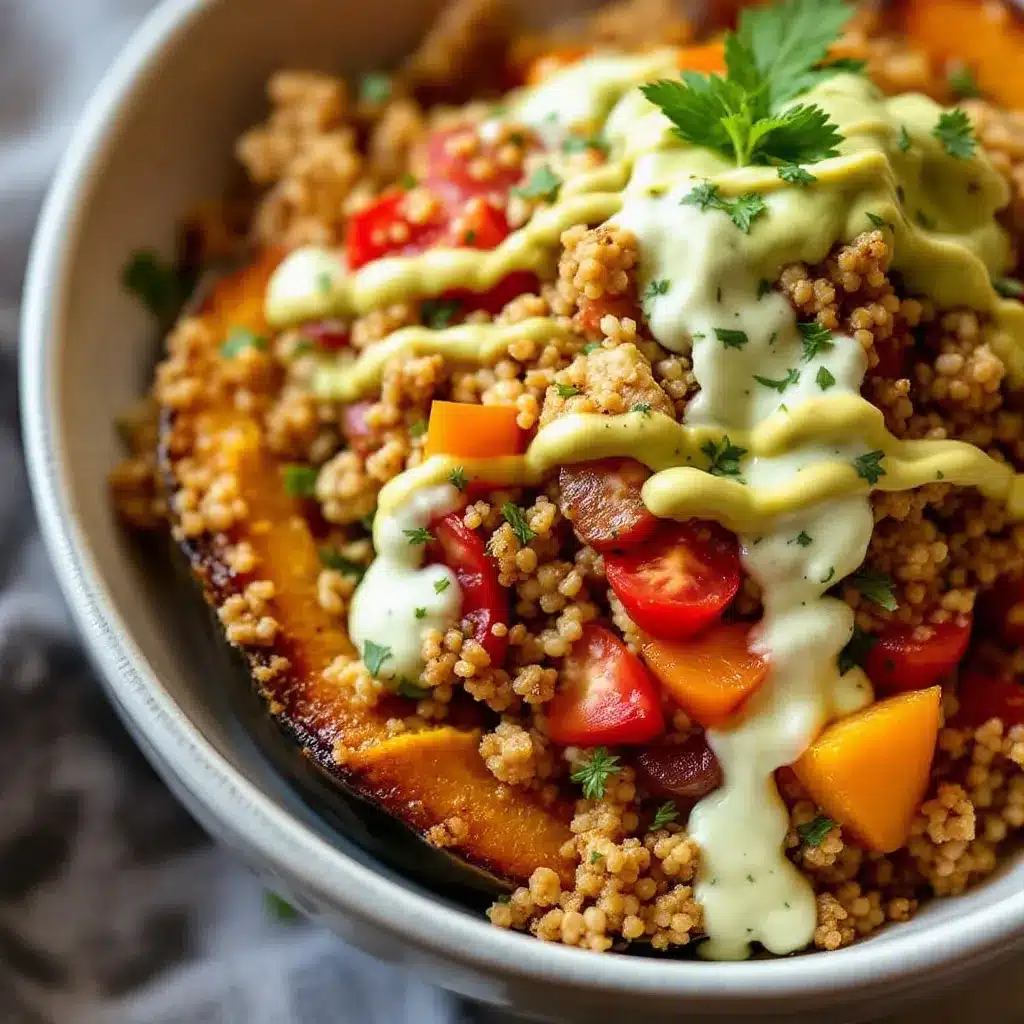
Let me walk you through this step by step. I have included time estimates and sensory cues so you know exactly what to look for at each stage.
- Preheat your oven to 400°F (200°C). Line a baking sheet with parchment paper or foil for easy cleanup. This is one of those small steps that saves you from scrubbing later, and I am all about that.
- Prepare the acorn squashes. Using a sharp knife, carefully cut each acorn squash in half from stem to tip. Scoop out the seeds and stringy pulp with a large spoon. You can save the seeds and roast them later if you want—they make a great snack—but for this recipe, just discard them. Brush the cut sides and cavities with 1 tablespoon of olive oil, then season with a pinch of salt and pepper. Place the squash halves cut-side down on the prepared baking sheet. Roast for 25-30 minutes, until the flesh is tender when pierced with a fork. The squash should look slightly caramelized on the edges and smell sweet and nutty.
- Cook the quinoa while the squash roasts. In a medium saucepan, combine the rinsed quinoa and vegetable broth (or water). Bring to a boil over high heat, then reduce the heat to low, cover, and simmer for 15 minutes. The quinoa is done when it has absorbed all the liquid and looks fluffy with little spiral rings visible. Remove from heat and let it sit, covered, for 5 minutes. Fluff with a fork.
- Sauté the aromatics. While the quinoa cooks, heat 1 tablespoon of olive oil in a large skillet over medium heat. Add the diced onion and cook for 4-5 minutes, until translucent and starting to brown at the edges. Add the minced garlic and cook for another 30 seconds, until fragrant. You should be able to smell the garlic immediately—that is how you know it is ready. Be careful not to burn it, or it will taste bitter.
- Toast the pecans. Push the onion and garlic to one side of the skillet and add the chopped pecans to the empty space. Toast them for 2-3 minutes, stirring occasionally, until they smell nutty and are slightly darker in color. This step is optional, but I highly recommend it. Toasted pecans have a depth of flavor that raw ones just do not have.
- Combine the filling. Add the cooked quinoa, dried cranberries, maple syrup, cinnamon, nutmeg, salt, pepper, and fresh sage (if using) to the skillet. Stir everything together until well combined. Taste the filling and adjust the seasoning if needed. It should be slightly sweet from the maple syrup, with warm spices and a hint of savory from the onion and garlic. If it tastes too sweet, add a pinch more salt. If it is not sweet enough, drizzle in a little more maple syrup.
- Stuff the squash. Once the squash halves are tender, carefully flip them over using tongs or a spatula. They will be hot, so be careful. Divide the quinoa filling evenly among the four squash halves, mounding it slightly in the center. Drizzle the remaining 1 tablespoon of olive oil over the tops, and add a light drizzle of extra maple syrup if you want a sweeter finish.
- Bake the stuffed squash. Return the baking sheet to the oven and bake for another 10-15 minutes, until the filling is heated through and the tops are slightly golden. The squash should be very tender by now, almost buttery in texture.
- Garnish and serve. Remove from the oven and let the squash rest for 5 minutes. Sprinkle with fresh parsley for a pop of color and a fresh flavor contrast. Serve warm.
One thing I learned from my testing: do not overstuff the squash. I made that mistake the first time, and the filling spilled out everywhere during baking. It was still delicious, but it looked messy. Leave a little room at the top, and you will be fine.
Cooking Tips & Techniques
I have made this recipe enough times to know where things can go wrong, and I want to save you from my mistakes. Here are the tips that make a real difference.
Cut the squash safely. Acorn squash is round and hard, which makes it tricky to cut. The best method I have found is to poke a few holes in the squash with a fork and microwave it for 2-3 minutes first. This softens the skin just enough to make cutting easier. Then, place the squash on a damp paper towel to keep it from sliding around, and use a sharp chef’s knife to cut through it. Go slow and keep your fingers out of the way.
Do not skip rinsing the quinoa. I know it is an extra step, but it makes a real difference. Unrinsed quinoa can taste bitter and soapy, and that bitterness will ruin the whole dish. I learned this the hard way when I was in a hurry and skipped the rinse. The filling tasted off, and I could not figure out why. Now I never skip it.
Toast your spices. If you have a minute, toast the cinnamon and nutmeg in the skillet with the onion and garlic for about 10 seconds before adding the quinoa. This releases their essential oils and makes them more aromatic. It is a small step that adds a lot of depth.
Watch the maple syrup. Maple syrup burns easily, so keep an eye on the squash during the final bake. If you notice the tops getting too dark, cover the squash loosely with foil for the last 5 minutes. This happened to me once, and the burnt sugar taste was not pleasant.
Make it ahead. You can prepare the filling up to two days in advance and store it in the fridge. When you are ready to eat, stuff the squash and bake as directed. You may need to add 5-10 minutes to the final bake time since the filling will be cold.
Variations & Adaptations
One of the best things about this recipe is how easy it is to adapt. I have tried several variations, and they all turned out great. Here are some ideas to make it your own.
Vegan & Dairy-Free: This recipe is already vegan and dairy-free as written, so no changes needed. Just make sure your vegetable broth is vegan-friendly (most are).
Protein-Packed Version: Add 1 cup of cooked chickpeas or white beans to the quinoa filling for extra protein and fiber. I have done this several times, and it makes the dish even more satisfying. Just stir them in with the quinoa and other ingredients.
Spicy Maple Version: Add 1/4 teaspoon of cayenne pepper or red pepper flakes to the filling for a sweet-and-spicy kick. The heat contrasts beautifully with the maple syrup and makes the dish more exciting. I tried this on a whim one night, and it quickly became my favorite version.
Grain Swap: If you do not have quinoa, you can use cooked farro, brown rice, or even couscous. Each grain will give the filling a different texture, but they all work. Farro adds a chewy, nutty quality that I really like.
Seasonal Add-Ins: In the fall, add 1/2 cup of diced apple or pear to the filling for extra sweetness and texture. In the winter, try adding roasted Brussels sprouts or kale. In the spring, fresh herbs like thyme or rosemary are lovely.
Nut-Free Option: Swap the pecans for pumpkin seeds or sunflower seeds. They add a similar crunch without the allergen. I have made this for a friend with a nut allergy, and she loved it.
Serving & Storage Suggestions
This dish is best served warm, straight from the oven. The squash is tender, the filling is hot, and everything is perfectly cozy. Here is how to serve and store it.
Serving Temperature: Serve the stuffed squash warm, but not piping hot. Let it rest for 5 minutes after baking so the flavors settle and the filling holds together better. A little fresh parsley on top adds color and a fresh note that balances the richness.
Complementary Dishes: This stuffed squash pairs beautifully with a simple green salad dressed with lemon vinaigrette. The acidity cuts through the sweetness of the maple syrup. It also goes well with roasted vegetables like lemon herb salmon if you want to add a protein. For a heartier meal, serve it alongside a bowl of soup or some crusty bread.
Storage: Store leftover stuffed squash in an airtight container in the refrigerator for up to 4 days. The squash will soften more over time, but the flavor actually gets better as the filling sits. I have eaten this cold straight from the fridge, and it is still delicious.
Reheating: To reheat, place the stuffed squash on a baking sheet and warm it in a 350°F (175°C) oven for 10-15 minutes, until heated through. You can also microwave it for 1-2 minutes, but the squash will be softer and less firm. If you are in a hurry, the microwave works fine.
Freezing: You can freeze the stuffed squash for up to 3 months. Wrap each half individually in plastic wrap, then place them in a freezer-safe bag. To reheat, thaw in the refrigerator overnight, then bake at 350°F (175°C) for 20-25 minutes. The texture will be slightly softer, but the flavor will still be great.
I have noticed that the flavors develop more after a day in the fridge. The maple syrup soaks into the quinoa, and the spices become more pronounced. If you can, make this a day ahead and reheat it. It is even better the next day.
Nutritional Information & Benefits
This recipe is packed with nutrients that make it a smart choice for a wholesome meal. Here is a rough estimate of the nutritional values per serving (one stuffed squash half):
| Nutrient | Amount |
|---|---|
| Calories | ~380 |
| Protein | 9g |
| Carbohydrates | 58g |
| Fiber | 8g |
| Sugar | 22g |
| Fat | 14g |
| Vitamin A | 15% DV |
| Vitamin C | 20% DV |
| Iron | 15% DV |
| Magnesium | 20% DV |
Acorn squash is rich in vitamin A and vitamin C, which support immune health and healthy skin. Quinoa is a complete protein, meaning it contains all nine essential amino acids, making it an excellent choice for plant-based eaters. Pecans provide healthy fats and magnesium, which is important for muscle function and energy production. The dried cranberries add antioxidants and a touch of natural sweetness.
This recipe is naturally gluten-free, dairy-free, and vegan. It is also relatively low in saturated fat and high in fiber, which helps keep you full and satisfied. If you are watching your sugar intake, you can reduce the maple syrup to 1/4 cup or use a sugar-free alternative. The squash itself is naturally sweet, so you will not miss it.
Conclusion
This cozy maple stuffed acorn squash with quinoa is the kind of recipe that makes you feel good about what you are eating. It is warm, satisfying, and full of fall flavors that do not require hours in the kitchen. The maple syrup adds just the right amount of sweetness, the quinoa keeps it hearty, and the pecans and cranberries add texture and pops of flavor. It is a complete meal in one dish, and it looks beautiful on the table.
I love this recipe because it feels like a win every time I make it. It is impressive enough for guests but simple enough for a regular weeknight. It is healthy without feeling like a sacrifice. And honestly, it just tastes really, really good. I hope you give it a try and make it your own. Add your favorite spices, swap in different nuts, or serve it with a side of your choice. The possibilities are endless, and that is what makes cooking fun.
If you make this recipe, I would love to hear about it. Leave a comment below and let me know how it turned out, or share your own variations. And if you are looking for more cozy fall recipes, check out the full recipe collection for more inspiration. Happy cooking!
Frequently Asked Questions
Can I use butternut squash instead of acorn squash?
Yes, absolutely. Butternut squash works well in this recipe, but you will need to adjust the cooking time. Butternut squash is denser and takes longer to roast, so give it an extra 10-15 minutes in the oven. You can also cut it into halves or large chunks and stuff them the same way.
Can I make this recipe ahead of time for a dinner party?
Yes, you can prepare the filling up to two days in advance and store it in the fridge. Roast the squash halves ahead of time too, then stuff and bake them just before serving. This makes the final assembly quick and stress-free, which is perfect for entertaining.
Is this recipe suitable for meal prep?
Definitely. This stuffed squash reheats beautifully and keeps well in the fridge for up to 4 days. You can make a batch on Sunday and enjoy it for lunches or dinners throughout the week. Just store each half separately in an airtight container for easy grab-and-go meals.
Can I freeze the stuffed squash?
Yes, you can freeze it for up to 3 months. Wrap each stuffed squash half individually in plastic wrap, then place them in a freezer-safe bag. To reheat, thaw in the refrigerator overnight and bake at 350°F (175°C) for 20-25 minutes. The texture will be slightly softer, but the flavor will still be excellent.
What can I use instead of quinoa?
If you do not have quinoa, you can use cooked farro, brown rice, couscous, or even millet. Each grain will give the filling a different texture, but they all work well. Farro adds a chewy, nutty quality that I personally love. Just adjust the cooking time based on the grain you choose.
Pin This Recipe!
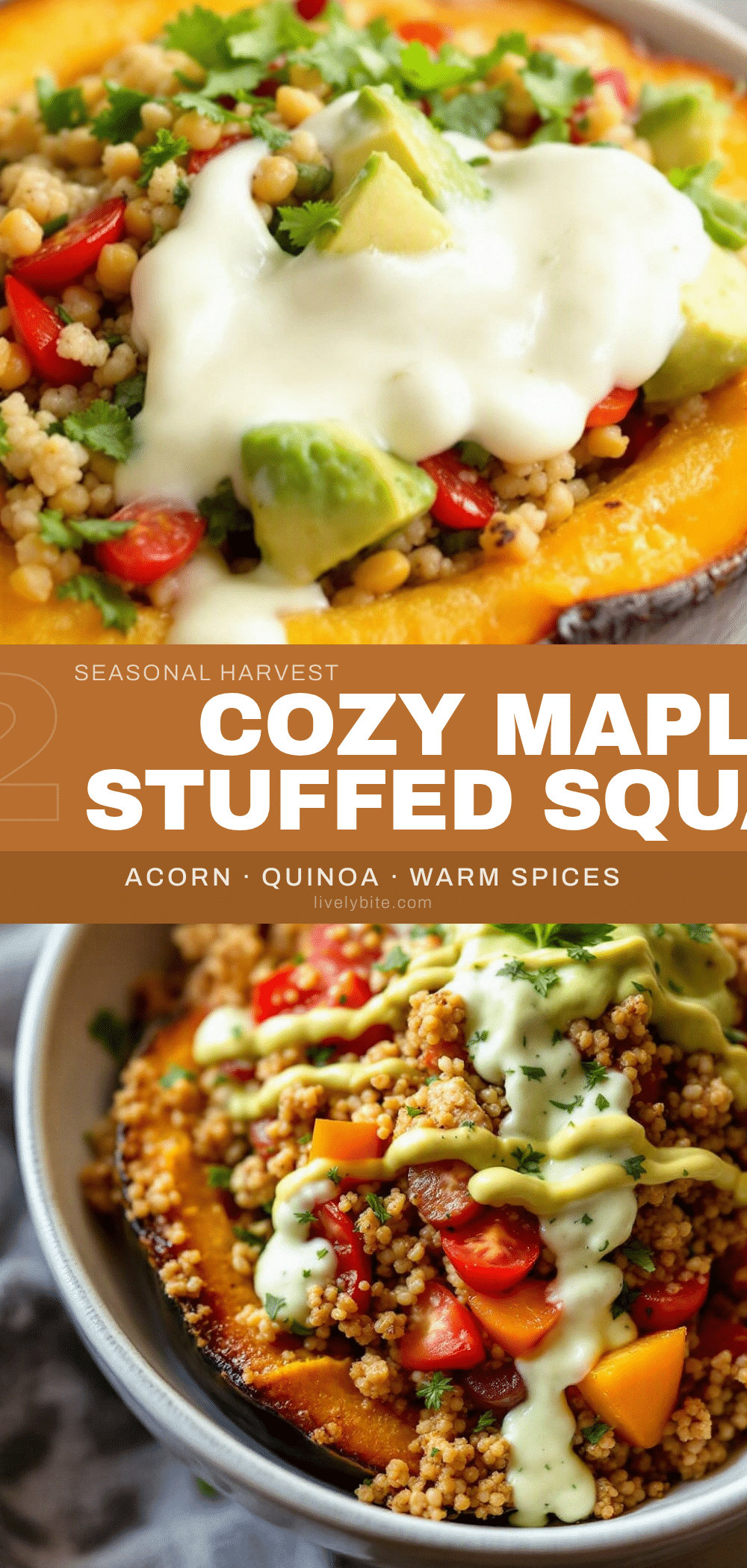
Cozy Maple Stuffed Acorn Squash with Quinoa

A warm and satisfying fall meal featuring tender roasted acorn squash filled with a savory-sweet quinoa mixture, maple syrup, pecans, and dried cranberries. Perfect for weeknights or holiday gatherings.
- Prep Time: 15 minutes
- Cook Time: 45 minutes
- Total Time: 1 hour
- Yield: 4 servings 1x
- Category: Main Course
- Cuisine: American
Ingredients
- 2 medium acorn squashes
- 1 cup quinoa, rinsed
- 2 cups vegetable broth or water
- 1/3 cup pure maple syrup, plus extra for drizzling
- 1/2 cup pecans, roughly chopped
- 1/2 cup dried cranberries
- 1 small yellow onion, diced
- 2 cloves garlic, minced
- 3 tablespoons olive oil, divided
- 1 teaspoon ground cinnamon
- 1/2 teaspoon ground nutmeg
- 1/2 teaspoon salt, plus more to taste
- 1/4 teaspoon black pepper
- 2 tablespoons fresh sage, chopped (optional)
- Fresh parsley, for garnish
Instructions
- Preheat oven to 400°F (200°C). Line a baking sheet with parchment paper or foil.
- Cut each acorn squash in half from stem to tip. Scoop out seeds and stringy pulp. Brush cut sides and cavities with 1 tablespoon olive oil; season with salt and pepper. Place cut-side down on baking sheet. Roast 25-30 minutes until tender.
- Meanwhile, in a medium saucepan, combine rinsed quinoa and vegetable broth. Bring to a boil, reduce heat to low, cover, and simmer 15 minutes. Remove from heat, let sit covered 5 minutes, then fluff with a fork.
- While quinoa cooks, heat 1 tablespoon olive oil in a large skillet over medium heat. Add onion and cook 4-5 minutes until translucent. Add garlic and cook 30 seconds until fragrant.
- Push onion and garlic to one side of skillet. Add pecans to empty space and toast 2-3 minutes until fragrant.
- Add cooked quinoa, dried cranberries, maple syrup, cinnamon, nutmeg, salt, pepper, and sage (if using) to skillet. Stir to combine. Adjust seasoning to taste.
- Once squash is tender, carefully flip halves over. Divide quinoa filling evenly among the four halves, mounding slightly. Drizzle remaining 1 tablespoon olive oil over tops; add extra maple syrup if desired.
- Return baking sheet to oven and bake 10-15 minutes until filling is heated through and tops are golden.
- Remove from oven, let rest 5 minutes. Garnish with fresh parsley and serve warm.
Notes
For easier cutting, microwave the squash for 2-3 minutes to soften the skin. Do not skip rinsing the quinoa to avoid bitterness. Toast spices briefly for more depth. If tops brown too quickly, cover loosely with foil. Filling can be made up to 2 days ahead.
Nutrition
- Serving Size: 1 stuffed squash hal
- Calories: 380
- Sugar: 22
- Sodium: 480
- Fat: 14
- Saturated Fat: 2
- Carbohydrates: 58
- Fiber: 8
- Protein: 9
Keywords: stuffed acorn squash, maple quinoa, fall recipe, vegetarian, vegan, gluten-free, Thanksgiving side dish