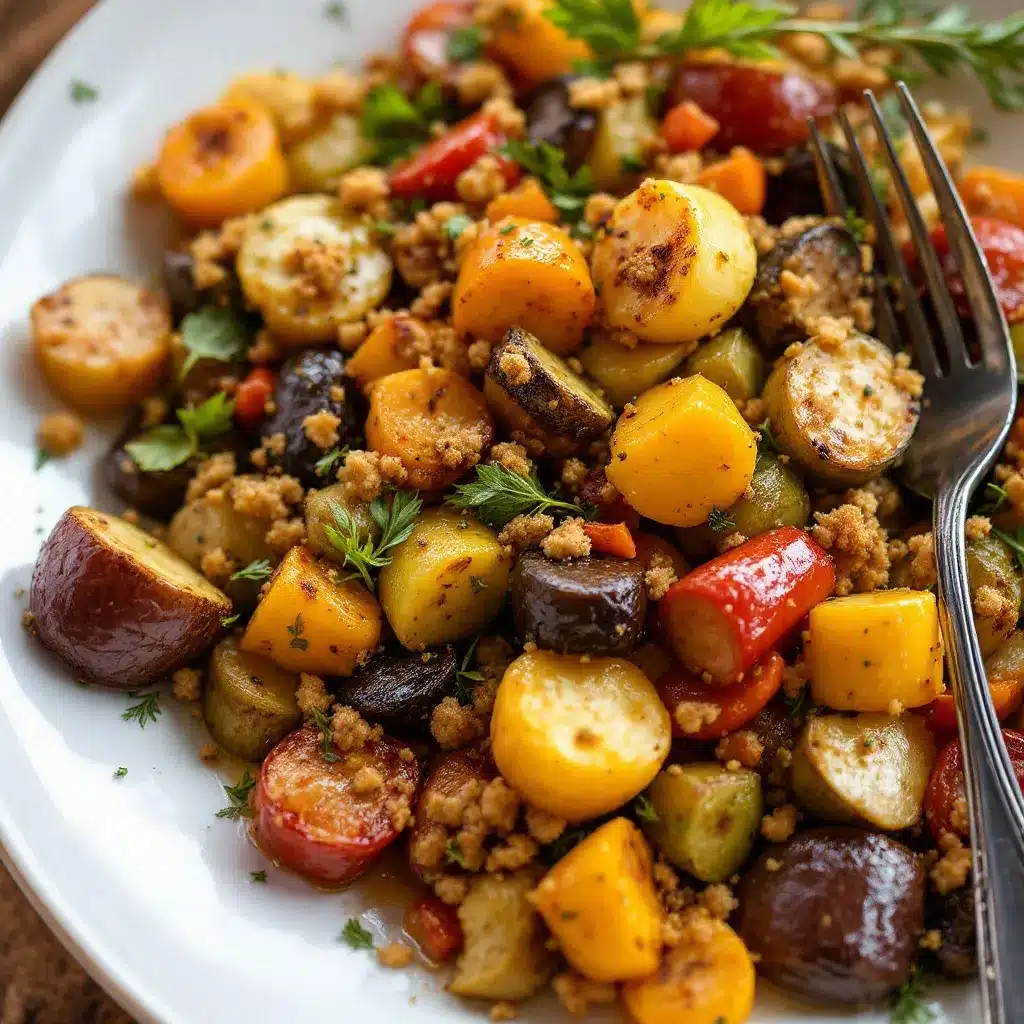
I figured roasted vegetables would just be soft, sad piles of brown mush by the time they hit the table. It took about twenty minutes for that assumption to fall apart completely, mostly because I was too busy watching the oven door to notice the magic happening inside. The smell hit me first—a sharp, piney burst of rosemary and thyme that cut through the heavy, buttery air of the Thanksgiving kitchen. I had dumped carrots, parsnips, and Brussels sprouts into a baking sheet with more olive oil than I probably should have, expecting a mediocre side dish to fill the gap between the turkey and the mashed potatoes.
Instead, I got caramelized edges that crisped up in the hot oven, turning humble root vegetables into something that actually competed with the main course. You know how it is when you stop trying to follow every rule and just let the heat do its thing? That is exactly what happened here. The herbs didn’t just sit on top; they baked into the vegetables, creating a savory crust that made me forget about the dry turkey entirely. I honestly didn’t plan on this becoming the star of the meal, but one bite of a perfectly charred Brussels sprout changed my mind.
It wasn’t about fancy techniques or expensive ingredients. It was about getting the temperature right and not being afraid to let things get a little brown. I realized that most people overthink side dishes, worrying about them being too healthy or too bland. This medley proved that you can have flavor and texture without sacrificing the comfort factor. The contrast between the sweet parsnips and the earthy sage was something I hadn’t expected, and now I find myself making it year after year. It stuck because it was simple, reliable, and actually delicious, not just an afterthought on the plate.
Why You’ll Love This Recipe
This isn’t just another vegetable side dish that gets pushed to the edge of the plate. It is the kind of recipe that changes how people look at their Thanksgiving spread. I have tested dozens of versions over the years, from steamed broccoli to glazed carrots, but this herb-roasted medley stands out because it balances texture and flavor in a way that feels both rustic and refined. Here is why this recipe earns its spot on your holiday table:
- Quick & Easy: Despite the long roasting time, active prep is minimal. You chop, toss, and roast, making it perfect for busy weeknights or last-minute holiday prep when you are already managing a dozen other dishes.
- Simple Ingredients: No fancy grocery trips needed; you likely already have everything in your kitchen. Root vegetables, fresh herbs, olive oil, and basic seasonings are all you need to create a complex flavor profile.
- Perfect for Thanksgiving: Great for potlucks, cozy dinners, or holiday mornings. The warm, earthy flavors complement rich meats like roast turkey or lemon herb salmon sheet pan dinner without overpowering them.
- Crowd-Pleaser: Always gets rave reviews from kids and adults alike. The natural sweetness of roasted carrots and parsnips appeals to picky eaters, while the crispy edges satisfy adults looking for more flavor.
- Unbelievably Delicious: The texture and flavor combo is next-level comfort food. The herbs infuse every bite, creating a savory experience that feels indulgent rather than diet-focused.
What makes this recipe different from the rest is the technique. Most people boil or steam vegetables, losing their nutrients and flavor. Roasting at a high temperature concentrates the natural sugars and creates a crispy exterior. Whether it is the specific blend of dried and fresh herbs or the perfect balance of salt and pepper, this isn’t just another version—it’s your best version. It isn’t just good; it is the kind that makes you close your eyes after the first bite. It’s comfort food reimagined—healthier, faster, but with the same soul-soothing satisfaction. Perfect for impressing guests without stress, or turning a simple meal into something memorable.
What Ingredients You Will Need
This recipe uses simple, wholesome ingredients to deliver bold flavor and satisfying texture without the fuss. The key is selecting vegetables that roast well together, meaning they have similar cooking times or are cut to size appropriately. Most of these are pantry staples or easy-to-find root vegetables, making sourcing a breeze.
- Carrots: Peeled and cut into uniform batons. I recommend using organic carrots when possible, as the skin holds much of the flavor. Look for bright orange, firm carrots with fresh green tops if you can find them.
- Parsnips: Peeled and chopped into similar-sized pieces as the carrots. Parsnips add a natural sweetness that balances the earthiness of other veggies. Choose firm parsnips without woody centers.
- Brussels Sprouts: Trimmed and halved. Fresh Brussels sprouts are superior to frozen. Look for tight, small heads for a sweeter taste. If they are large, quarter them to ensure even cooking.
- Red Onion: Cut into large chunks. Red onion adds a pop of color and a mild sweetness when roasted. Yellow onion can be substituted if red is unavailable.
- Garlic Cloves: Peeled and left whole or smashed. Whole cloves prevent burning while infusing the oil with garlic flavor. Do not mince them for roasting, as they will burn quickly.
- Extra Virgin Olive Oil: High-quality oil is crucial. I recommend Mediterranean olive oils for their fruity notes, which complement the herbs beautifully. Use enough to coat the vegetables thoroughly.
- Fresh Rosemary: Stripped from the stems. Fresh rosemary provides a piney, aromatic flavor that dried herbs cannot match. If using dried, use half the amount.
- Fresh Thyme: Leaves stripped from the stems. Thyme adds a subtle, earthy background note that pairs perfectly with root vegetables.
- Fresh Sage: Leaves torn into smaller pieces. Sage is a classic Thanksgiving herb that adds a warm, slightly peppery depth.
- Sea Salt and Black Pepper: Freshly cracked black pepper and flaky sea salt make a huge difference in seasoning. Avoid pre-ground salt if you can.
Equipment Needed
You don’t need fancy gadgets to make this dish, but having the right basic tools will ensure even cooking. A large rimmed baking sheet is essential. I prefer a heavy-gauge stainless steel or aluminum sheet because it distributes heat evenly. Dark non-stick sheets can sometimes cause vegetables to burn on the bottom before they crisp up on top. If you only have one sheet, consider roasting in two batches to avoid overcrowding, which leads to steaming instead of roasting.
A sharp chef’s knife and a cutting board are necessary for uniform chopping. Uniformity is key to ensuring all vegetables finish cooking at the same time. A large mixing bowl is helpful for tossing the vegetables with oil and herbs before spreading them on the sheet. Tongs are useful for turning the vegetables halfway through cooking. If you don’t have a wire cooling rack, you can use the baking sheet itself, but ensure there is space for air circulation. Avoid using glass baking dishes, as they do not conduct heat as well as metal sheets and can result in soggy vegetables.
Preparation Method
1. Preheat the Oven (5 minutes prep): Set your oven to 425°F (220°C). This high temperature is crucial for caramelization. Allow the oven to fully preheat while you chop the vegetables.
2. Prepare the Vegetables (10 minutes prep): Peel the carrots and parsnips. Cut them into batons or chunks roughly the same size as the Brussels sprouts halves. This ensures even cooking. Trim the tough ends off the Brussels sprouts and halve them. Peel the red onion and cut it into large wedges. Leave the garlic cloves whole or lightly smashed.
3. Season the Oil (2 minutes prep): In a large mixing bowl, combine the extra virgin olive oil, chopped fresh rosemary, thyme, sage, sea salt, and black pepper. Whisk together to distribute the herbs evenly. This step ensures every piece of vegetable gets coated in flavor.
4. Toss the Vegetables (3 minutes prep): Add all the chopped vegetables to the bowl with the herb-oil mixture. Toss thoroughly with tongs or clean hands until every piece is lightly coated. Do not overcrowd the bowl; if you have a large batch, do this in two batches.
5. Arrange on Baking Sheet (2 minutes prep): Line your baking sheet with parchment paper or a silicone mat for easy cleanup. Spread the vegetables in a single layer. Make sure they are not touching. Overcrowding will cause them to steam instead of roast.
6. Roast (25-30 minutes cook time): Place the baking sheet in the preheated oven. Roast for 25 to 30 minutes. Halfway through (around the 15-minute mark), remove the sheet and flip the vegetables with tongs. This ensures even browning on all sides. The vegetables are done when they are tender when pierced with a fork and have crispy, browned edges.
7. Final Seasoning (1 minute prep): Remove from the oven and taste. Add more salt or pepper if needed. Serve immediately while hot and crispy.
Cooking Tips & Techniques
One common mistake is cutting the vegetables into uneven sizes. If you have huge chunks of carrot next to tiny pieces of onion, the small pieces will burn before the carrots are cooked. Take the time to make them uniform. Another tip is to not skip the flipping step. Even in a good oven, heat distribution can vary, and flipping ensures all sides get that desirable char.
I once tried to rush this recipe by lowering the temperature, and the result was mushy, bland vegetables. High heat is non-negotiable for roasting. Also, don’t be afraid of the oil. Vegetables need fat to conduct heat and carry flavor. If they look dry in the bowl, add a little more oil. They will absorb it during roasting.
Multitasking is key here. While the vegetables are roasting, you can start your gravy or heat up the rolls. The aroma will fill your kitchen, so be prepared for constant grazing. If you find some vegetables browning too quickly, you can loosely tent them with foil. However, for the best texture, I prefer them fully exposed to get that crispy edge.
Variations & Adaptations
This recipe is highly adaptable. For a gluten-free option, ensure your olive oil and herbs are certified gluten-free, though they naturally are. You can swap root vegetables based on seasonality. In autumn, add sweet potatoes or butternut squash cubes. In winter, add turnips or rutabaga. For a dairy-free version, this recipe is already naturally dairy-free. If you want a richer flavor, toss the roasted vegetables with a little balsamic vinegar right before serving.
For a spicier kick, add a pinch of red pepper flakes to the oil mixture. You can also add chopped pecans or walnuts in the last 5 minutes of roasting for added crunch. If you are feeding a crowd, double the recipe but use two baking sheets, rotating them halfway through cooking for even browning. I once tried adding cranberries to the mix, and the tartness paired wonderfully with the sweet parsnips. It was a happy accident that I now make every year.
Serving & Storage Suggestions
Serve this medley immediately after roasting for the best texture. It pairs beautifully with roast turkey, honey garlic chicken, or even a vegetarian main dish. A drizzle of balsamic glaze or a sprinkle of fresh parsley adds a final touch of elegance. For beverages, a crisp white wine or a spiced cider complements the earthy flavors well.
Leftovers can be stored in an airtight container in the refrigerator for up to 4 days. Reheat in the oven at 350°F (175°C) for 10-15 minutes to restore crispiness. Avoid microwaving, as it will make the vegetables soggy. The flavors actually develop over time, making leftovers surprisingly good cold in salads. You can also freeze roasted vegetables, though the texture may become softer upon thawing. They are best used in soups or stews after freezing.
Nutritional Information & Benefits
This vegetable medley is packed with essential vitamins and minerals. Carrots are rich in beta-carotene, which the body converts to vitamin A, supporting eye health. Parsnips provide fiber and vitamin C, aiding digestion and immunity. Brussels sprouts are a cruciferous vegetable known for their antioxidant properties and potential cancer-fighting compounds. The olive oil provides healthy monounsaturated fats, which support heart health. This dish is naturally gluten-free, dairy-free, and vegan. It is a nutrient-dense side that adds color and flavor to any meal without excessive calories.
Conclusion
This Perfect Herb Roasted Thanksgiving Vegetable Medley is a game-changer for your holiday table. It is simple, flavorful, and visually stunning. I encourage you to try it and customize it with your favorite seasonal vegetables. The combination of crispy edges and tender centers is unmatched. I love this recipe because it takes the stress out of side dishes and delivers consistent results. Please share your experiences in the comments below. Did you add any unique twists? Let me know! Enjoy the process of cooking and the joy of sharing a meal with loved ones.
Frequently Asked Questions
Can I use frozen vegetables for this recipe?
It is not recommended. Frozen vegetables release too much water during roasting, resulting in a steamed, mushy texture. Fresh vegetables are essential for achieving the desired crispiness.
How do I prevent the herbs from burning?
Toss the herbs with the oil before adding the vegetables. The oil protects the herbs from direct heat. Also, ensure the oven is not set higher than 425°F (220°C), as higher temperatures can burn delicate herbs quickly.
Can I make this recipe ahead of time?
You can chop and store the vegetables in the refrigerator for up to 24 hours before roasting. However, do not toss them with oil and herbs until just before roasting to prevent them from becoming soggy.
What is the best oil to use for roasting vegetables?
Extra virgin olive oil is best for flavor, but you can also use avocado oil or grapeseed oil for a higher smoke point. Avoid butter, as it burns easily at high roasting temperatures.
Can I add other herbs to this medley?
Absolutely. Tarragon, thyme, and even a little mint can work well. Experiment with herbs you enjoy, but keep the total amount of herbs balanced to avoid overpowering the vegetables.
Pin This Recipe!
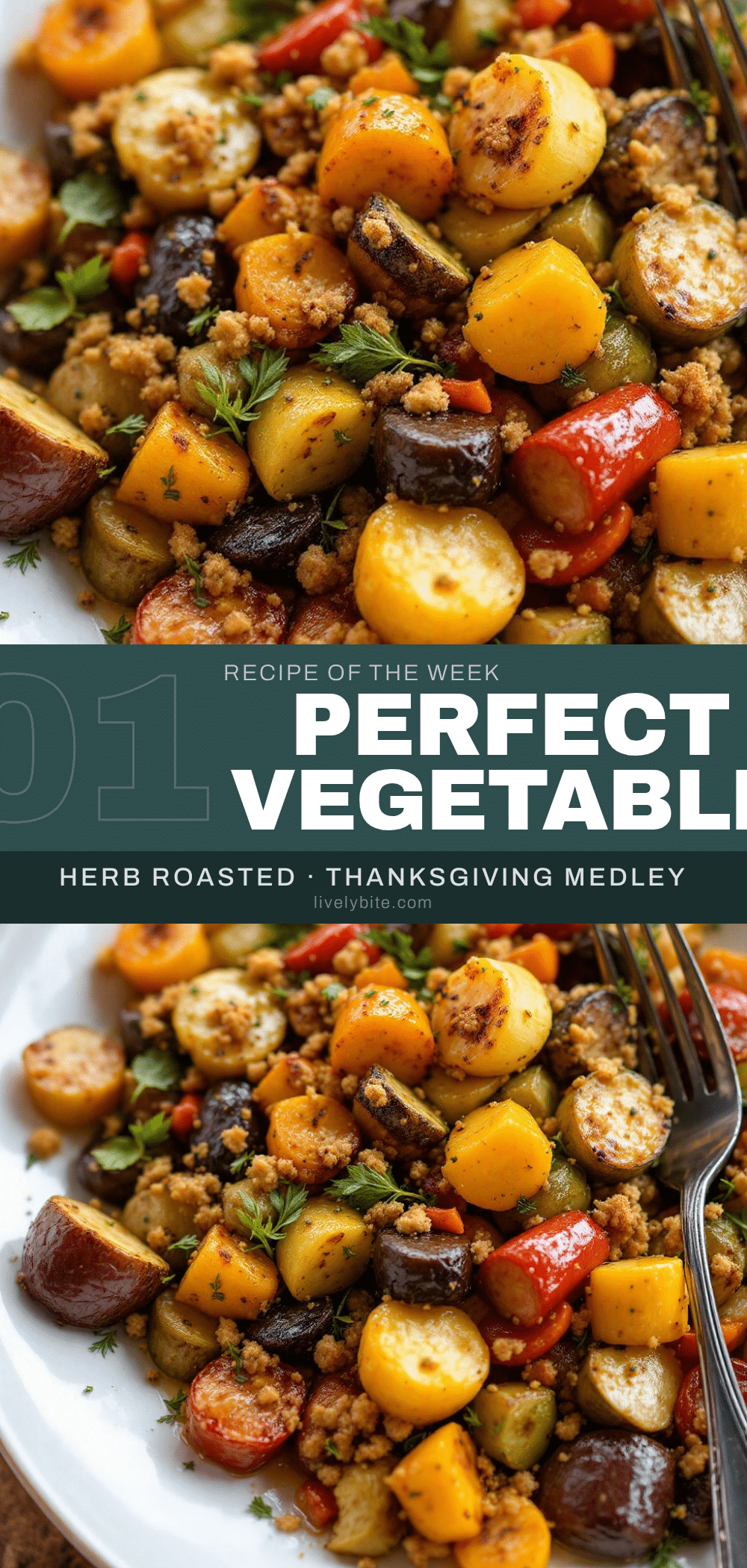
Perfect Herb Roasted Thanksgiving Vegetable Medley
A simple yet flavorful side dish featuring caramelized root vegetables and Brussels sprouts tossed in fresh herbs and olive oil, roasted to perfection for a crispy, savory finish.
- Prep Time: 20 minutes
- Cook Time: 30 minutes
- Total Time: 50 minutes
- Yield: 4 servings
- Category: Side Dish
- Cuisine: American
Ingredients
- Carrots, peeled and cut into uniform batons
- Parsnips, peeled and chopped into similar-sized pieces
- Brussels sprouts, trimmed and halved
- Red onion, cut into large chunks
- Garlic cloves, peeled and left whole or smashed
- Extra virgin olive oil
- Fresh rosemary, stripped from stems
- Fresh thyme, leaves stripped from stems
- Fresh sage, leaves torn into smaller pieces
- Sea salt
- Black pepper, freshly cracked
Instructions
- Preheat oven to 425°F (220°C).
- Peel carrots and parsnips, cutting them into batons or chunks roughly the same size as the Brussels sprouts halves. Trim tough ends off Brussels sprouts and halve them. Peel red onion and cut into large wedges. Leave garlic cloves whole or lightly smashed.
- In a large mixing bowl, combine extra virgin olive oil, chopped fresh rosemary, thyme, sage, sea salt, and black pepper. Whisk to distribute herbs evenly.
- Add all chopped vegetables to the bowl with the herb-oil mixture. Toss thoroughly until every piece is lightly coated.
- Line a large rimmed baking sheet with parchment paper or a silicone mat. Spread vegetables in a single layer, ensuring they are not touching.
- Roast in the preheated oven for 25 to 30 minutes. Halfway through (around 15 minutes), remove the sheet and flip the vegetables with tongs.
- Vegetables are done when tender when pierced with a fork and have crispy, browned edges.
- Remove from oven, taste, and add more salt or pepper if needed. Serve immediately.
Notes
Ensure vegetables are cut into uniform sizes for even cooking. Do not overcrowd the baking sheet, as this causes steaming instead of roasting. High heat is essential for caramelization. If vegetables brown too quickly, tent loosely with foil. Leftovers can be stored in the refrigerator for up to 4 days and reheated in the oven to restore crispiness.
Nutrition
- Serving Size: 1 cup
- Calories: 180
- Sugar: 8
- Sodium: 350
- Fat: 12
- Saturated Fat: 2
- Carbohydrates: 18
- Fiber: 5
- Protein: 3
Keywords: roasted vegetables, thanksgiving side dish, herb roasted vegetables, healthy side dish, gluten-free, vegan, root vegetables, brussels sprouts, easy dinner