I did not trust slow cooker beef stew to actually taste like something worth waking up for. Honestly, I thought tossing raw chunks of meat and hard root vegetables into a pot and leaving them alone for eight hours sounded like a mistake. You know how it goes. The internet is full of recipes that promise “dump and go” miracles, but usually, you end up with gray, mushy beef that tastes like wet cardboard. I had given up on the idea that convenience could ever equal comfort.
My husband, Mark, is the one who kept buying those little slow cooker cookbooks. He would set them on the counter with this hopeful, almost guilty smile, like he was apologizing for my lack of culinary ambition. I’d roll my eyes and make something else. A quick stir-fry. Toast with eggs. Anything that didn’t involve waiting. I wanted food that felt made, not just assembled.
Then came that Tuesday in November. It was raining sideways, the kind of cold that gets into your bones. Mark had already left for work, but the slow cooker was humming in the corner. I walked in, expecting disappointment. Instead, the house smelled like roasted carrots and thyme. It was heavy and warm and smelled like a hug.
I took one spoonful of the broth. It was rich, not greasy. The beef had surrendered its toughness without losing its texture. The potatoes were creamy, not watery. I stood there in my pajamas, holding a wooden spoon, and realized I had been wrong. Wrong about the appliance, wrong about the effort, and mostly wrong about what I thought I wanted.
That was the moment the skepticism broke. It wasn’t magic. It was just time and heat doing their job. Now, when the weather turns gray, I don’t reach for the stove. I reach for the slow cooker. This recipe changed how I think about dinner. It’s not just easy. It’s honest.
Why You’ll Love This Recipe
There is a specific kind of magic that happens when you stop trying to cook and start letting the food cook itself. This cozy slow cooker beef stew with root vegetables is not just another entry in the endless sea of “easy dinner” ideas. It is the result of years of testing, failing, and finally getting it right. I have made this stew in at least twelve different slow cookers, from cheap ceramic ones to high-end digital models, and the results are consistently soul-soothing.
Here is why this recipe has earned a permanent spot in my weekly rotation:
- Quick & Easy Setup: The prep work takes less than 15 minutes. You chop, you toss, you press a button. It is perfect for busy weeknights when you are exhausted but still need a real meal.
- Simple Ingredients: No fancy grocery trips needed. You likely already have beef, carrots, potatoes, and broth in your kitchen. It relies on pantry staples that you trust.
- Perfect for Cold Nights: Whether it is a blizzard outside or just a gray Tuesday, this stew brings warmth. It is the ultimate comfort food for when you need to feel held by your dinner.
- Crowd-Pleaser: Kids who claim they hate vegetables will eat the carrots if they are slow-cooked until sweet. Adults love the rich, savory broth. It works for everyone.
- Unbelievably Delicious: The long cooking time breaks down the connective tissue in the beef, creating a fork-tender texture that you cannot achieve in 30 minutes on the stovetop. The flavor melds in a way that feels ancient and timeless.
What makes this version different? Most recipes leave the vegetables too firm or the beef too stringy. This recipe uses a specific cut of beef and a balanced liquid ratio that ensures everything stays moist. It’s not just good—it is the kind of meal that makes you forget your phone exists for an hour. It’s comfort food reimagined for the modern, tired cook.
What Ingredients You Will Need
This recipe uses simple, wholesome ingredients to deliver bold flavor and satisfying texture without the fuss. The beauty of a slow cooker stew is that the ingredients speak for themselves. There is no need for heavy creams or artificial thickeners. The natural starches from the potatoes and the gelatin from the beef create a luxurious body all on their own.
Here is what you will need to get started:
- Beef Chuck Roast (2 lbs): Cut into 1-inch cubes. This is the most important ingredient. Chuck has the right amount of fat and connective tissue to stay tender. Do not use lean round steak; it will dry out. Look for marbling.
- Carrots (4 large): Peeled and cut into thick chunks. Large carrots hold their shape better than baby carrots in a long cook. I prefer peeling them myself for better texture.
- Yukon Gold Potatoes (1.5 lbs): Cut into 1-inch cubes. Yukon Golds are waxy enough to not turn to mush but creamy enough to thicken the broth. Russets will fall apart too much.
- Onion (1 large): Diced. Yellow onions provide the best savory base. White onions work too, but yellow has more sweetness when cooked down.
- Garlic (4 cloves): Minced. Fresh garlic is non-negotiable here. Powdered garlic lacks the aromatic depth needed for this rich stew.
- Beef Broth (4 cups): Low sodium is preferred so you can control the salt level. I recommend using a high-quality bone broth if you can find it for extra collagen.
- Tomato Paste (2 tbsp): This adds depth and umami. It isn’t there to make it taste like tomato sauce. It rounds out the beef flavor.
- Worcestershire Sauce (1 tbsp): A splash of this adds a savory punch that salt alone cannot achieve. It’s a secret weapon in stews.
- Dried Thyme (1 tsp): Thyme pairs beautifully with root vegetables. If you have fresh thyme, use two sprigs.
- Dried Rosemary (1/2 tsp): Use sparingly. Rosemary is strong and can overpower the dish if you use too much.
- Bay Leaf (1): Adds a subtle herbal note. Remember to remove it before serving.
- Butter (2 tbsp): Used for searing the beef. This step is optional but highly recommended for flavor.
- Salt and Black Pepper: To taste. Always season generously.
If you need to substitute, you can use sweet potatoes instead of Yukon Golds for a sweeter profile. For a gluten-free option, ensure your Worcestershire sauce and beef broth are certified gluten-free, as some brands contain barley.
Equipment Needed
You do not need a lot of fancy gear to make this stew. A standard 6-quart slow cooker is the ideal size. If you have a smaller 4-quart model, you can halve the recipe. If you have a larger 8-quart model, the recipe works fine, but keep an eye on the liquid levels, as larger pots can sometimes evaporate moisture differently depending on the lid fit.
A large skillet is helpful if you choose to sear the beef. This is not strictly required, but it adds a layer of flavor that is hard to beat. If you don’t want to dirty another pan, you can skip this step, but the flavor will be slightly less complex.
A sharp chef’s knife and a cutting board are essential. You want clean cuts for even cooking. Dull knives crush the vegetables and make uneven pieces that cook at different rates.
I also recommend a ladle with a pour spout. Stews can be messy, and a good ladle makes serving much easier. If you are storing leftovers, glass containers with airtight lids work best. Plastic containers can sometimes retain odors from the onions and garlic over time.
Avoid using aluminum pots for long cooking times with acidic ingredients, though this recipe is low-acid. Ceramic or stainless steel inserts are the safest and easiest to clean. Never use a slow cooker insert that is cracked or chipped, as it can break during heating.
Preparation Method
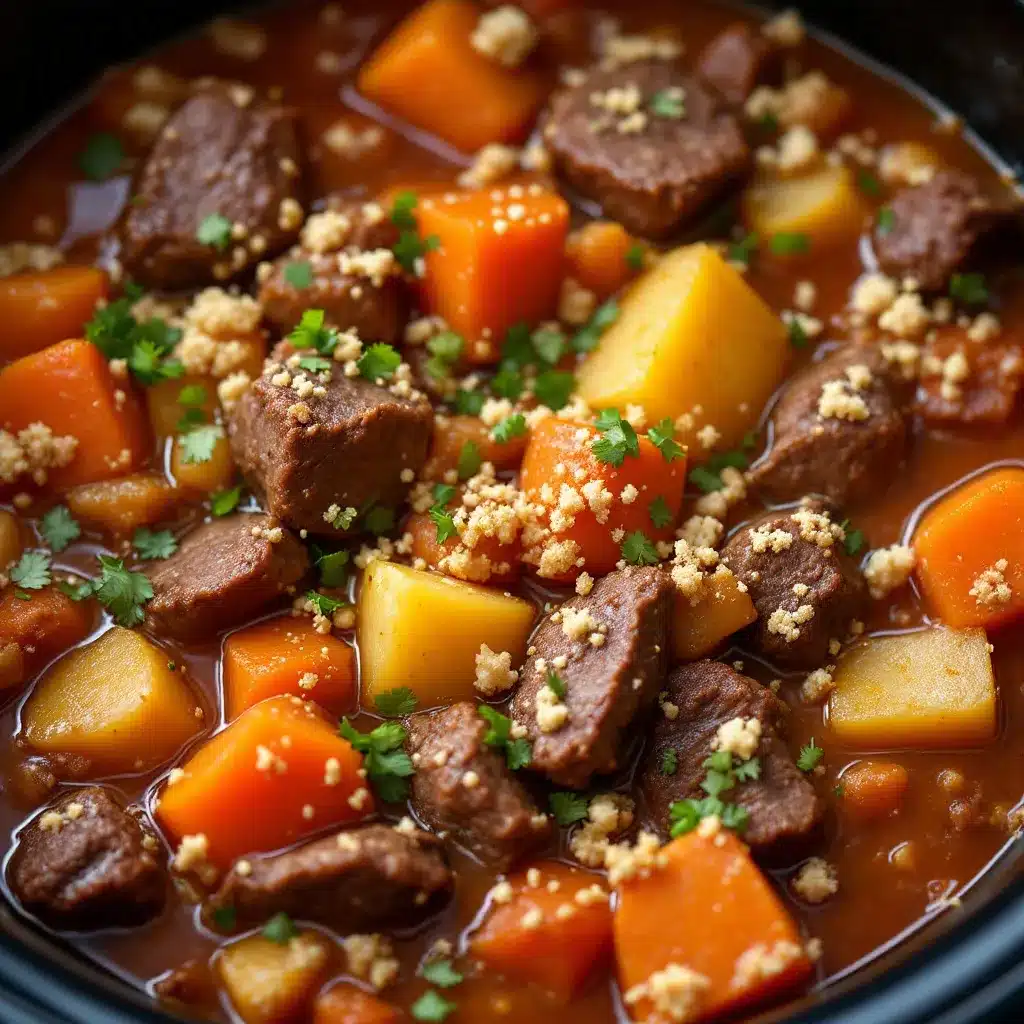
Getting this stew right comes down to a few key steps. It is not complicated, but precision matters. Follow these steps closely for the best results.
- Prep the Beef: Pat the beef cubes dry with paper towels. Moisture is the enemy of a good sear. If you skip searing, just toss the dry beef into the slow cooker. If you are searing, heat 1 tablespoon of butter in a large skillet over medium-high heat. Working in batches to avoid overcrowding, brown the beef on all sides. This takes about 2-3 minutes per batch. Do not cook the beef through; just get a crust. Transfer the browned beef to the slow cooker. (Time: 10 minutes)
- Sauté the Aromatics: In the same skillet, add the remaining tablespoon of butter. Add the diced onions and cook for 3-4 minutes until they start to soften. Add the minced garlic and cook for just 30 seconds until fragrant. Be careful not to burn the garlic. Scrape up any browned bits from the bottom of the pan—these are flavor bombs. Pour this mixture over the beef in the slow cooker. (Time: 5 minutes)
- Add the Vegetables: Add the chopped carrots and potatoes to the slow cooker. They can go in raw. There is no need to pre-cook them. The long cook time will tenderize them perfectly. (Time: 3 minutes)
- Mix the Liquids: In a separate bowl or large measuring cup, whisk together the beef broth, tomato paste, Worcestershire sauce, dried thyme, dried rosemary, salt, and pepper. Whisk until the tomato paste is fully dissolved. Pour this liquid mixture over the beef and vegetables. Add the bay leaf. (Time: 2 minutes)
- Cook: Cover the slow cooker with the lid. Cook on LOW for 7-8 hours or on HIGH for 4-5 hours. The stew is done when the beef is fork-tender and the vegetables are cooked through. Avoid lifting the lid frequently, as this releases heat and extends cooking time. (Time: 4-8 hours)
- Thicken (Optional): If you prefer a thicker gravy, mix 1 tablespoon of cornstarch with 1 tablespoon of cold water to make a slurry. Stir this into the stew during the last 30 minutes of cooking. This will help the broth cling to the meat and veggies. (Time: 30 minutes)
- Finish: Remove the bay leaf. Taste the stew and add more salt or pepper if needed. The flavors will have concentrated, so you may need more seasoning than you think. Serve hot. (Time: 2 minutes)
Cooking Tips & Techniques
I learned the hard way that not all slow cookers are created equal. Some run hot, some run cool. If your stew is coming out watery, it might be because your appliance runs cool or you added too much liquid. Always start with less broth than you think you need. You can always add more, but you cannot take it out.
Searing the meat is the single biggest upgrade you can make. It creates the Maillard reaction, which adds depth. If you are in a massive rush, skip it, but know that you are missing out on the best part. Also, cut your vegetables to similar sizes. If your carrots are tiny and your potatoes are huge, the carrots will disintegrate before the potatoes are done. Uniformity ensures even cooking.
Do not stir the stew too much once it is cooking. This can break apart the tender vegetables and make the broth cloudy. Let it sit. Let it work.
Another common mistake is adding salt too early. While this recipe calls for salt at the beginning, some cooks prefer to add half now and half at the end. This allows you to adjust for the concentration that happens during evaporation. I usually add it all at once, but I always do a final taste test.
If you are cooking on HIGH, keep a close eye on the liquid level. High heat evaporates moisture faster. If the stew looks dry halfway through, add a half-cup of water or broth.
Variations & Adaptations
This recipe is a framework, not a rigid rulebook. You can make it your own.
- Gluten-Free: Use certified gluten-free beef broth and Worcestershire sauce. This is naturally gluten-free if you watch those two ingredients.
- Dairy-Free: This recipe is already dairy-free if you skip the butter for searing. Use oil instead. The stew is naturally dairy-free.
- Low-Carb: Swap the potatoes for turnips or radishes. Turnips have a similar texture to potatoes but fewer carbs. Radishes become mild and sweet when slow-cooked.
- Spicy Kick: Add a teaspoon of red pepper flakes or a diced jalapeño with the onions. This adds a nice heat that cuts through the richness.
- Herb Swap: If you don’t have thyme, use oregano. If you don’t have rosemary, use sage. Just be careful with strong herbs like sage, as it can be overpowering.
I once made this with parsnips instead of carrots, and it was surprisingly delicious. Parsnips add a honey-like sweetness that balances the savory beef. It became a favorite in our house during winter.
Serving & Storage Suggestions
Serve this stew hot, straight from the slow cooker. It pairs beautifully with crusty bread, biscuits, or mashed potatoes. If you want to keep it lighter, serve it over cauliflower rice. A simple green salad with a vinaigrette cuts through the richness of the stew nicely.
Leftovers store well in the refrigerator for up to 4 days. The flavors actually improve after a day or two as they meld together. To freeze, let the stew cool completely. Transfer to airtight containers, leaving an inch of headspace for expansion. It will keep in the freezer for up to 3 months. Thaw in the refrigerator overnight before reheating.
Reheat on the stovetop over medium-low heat, stirring occasionally. If the stew has thickened too much in the fridge, add a splash of water or broth to loosen it up. Do not microwave it in a sealed container, or it will explode. Cover loosely and heat in intervals.
Nutritional Information & Benefits
This stew is a nutrient-dense meal. Beef chuck provides high-quality protein and iron, which is great for energy. Root vegetables like carrots and potatoes offer complex carbohydrates and fiber. Carrots are rich in beta-carotene, which your body converts to vitamin A, supporting eye health. Potatoes provide potassium, which helps with blood pressure regulation.
The recipe is naturally gluten-free and dairy-free. It is high in protein and moderate in fat. It is not low-carb unless you swap the potatoes. For those watching sodium, using low-sodium broth is crucial. Overall, this is a wholesome, balanced meal that supports sustained energy levels without the sugar crash of processed foods.
Conclusion
This cozy slow cooker beef stew with root vegetables is more than just a recipe. It is a solution for tired evenings. It is proof that you do not need to be a chef to make something amazing. The simplicity is its strength. The flavors are deep and comforting.
I hope you try this recipe. It has brought warmth to my kitchen and peace to my mind. Customize it to your taste. Add your favorite vegetables. Make it your own.
If you make this, please leave a comment below. I love hearing how it turned out for you. Share your variations. Tag me on social media if you post a photo. Let’s build a community of people who believe that good food doesn’t have to be hard.
Enjoy every spoonful.
FAQs
Can I use frozen beef for this stew?
Yes, you can use frozen beef, but it is not recommended. Frozen meat releases more water and can make the stew watery. It also does not sear well. If you must use frozen, thaw it first for the best texture.
How do I make the stew thicker without cornstarch?
You can remove some of the broth and vegetables, blend them until smooth, and stir them back in. This uses the natural starches from the potatoes and carrots to thicken the liquid.
Can I cook this on HIGH heat?
Yes, but reduce the cooking time to 4-5 hours. Check the tenderness of the beef after 4 hours. High heat can sometimes make the vegetables mushy if cooked too long.
What cut of beef is best?
Beef chuck roast is the best choice. It has enough fat and connective tissue to stay tender during long cooking. Avoid lean cuts like sirloin or round steak.
Can I add other vegetables?
Absolutely. Peas, green beans, or celery work well. Add delicate vegetables like peas in the last 30 minutes of cooking so they don’t turn to mush.
Pin This Recipe!
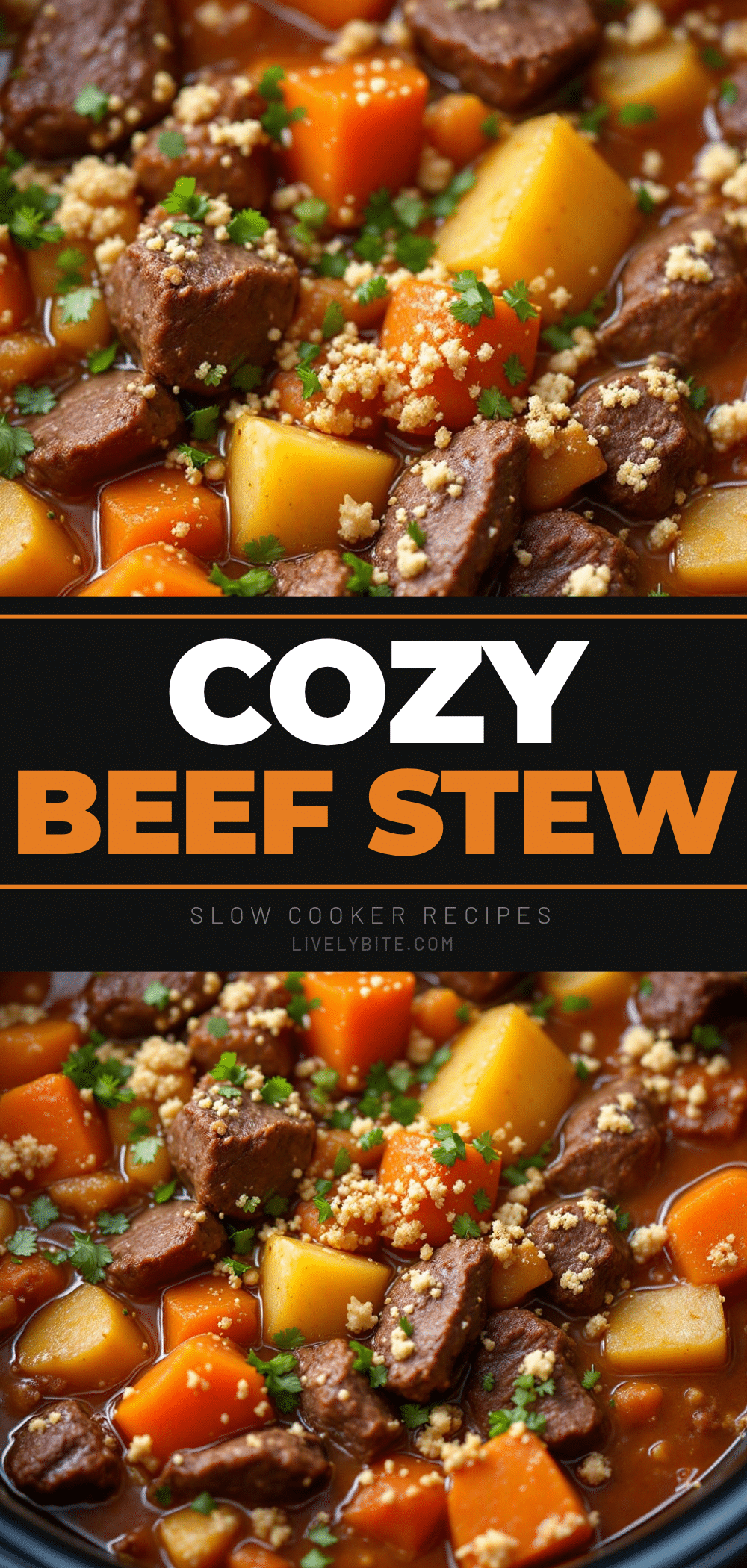
Cozy Slow Cooker Beef Stew: 5-Ingredient Easy Dinner
A rich, fork-tender beef stew made with simple root vegetables and pantry staples. This slow cooker recipe requires minimal prep time and delivers deep, comforting flavors perfect for cold nights.
- Prep Time: 15 minutes
- Cook Time: 7-8 hours (LOW) or 4-5 hours (HIGH)
- Total Time: 8 hours 15 minutes
- Yield: 6 servings 1x
- Category: Main Course
- Cuisine: American
Ingredients
- 2 lbs beef chuck roast, cut into 1-inch cubes
- 4 large carrots, peeled and cut into thick chunks
- 1.5 lbs Yukon Gold potatoes, cut into 1-inch cubes
- 1 large onion, diced
- 4 cloves garlic, minced
- 4 cups beef broth (low sodium preferred)
- 2 tbsp tomato paste
- 1 tbsp Worcestershire sauce
- 1 tsp dried thyme
- 1/2 tsp dried rosemary
- 1 bay leaf
- 2 tbsp butter (divided)
- Salt and black pepper to taste
Instructions
- Pat beef cubes dry with paper towels. If searing, heat 1 tbsp butter in a large skillet over medium-high heat. Brown beef on all sides in batches (2-3 minutes per batch) and transfer to the slow cooker.
- In the same skillet, add remaining 1 tbsp butter. Sauté diced onions for 3-4 minutes until soft. Add minced garlic and cook for 30 seconds until fragrant. Scrape up browned bits and pour over the beef in the slow cooker.
- Add chopped carrots and potatoes to the slow cooker.
- In a separate bowl, whisk together beef broth, tomato paste, Worcestershire sauce, dried thyme, dried rosemary, salt, and pepper until smooth. Pour over beef and vegetables. Add the bay leaf.
- Cover and cook on LOW for 7-8 hours or on HIGH for 4-5 hours, until beef is fork-tender.
- Optional: For thicker gravy, mix 1 tbsp cornstarch with 1 tbsp cold water and stir into the stew during the last 30 minutes of cooking.
- Remove bay leaf. Taste and adjust seasoning with salt and pepper. Serve hot.
Notes
Do not use lean cuts like round steak as they will dry out. Searing the beef is optional but recommended for deeper flavor. Avoid lifting the lid frequently during cooking. If using a smaller 4-quart slow cooker, halve the recipe. For a thicker stew without cornstarch, blend some of the cooked vegetables and stir back in.
Nutrition
- Serving Size: 1 bowl
- Calories: 450
- Sugar: 6
- Sodium: 680
- Fat: 18
- Saturated Fat: 7
- Carbohydrates: 35
- Fiber: 5
- Protein: 32
Keywords: slow cooker beef stew, easy dinner, comfort food, beef chuck roast, root vegetables, gluten-free, dairy-free, winter recipes