October 31st, and the only thing I want is for these deviled eggs to look like they crawled out of a haunted basement. The house is quiet now, the kids are finally asleep, and the party decorations are half-finished. There is a strange peace in the kitchen at midnight, just me and a stack of hard-boiled eggs that need to become something magical before guests arrive. Honestly, I used to stress over these appetizers. I would spend hours piping fancy rosettes or trying to make delicate garnishes that looked perfect until someone touched them. But this year, I found a trick that is so simple, it feels almost cheating. You just need a toothpick, some black food coloring, and a steady hand.
I remember the first time I tried this spiderweb design. I was terrified I would ruin the beautiful yellow yolks with a smudge of black gel. But then I realized that the imperfections are part of the charm. It’s supposed to look spooky, not surgical. The contrast between the bright yellow yolk filling and the intricate black lines is striking on a plate. It turns out, creating a mini web is less about artistic precision and more about patience. You drag the toothpick through the center, then pull outward in gentle arcs. It creates those concentric circles that spiders are famous for. It’s a small detail, but it changes the whole vibe of the dish.
There is something satisfying about turning a simple ingredient into a centerpiece. These eggs aren’t just food; they are conversation starters. Guests will stare at them before they even take a bite. The visual surprise of the web design makes the experience more memorable than just another bowl of mayo-heavy snacks. Plus, the flavor is classic—creamy, tangy, and perfectly seasoned. It’s the comfort of deviled eggs with a twist of seasonal drama. This recipe belongs to the hour when the moon is high and the coffee is strong. It’s for the cook who wants to impress without spending all night in the kitchen.
As I finish the last egg, I realize this is the kind of recipe that sticks with you. It’s not complicated, but it feels special. You know, sometimes the best cooking moments are the quiet ones, where you are just focused on making something beautiful for people you love. I hope you find that same joy in making these. They are easier than you think, and the result is definitely worth the few extra minutes of effort.
Why You’ll Love This Recipe
Let’s be real, deviled eggs can be tricky. Get the ratio of mayo to mustard wrong, and you end up with a dry, crumbly mess. Or worse, you overbeat the yolks and they turn gray. I have spent years testing different combinations to find the perfect balance, and this spiderweb version is my absolute favorite. It combines the reliability of a classic recipe with a fun, festive presentation that works every single time. Here is why this specific method stands out from the crowd:
- Quick & Easy: The actual assembly takes less than five minutes per egg once the yolks are mixed. This is perfect for busy weeknights or when you are hosting a last-minute gathering and need to look like a culinary pro.
- Simple Ingredients: You likely already have everything in your fridge. Eggs, mayo, mustard, paprika, and black food gel. No fancy grocery trips or obscure spices needed.
- Perfect for Halloween Parties: Whether it’s a kid’s trick-or-treat party or an adult spooky soirée, these eggs fit the theme perfectly. They are a great addition to any fall appetizer spread.
- Crowd-Pleaser: Kids love the “gross” factor of the spiderwebs, and adults appreciate the classic flavor profile. It bridges the gap between scary and delicious.
- Unbelievably Delicious: The texture is ultra-smooth because we strain the yolk mixture. The flavor combo of tangy vinegar and creamy mayo is next-level comfort food.
What makes this recipe different is the spiderweb technique itself. Most people just pipe the filling in a simple mound or rosette. By adding the web, you add visual depth. It’s a small twist that makes the dish feel custom-made. I’ve tried swapping in Greek yogurt for a lighter version, but the traditional mayo keeps that rich, indulgent mouthfeel that people crave. This isn’t just another version of deviled eggs—it’s the best version because it balances ease with wow factor. It’s the kind of dish that makes you close your eyes after the first bite and just enjoy the moment.
What Ingredients You Will Need
This recipe uses simple, wholesome ingredients to deliver bold flavor and satisfying texture without the fuss. The key is quality. Since there are so few components, each one needs to shine. I like to use large, farm-fresh eggs if I can find them, as the yolks tend to be richer and more vibrant. For the filling, we rely on a few pantry staples that come together to create that signature tangy creaminess. Here is exactly what you need to get started:
- Hard-boiled eggs: Large eggs, peeled. I recommend using eggs that are at least a few days old, as they peel much easier than fresh ones. This saves you from breaking the whites.
- Mayonnaise: About 1/2 cup. I personally prefer Hellmann’s or Duke’s for their consistent texture and tang. Avoid light mayo if you want that rich, classic taste.
- Yellow mustard: 1 tablespoon. This adds the necessary acidity to cut through the richness of the mayo. Dijon works too, but yellow mustard gives that traditional deli flavor.
- White vinegar: 1 teaspoon. A splash of vinegar brightens the whole mixture. Apple cider vinegar is a good alternative if you want a slightly fruitier note.
- Paprika: 1/2 teaspoon, plus extra for garnish. Smoked paprika adds a nice depth, but sweet paprika is standard for this look.
- Salt and black pepper: To taste. Freshly cracked pepper adds a nice bite.
- Black food gel: A small amount. Gel coloring is essential here. Liquid food coloring will make the filling watery and dilute the flavor, so stick to gel.
- Toothpicks: Standard wooden toothpicks are perfect for dragging through the filling to create the web pattern.
If you need substitutions, you can use Greek yogurt instead of mayo for a protein boost, though the texture will be slightly less smooth. For a dairy-free option, a high-quality vegan mayo works surprisingly well. Just make sure your black food coloring is vegan-friendly if that matters to you. The simplicity of these ingredients is what makes the recipe so approachable for cooks of all skill levels.
Equipment Needed
You don’t need a fancy kitchen to make these. Just a few basic tools will do the job. You will need a large pot for boiling the eggs and a bowl of ice water for the shock bath. This stops the cooking process and prevents that green ring around the yolk. A sharp knife is helpful for slicing the eggs in half cleanly. For the filling, a medium mixing bowl and a fork or a small hand mixer work well. I actually prefer a fork for this because it gives you a bit more control over the texture, allowing you to keep it slightly rustic if you want. A piping bag with a star tip is optional. If you are confident in your piping skills, it gives a professional look, but a spoon works just fine for beginners. Also, grab a small plate or serving dish lined with parchment paper or a decorative doily. This keeps the eggs stable while you work on the webs. If you don’t have a piping bag, don’t worry. The spoon method is faster and just as effective for this specific design.
Preparation Method
Let’s get into the nitty-gritty of making these spooky treats. The process is straightforward, but attention to detail makes all the difference. Follow these steps closely for the best results.
- Boil the eggs: Place your eggs in a single layer in a pot. Cover them with cold water by about an inch. Bring the water to a rolling boil over high heat. Once boiling, remove the pot from the heat, cover it with a lid, and let it sit for 12 minutes. This gentle cooking method ensures the whites are tender and the yolks are fully set but not chalky. (Time estimate: 15 minutes total).
- Cool the eggs: While the eggs sit, prepare a bowl of ice water. As soon as the 12 minutes are up, transfer the eggs to the ice bath using a slotted spoon. Let them cool completely for at least 15 minutes. This step is crucial for easy peeling. (Time estimate: 15 minutes).
- Peel and slice: Gently tap each egg on the counter to crack the shell all over. Peel them under running water to help remove any stubborn shell pieces. Slice each egg in half lengthwise. Carefully scoop out the yolks with a small spoon and place them in your mixing bowl. Try to keep the white halves intact and neat.
- Make the filling: Mash the yolks with a fork until they are fine crumbs. Add the mayonnaise, mustard, vinegar, paprika, salt, and pepper. Mix until smooth. If the mixture feels too thick, add a tiny bit more vinegar or mayo. If it’s too thin, add a bit more mayo. You want a consistency that holds its shape but is still creamy. (Time estimate: 5 minutes).
- Fill the eggs: Spoon the yolk mixture back into the egg white halves. You can use a piping bag for a fancy look, or just mound it on top with a spoon. Make sure the mound is slightly domed so you have room to draw the web. (Time estimate: 10 minutes).
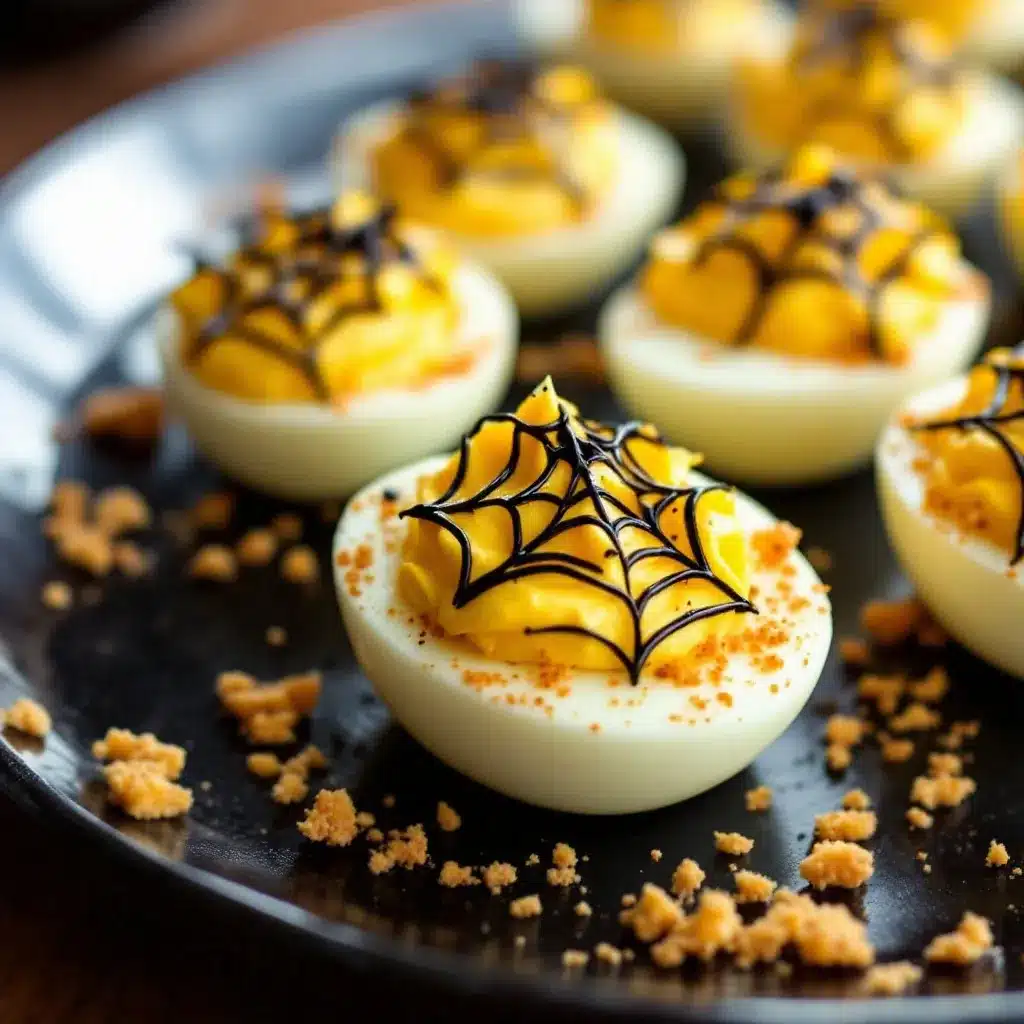
- Create the spiderwebs: This is the fun part. Take a toothpick and dip it into a tiny amount of black food gel. Touch the center of the yolk mound with the gel-tipped toothpick. Then, gently drag the toothpick outward toward the edge of the egg white, creating a line. Rotate the egg slightly and repeat, creating a radial pattern like the spokes of a wheel. Then, drag the toothpick in small, curved arcs between the spokes, connecting them to create the web effect. Be gentle; the filling is soft. (Time estimate: 5 minutes per batch).
- Garnish and serve: Dust the tops lightly with a little extra paprika for a pop of color. Place them on a serving platter. If you aren’t serving immediately, cover them with plastic wrap and refrigerate until ready to eat.
Cooking Tips & Techniques
I have made my share of mistakes in the kitchen, and deviled eggs are no exception. One common error is using eggs that are too fresh. Trust me, peel a fresh egg, and you will be picking shells out of your whites for ten minutes. Always use older eggs. Another tip is to strain the yolk mixture if you want it ultra-smooth. Press it through a fine-mesh sieve. It takes an extra minute, but the texture is restaurant-quality. When it comes to the spiderweb, don’t press too hard with the toothpick. You just want to drag the color through the surface. If you push down, you’ll create holes. Also, if the black gel is too thick, mix it with a drop of vinegar or water to make it easier to drag. And here is a pro tip: chill the eggs for an hour after filling them. The cold helps the filling set, making it firmer and easier to handle without smudging the web design.
Variations & Adaptations
While the classic spiderweb is my go-to, there are plenty of ways to tweak this recipe. For a spicy kick, add a dash of hot sauce or some finely chopped jalapeños to the yolk mixture. If you want a smoky flavor, use smoked paprika and a touch of liquid smoke. For a vegetarian twist, you can add some crumbled feta cheese to the filling for a tangy, Mediterranean vibe. If you are hosting a group with dietary restrictions, consider making a batch with avocado instead of mayo for a healthy fat option. You can also experiment with different colors. Purple food coloring mixed with yellow creates a lovely lavender web, which looks great for Easter or spring parties. I once tried a gold web for a New Year’s Eve party, and it was stunning. The possibilities are really endless once you master the basic technique.
Serving & Storage Suggestions
These eggs are best served chilled. The cold temperature keeps the mayo-based filling safe and gives the eggs a crisp texture. Arrange them on a platter with a dark background, like a slate board or a black plate, to make the yellow and black colors pop. They pair wonderfully with a crisp white wine or a refreshing cucumber-mint green tea cooler. If you have leftovers, store them in an airtight container in the refrigerator for up to two days. Do not freeze them, as the texture of the eggs will become rubbery. When reheating is not an option for eggs, just enjoy them cold. The flavors actually meld together nicely after a few hours in the fridge, so making them a day ahead is a great strategy.
Nutritional Information & Benefits
While deviled eggs are indulgent, they are also a good source of protein. Each egg provides about 6 grams of protein, which helps keep you full. The yolks contain essential nutrients like choline, which is important for brain health. However, they are also high in fat due to the mayonnaise. If you are watching your calorie intake, you can reduce the mayo by half and replace it with Greek yogurt. This cuts the calories significantly while maintaining creaminess. Be mindful of allergens, as eggs and dairy (in the mayo) are common triggers. For a low-carb option, this recipe is naturally keto-friendly, provided you use a low-carb mayo. Overall, they are a balanced treat when enjoyed in moderation.
Conclusion
Making spooky Halloween deviled eggs with spiderweb yolks is a simple yet effective way to add some festive flair to your holiday table. The five-minute trick for the web design is a game-changer, turning a simple snack into a memorable centerpiece. I love this recipe because it combines ease with creativity, allowing you to enjoy the process without stress. I encourage you to try it and see how it turns out. Feel free to experiment with colors and flavors to make it your own. If you give this a try, I would love to hear about it. Leave a comment below with your thoughts or share a photo of your spooky creations. Happy cooking, and may your Halloween be filled with delicious surprises.
Frequently Asked Questions
Can I make deviled eggs ahead of time?
Yes, you can make the filling and store it in a piping bag in the fridge for up to two days. However, it is best to fill and decorate the eggs the day of serving to keep the spiderweb design crisp and fresh.
Why do my deviled eggs turn gray?
Gray yolks usually happen when eggs are overcooked. To prevent this, ensure you are using the gentle boil-and-rest method and cooling them immediately in an ice bath. This keeps the yolks bright yellow.
Can I use liquid food coloring instead of gel?
It is not recommended. Liquid food coloring adds too much moisture to the filling, which can make it runny and dilute the flavor. Gel coloring provides intense color without affecting the texture.
How do I keep the spiderweb from smudging?
Chill the filled eggs for at least an hour before drawing the webs. The cold firm up the filling, making it more stable and less likely to smear when you drag the toothpick through it.
What can I serve with deviled eggs at a party?
These eggs pair well with a variety of sides. Consider serving them alongside easy Mediterranean stuffed mini peppers for a fresh crunch, or with some slow cooker honey garlic chicken for a heartier option. A light cucumber mint green tea is also a great refreshing drink to balance the richness.
Pin This Recipe!
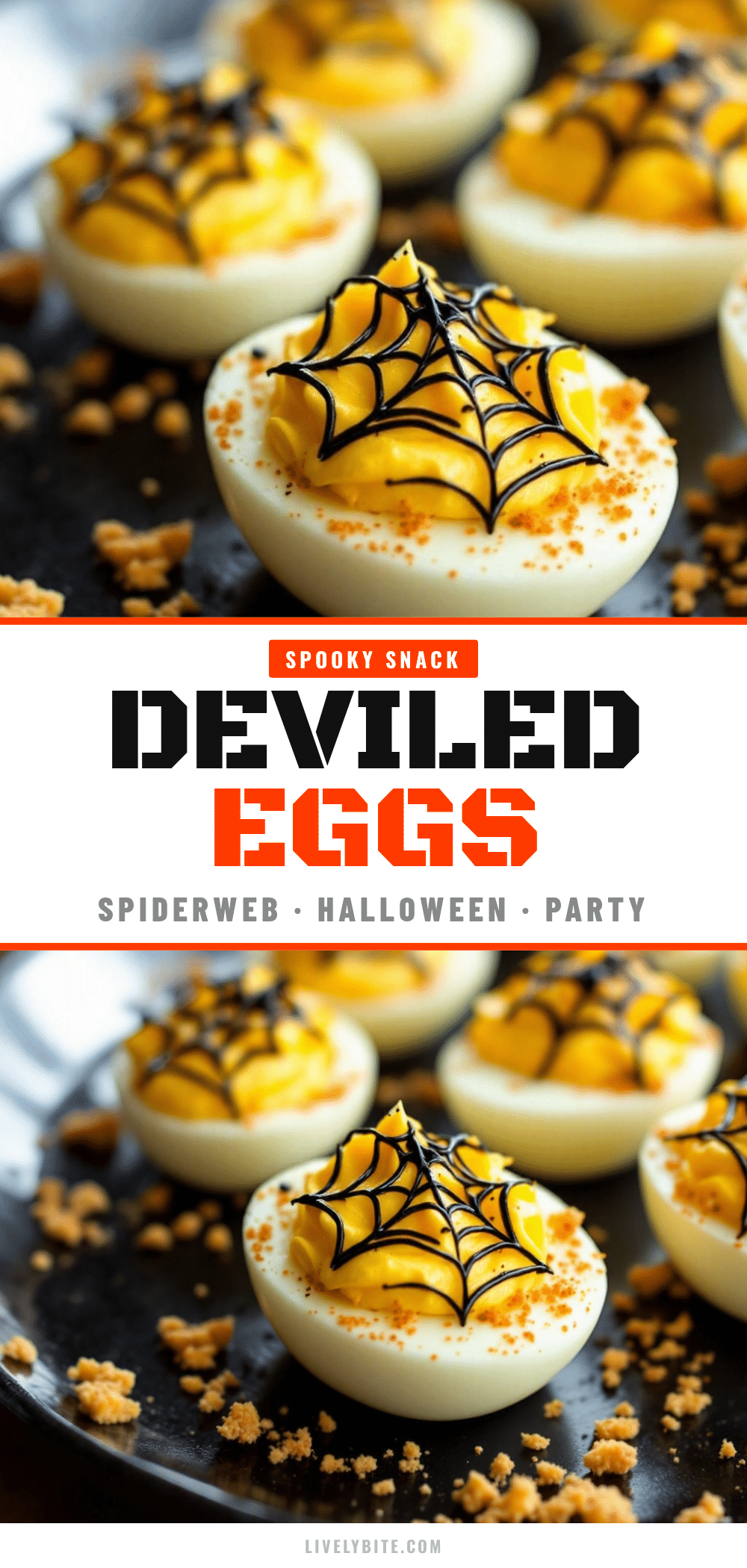
Spooky Halloween Deviled Eggs: 5-Min Spiderweb Trick
These spooky Halloween deviled eggs feature a classic creamy filling topped with an intricate spiderweb design created using black food gel and a toothpick. They are easy to make, perfect for parties, and offer a fun visual twist on a traditional appetizer.
- Prep Time: 20 minutes
- Cook Time: 15 minutes
- Total Time: 35 minutes
- Yield: 8 servings 1x
- Category: Appetizer
- Cuisine: American
Ingredients
- 8 large hard-boiled eggs, peeled
- 1/2 cup mayonnaise (Hellmann’s or Duke’s recommended)
- 1 tablespoon yellow mustard
- 1 teaspoon white vinegar
- 1/2 teaspoon paprika, plus extra for garnish
- Salt and black pepper to taste
- Black food gel
- Toothpicks
Instructions
- Place eggs in a single layer in a pot and cover with cold water by an inch. Bring to a rolling boil, then remove from heat, cover, and let sit for 12 minutes.
- Transfer eggs to an ice water bath and let cool completely for at least 15 minutes to ensure easy peeling.
- Gently tap and peel the eggs under running water. Slice each egg in half lengthwise and scoop out the yolks into a mixing bowl.
- Mash the yolks with a fork until fine. Add mayonnaise, mustard, vinegar, paprika, salt, and pepper. Mix until smooth.
- Spoon or pipe the yolk mixture back into the egg white halves, creating a slightly domed mound.
- Dip a toothpick into black food gel and touch the center of the yolk mound. Drag the toothpick outward to create radial lines, then drag in small curved arcs between the lines to create a web pattern.
- Dust lightly with extra paprika and serve chilled.
Notes
Use eggs that are a few days old for easier peeling. Strain the yolk mixture through a fine-mesh sieve for an ultra-smooth texture. Chill filled eggs for an hour before drawing the webs to prevent smudging. Do not freeze deviled eggs as the texture will become rubbery.
Nutrition
- Serving Size: 1 deviled egg
- Calories: 120
- Sugar: 1
- Sodium: 90
- Fat: 9
- Saturated Fat: 2
- Carbohydrates: 1
- Protein: 6
Keywords: Halloween recipes, deviled eggs, spiderweb eggs, easy appetizers, party food, spooky snacks, holiday cooking