“Wait, you can put honey garlic sauce on fish?” My friend Jenna was staring at me like I’d just suggested putting maple syrup on a steak. We were standing in her kitchen, she was pulling salmon out of the fridge, and I was rummaging through her cabinets for soy sauce. She had a plan for plain baked salmon with lemon. I had a better one.
That was the moment this sticky honey garlic salmon bowl was born. Not on a fancy cooking show or after meticulously testing three dozen versions in a professional kitchen. Nope. It came together in about twenty minutes on a Tuesday night, using a whisk, a hot pan, and a bottle of honey that was crystallizing at the back of her pantry. I told her to trust me. She did. And when she took that first bite—salmon caramelized at the edges, rice soaking up the glossy sauce, avocado slicing through the richness—she just looked at me and said, “Okay, I get it now.”
That’s the thing about this recipe. It sounds like it shouldn’t work as well as it does. Salmon is elegant. Honey garlic sauce is sticky and bold. A bowl feels like a weeknight compromise. But together? It’s the kind of dinner that makes you forget you were tired. The sauce clings to everything—the fish, the rice, the broccoli, even the sesame seeds. And honestly, it’s so easy that you’ll stop overthinking dinner. You’ll just make it. Again and again.
So here it is. The bowl that turned a skeptical friend into a repeat customer. The one that proves you don’t need a complicated recipe to eat like you do.
Why You’ll Love This Sticky Honey Garlic Salmon Bowl
Let me tell you why this bowl has become my go-to for busy nights, lazy weekends, and everything in between. It checks every box.
- Quick & Easy: From start to finish, this comes together in under 30 minutes. Seriously. You can have dinner on the table faster than delivery.
- Simple Ingredients: No fancy grocery store trips. Honey, soy sauce, garlic, salmon, rice, and whatever vegetables you have hanging around. You probably already have most of it.
- Perfect for Any Occasion: It’s fancy enough for a Friday night date night but fast enough for a Wednesday when you have zero energy left.
- Crowd-Pleaser: My kids inhale this. My in-laws ask for the recipe. Even my friend who swore she didn’t like salmon changed her mind after one bite.
- Unbelievably Delicious: The sauce gets thick and glossy, almost like a caramel glaze. The salmon stays tender and flaky. Every bite has that perfect salty-sweet balance.
What makes this version different from the rest? It’s the technique. Instead of just brushing sauce on top, you let the salmon caramelize in the pan first, then you add the sauce and let it reduce right in the same skillet. That’s where the magic happens—the edges get crispy, the sauce gets sticky, and every single piece of salmon is coated in that glossy goodness. No dry fish. No watery sauce. Just pure, sticky perfection.
This isn’t just another salmon recipe. It’s the one you’ll make when you want to feel like you’ve got your life together, even if you’re just wearing sweatpants and listening to a podcast while you cook.
What Ingredients You Will Need
This recipe uses simple, wholesome ingredients that work together to create something truly special. Here’s what you’ll need and why each one matters.
For the Salmon & Sauce
- Salmon fillets (4 fillets, about 6 oz / 170g each) – Skin-on or skin-off, both work. I prefer skin-on because it gets crispy and adds texture. Look for wild-caught if you can, but farm-raised works perfectly fine too.
- Honey (1/3 cup / 110g) – This is the star of the sticky factor. Use a good-quality honey that’s not too thick. If your honey is crystallized, warm it up slightly before mixing.
- Soy sauce (1/4 cup / 60ml) – Low-sodium is my go-to. It gives you that salty umami without overpowering everything. You can use tamari or coconut aminos for a gluten-free option.
- Garlic (4 cloves, minced) – Fresh garlic is non-negotiable here. The pre-minced stuff in a jar just doesn’t have the same punch. Trust me on this one.
- Rice vinegar (2 tablespoons / 30ml) – Adds a subtle tang that balances out the sweetness. Don’t skip it. If you don’t have rice vinegar, apple cider vinegar works in a pinch.
- Sesame oil (1 tablespoon / 15ml) – Just a little goes a long way. It adds that nutty, toasted flavor that makes the sauce taste like it came from your favorite takeout spot.
- Cornstarch (1 teaspoon) – This is optional but helps thicken the sauce if you want it extra sticky. Mix it with a tablespoon of water before adding.
For the Bowl
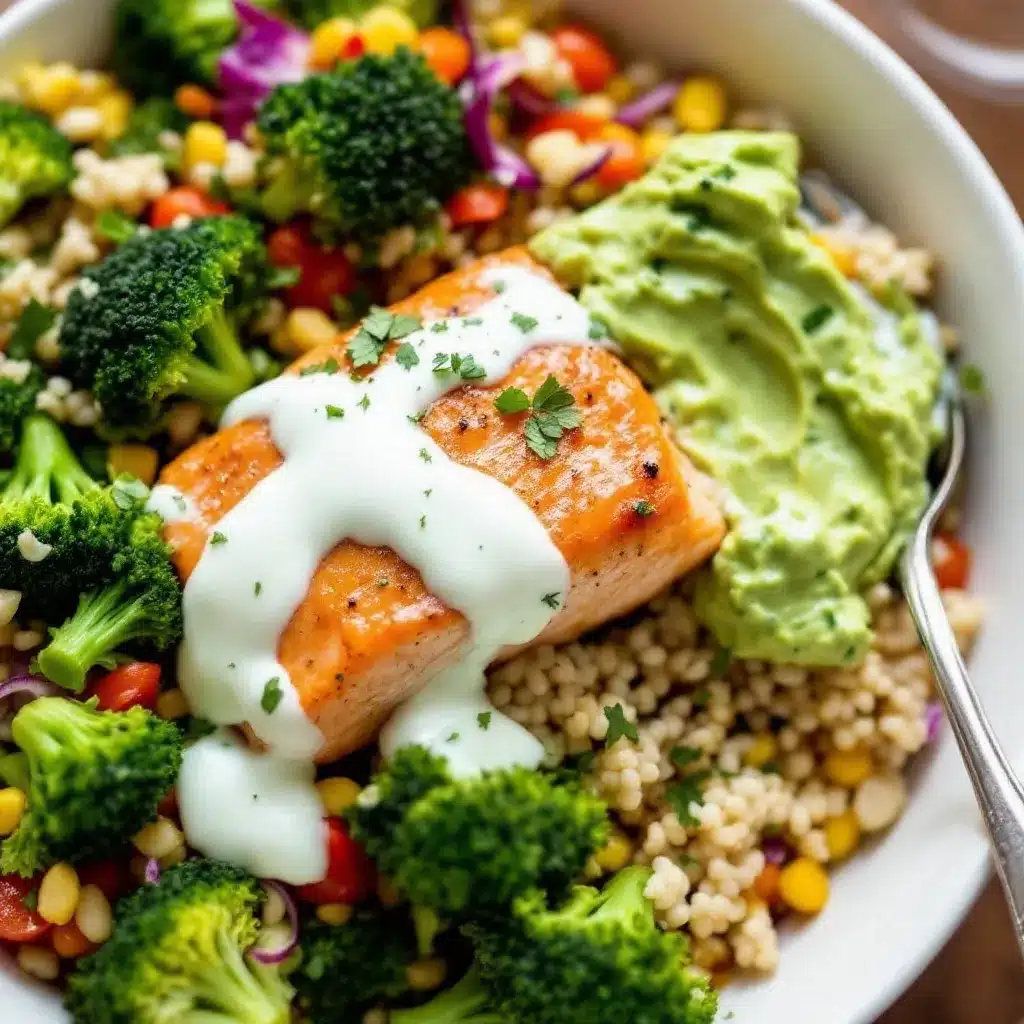
- Cooked rice (2 cups / 400g) – Jasmine rice is my favorite for its fluffy texture and subtle floral notes. Basmati or sushi rice work great too. For a low-carb option, try cauliflower rice.
- Broccoli florets (2 cups / 200g) – Roasted or steamed, they add a nice crunch and soak up any extra sauce.
- Avocado (1 large, sliced) – Creamy avocado is the perfect counterpoint to the sticky, savory salmon. It makes every bite feel luxurious.
- Edamame (1 cup / 150g, shelled) – Adds protein and a pop of green. Frozen edamame works perfectly—just thaw and add.
- Sesame seeds (1 tablespoon) – For garnish. They add a little crunch and make the bowl look restaurant-worthy.
- Green onions (2, sliced) – Fresh and mild, they brighten up the whole bowl.
Ingredient Tips & Substitutions
If you’re out of honey, maple syrup works surprisingly well. It changes the flavor slightly (more earthy, less floral), but it’s still delicious. For the soy sauce, I recommend Kikkoman or San-J. They have the right balance of saltiness without being too harsh. And if you’re avoiding gluten, tamari is your best bet—it tastes almost identical.
For the salmon, look for fillets that are evenly thick so they cook at the same rate. If one end is much thinner than the other, it’ll overcook before the thick part is done. And honestly, if you can’t find fresh salmon, frozen works fine—just thaw it completely in the fridge overnight and pat it dry before cooking.
Equipment Needed
You don’t need a fancy kitchen to make this bowl. Here’s what you’ll actually use.
- Large non-stick skillet or cast-iron pan – Non-stick is easiest for the sticky sauce cleanup, but cast-iron gives you a better sear on the salmon. Either works.
- Small bowl for mixing the sauce – Any bowl will do. I use a small glass measuring cup.
- Sharp knife – For slicing the avocado and green onions. A dull knife makes avocado slicing a nightmare.
- Cutting board – Preferably one that won’t slide around. I put a damp paper towel under mine to keep it steady.
- Spatula or fish turner – A thin, flexible spatula makes flipping the salmon so much easier without breaking it apart.
- Pot for rice – Or a rice cooker if you have one. Honestly, a rice cooker is a game-changer for meal prep.
- Sheet pan or steamer basket – For the broccoli. Roasting gives you better flavor, but steaming is faster.
If you don’t have a non-stick skillet, you can use a stainless steel one—just make sure you add a little extra oil so the salmon doesn’t stick. And if you’re really in a pinch, an air fryer works for the salmon too. Cook it at 400°F (200°C) for about 8-10 minutes, then brush the sauce on in the last 2 minutes.
Preparation Method
Alright, let’s get cooking. This is going to be fast, so read through everything first before you start. Trust me, it makes a difference.
Step 1: Prepare Your Ingredients
Start by cooking your rice according to the package directions. For jasmine rice, I use a 1:1.5 ratio of rice to water. Bring it to a boil, then cover and simmer for 12 minutes. Let it sit covered for 5 minutes off the heat before fluffing. While the rice cooks, you can prep everything else.
Pat the salmon fillets dry with paper towels. This is crucial—wet salmon won’t sear properly. Season both sides with a pinch of salt and pepper. Not too much, because the sauce has plenty of saltiness already.
In a small bowl, whisk together the honey, soy sauce, minced garlic, rice vinegar, and sesame oil. If you’re using cornstarch, mix it with 1 tablespoon of water in a separate tiny bowl and set aside.
Step 2: Cook the Broccoli
Preheat your oven to 425°F (220°C) or get a steamer basket ready. For roasted broccoli, toss the florets with a little olive oil, salt, and pepper, then spread them on a sheet pan. Roast for 15-18 minutes, flipping halfway, until the edges are browned and crispy. If you’re steaming, it’ll take about 5-7 minutes. I’m a roasted broccoli person—it gets those little charred bits that taste amazing with the sticky sauce.
Step 3: Sear the Salmon
Heat your skillet over medium-high heat. Add a drizzle of oil (avocado or vegetable oil works best—olive oil can burn). Once the oil is shimmering, place the salmon fillets skin-side down (if using skin-on) or presentation-side down. Let them cook undisturbed for 4 minutes. Yes, 4 full minutes. Don’t touch them. Don’t peek. The salmon needs that time to develop a golden-brown crust.
After 4 minutes, carefully flip the fillets. Cook for another 2-3 minutes on the other side, depending on thickness. The salmon should be just cooked through—it will flake easily with a fork but still be moist in the center. If you’re unsure, use a meat thermometer: 125°F (52°C) for medium, 130°F (54°C) for well-done.
Step 4: Make the Sticky Sauce
Reduce the heat to medium-low. Pour the honey garlic sauce into the pan around the salmon (not directly on top, or it’ll burn). Let it bubble gently for 2-3 minutes, spooning the sauce over the salmon as it thickens. If you’re using the cornstarch slurry, stir it in now and watch the sauce transform into a glossy, sticky glaze. It should coat the back of a spoon.
Here’s a tip I learned the hard way: don’t walk away during this step. The sauce can go from perfectly sticky to burnt and bitter in about 30 seconds. Keep an eye on it, and take the pan off the heat as soon as it reaches that syrupy consistency.
Step 5: Assemble the Bowls
Divide the rice between four bowls. Arrange the roasted broccoli, sliced avocado, and edamame around the edges. Place a salmon fillet in the center of each bowl. Spoon any remaining sauce from the pan over the top. Don’t waste a single drop of that liquid gold.
Garnish with sesame seeds and sliced green onions. Serve immediately while everything is warm and the salmon is still sticky.
Cooking Tips & Techniques
I’ve made this bowl more times than I can count, and I’ve messed it up plenty along the way. Here’s what I’ve learned so you don’t have to.
The Biggest Mistake: Overcooking the Salmon
Salmon goes from perfect to dry in about 60 seconds. The trick is to cook it just until it’s opaque in the center and flakes easily. If you wait until it’s fully opaque all the way through, it’s already overdone. Pull it off the heat when it’s still slightly translucent in the very center—the residual heat will finish cooking it.
My Personal Failure: The Burnt Sauce Incident
I once got distracted by a phone call and let the sauce cook for an extra 2 minutes. It turned into a sticky, bitter mess that smelled like burnt caramel. Now I set a timer. Every single time. Don’t be like me.
Multitasking Like a Pro
Start the rice first because it takes the longest. While it cooks, prep the broccoli and get it in the oven. While the broccoli roasts, sear the salmon. By the time the salmon is done, the rice is ready, the broccoli is roasted, and you’re just assembling. It’s a beautiful, efficient flow.
Getting the Perfect Sear
Hot pan, dry fish, don’t move it. That’s the mantra. If you try to flip the salmon and it feels stuck, it’s not ready yet. Give it another 30 seconds and try again. A good sear is what gives you those crispy edges that contrast with the tender interior.
Variations & Adaptations
This bowl is endlessly customizable. Here are some of my favorite twists.
Spicy Honey Garlic Version
Add 1 teaspoon of sriracha or red pepper flakes to the sauce. It gives you that sweet-heat combo that’s absolutely addictive. I make this version when I’m feeling like I need a little kick.
Low-Carb / Keto Adaptation
Swap the rice for cauliflower rice or a bed of mixed greens. Use a sugar-free honey substitute or monk fruit sweetener instead of regular honey. The sauce will be slightly less sticky, but it still tastes amazing. I’ve made this for friends on keto diets and they raved about it.
Air Fryer Method
If you want even less cleanup, cook the salmon in an air fryer. Preheat to 400°F (200°C), spray the basket with oil, and cook the salmon for 8 minutes. Brush the sauce on, then cook for another 2 minutes until the sauce is sticky and caramelized. It’s not quite the same as pan-searing, but it’s close.
Vegetable Swaps
Don’t have broccoli? Use asparagus, green beans, snap peas, or even bell peppers. I’ve used whatever I had in the fridge and it always works. The key is to roast or steam them so they’re tender but still have a little bite.
Meal Prep Version
Double the recipe and store the components separately. The salmon keeps in the fridge for up to 3 days. When you’re ready to eat, reheat the salmon gently in a pan with a splash of water to loosen the sauce, or microwave it for 30-45 seconds. The avocado should be sliced fresh each time.
Serving & Storage Suggestions
This bowl is best served warm, right after assembly. The contrast between the warm salmon, the cool avocado, and the crunchy broccoli is what makes it special. But leftovers are still delicious in their own way.
How to Serve
Serve the bowls on a large platter if you’re feeding a crowd, or individually for a more intimate dinner. I like to add a wedge of lime on the side—a squeeze of citrus brightens everything up. If you’re feeling extra fancy, drizzle a little sriracha mayo (just sriracha mixed with mayo) over the top.
Complementary Dishes
This bowl is a complete meal on its own, but if you want to round it out, try a light refreshing cucumber mint green tea cooler on the side. The cool, herbal notes balance the sticky sweetness perfectly. Or start with something like easy Mediterranean stuffed mini peppers with feta for a bright, tangy appetizer.
Storage Instructions
Store leftovers in an airtight container in the fridge for up to 3 days. Keep the avocado separate if possible—it gets brown and mushy when stored with the warm ingredients. The salmon and rice can be stored together, and the broccoli is fine mixed in.
Reheating Tips
The best way to reheat is in a skillet over medium heat. Add a splash of water or soy sauce to the pan to loosen the sauce, then warm the salmon and rice together for 2-3 minutes. The microwave works too, but it will make the salmon a little drier. If you’re using the microwave, cover the bowl with a damp paper towel to add moisture.
How Flavors Develop
Here’s something I’ve noticed: the flavors actually get better after a day in the fridge. The sauce soaks into the rice, the garlic mellows out, and everything becomes more cohesive. It’s not as pretty the next day, but it’s just as tasty. I’ve been known to make extra just for lunch the next day.
Nutritional Information & Benefits
This bowl is packed with good-for-you ingredients, but it still feels indulgent. Here’s the breakdown per serving (based on one bowl with rice, broccoli, avocado, edamame, and one salmon fillet).
- Calories: Approximately 580-650
- Protein: 38-42g
- Carbohydrates: 55-65g
- Fat: 22-28g
- Fiber: 8-10g
- Sugar: 20-25g (mostly from honey, with natural sugars from avocado and broccoli)
Health Benefits
Salmon is loaded with omega-3 fatty acids, which are amazing for heart health and brain function. Avocado adds healthy monounsaturated fats and fiber. Broccoli is a powerhouse of vitamins C and K, plus it’s a great source of antioxidants. And edamame? That’s plant-based protein and fiber in one little green package.
Dietary Considerations
This recipe is naturally dairy-free and can be made gluten-free by using tamari instead of soy sauce. It’s also high in protein and healthy fats, making it a great option for anyone looking for a balanced meal. If you’re watching your sugar intake, you can reduce the honey to 1/4 cup, but the sauce won’t be as sticky.
Potential Allergens
This recipe contains fish (salmon) and soy (soy sauce). It also contains sesame (sesame oil and seeds). If you have allergies, make sure to use appropriate substitutions.
Conclusion
This sticky honey garlic salmon bowl is proof that you don’t need a complicated recipe to eat well. It’s fast, it’s forgiving, and it tastes like something you’d order at a nice restaurant—but it costs a fraction of the price and takes less than 30 minutes.
I love this recipe because it makes me feel like I’ve got my act together, even on days when I absolutely don’t. It’s the kind of meal that makes you want to sit down, take a breath, and actually enjoy what you’re eating. And honestly, isn’t that the whole point?
If you make this bowl (and I really hope you do), I’d love to hear about it. Leave a comment below and tell me how it turned out. Did you add a spicy twist? Swap the broccoli for something else? Make it for a dinner party? I want to know. And if you’re looking for more easy, delicious meals, check out my easy slow cooker honey garlic chicken meal prep bowls for another sticky, saucy favorite, or try this easy lemon herb salmon sheet pan dinner when you want something equally delicious but even simpler.
Happy cooking, friends. See you in the kitchen.
Frequently Asked Questions
Can I use frozen salmon for this recipe?
Yes, absolutely. Just make sure to thaw it completely in the fridge overnight. Pat it very dry with paper towels before cooking—frozen salmon tends to hold more moisture, and you need it dry for a good sear.
How do I prevent the sauce from burning?
Keep the heat at medium-low once you add the sauce, and don’t walk away. The sauce goes from perfectly sticky to burnt in about 30 seconds. Stir it constantly and take the pan off the heat as soon as it thickens.
Can I make this recipe without rice?
Definitely. Cauliflower rice, quinoa, or even a bed of leafy greens work great. I’ve also served the salmon over soba noodles for a different twist. The sticky sauce works with pretty much any base.
How do I store and reheat leftovers?
Store in an airtight container in the fridge for up to 3 days. Keep the avocado separate if possible. Reheat in a skillet with a splash of water or soy sauce for 2-3 minutes, or microwave covered with a damp paper towel for 45-60 seconds.
Is this recipe gluten-free?
It can be. Use tamari or coconut aminos instead of regular soy sauce, and double-check that your rice vinegar and sesame oil are certified gluten-free. Everything else in the recipe is naturally gluten-free.
Pin This Recipe!
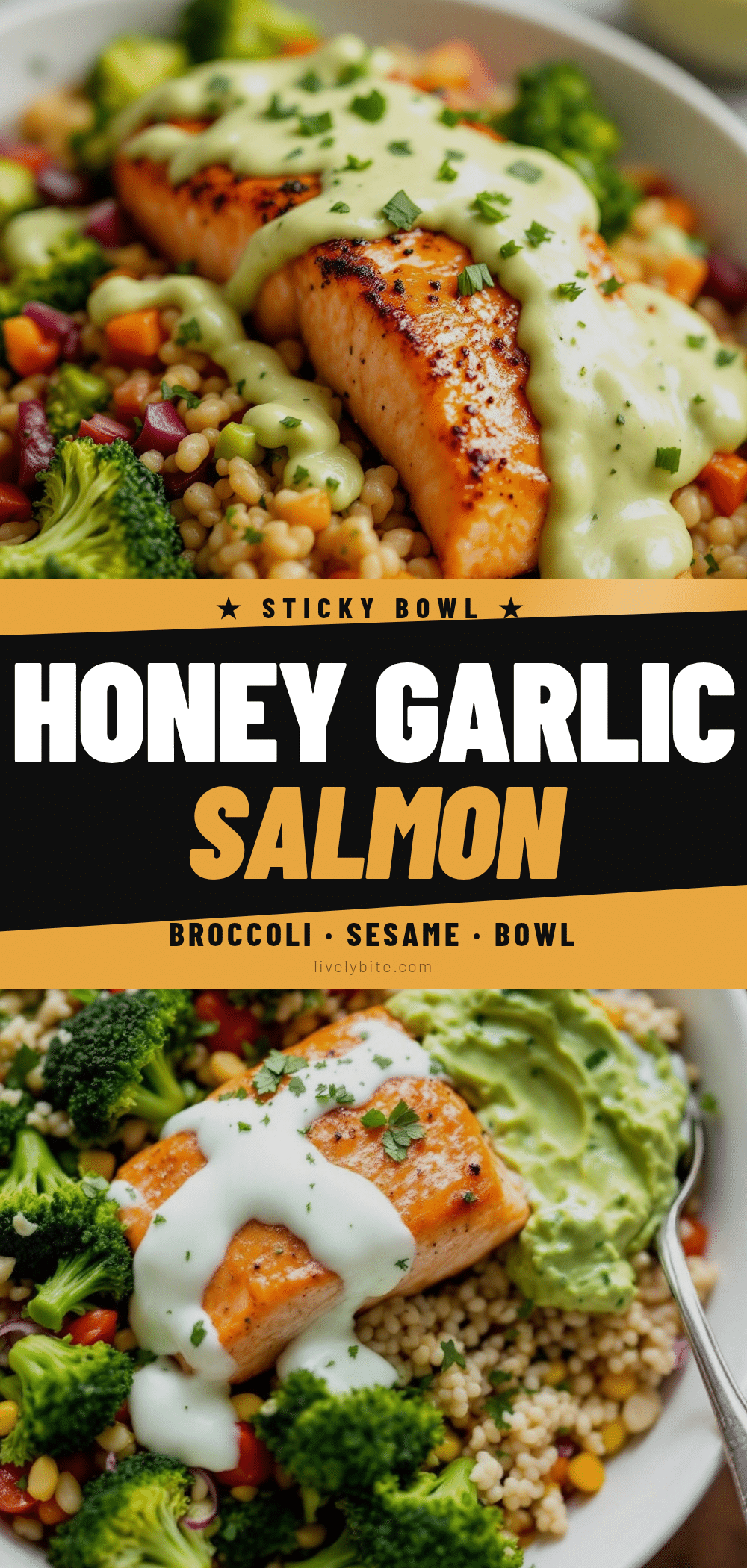
Easy Sticky Honey Garlic Salmon Bowl Recipe
A quick and easy salmon bowl with a sticky honey garlic glaze, served over rice with roasted broccoli, creamy avocado, and edamame. Ready in under 30 minutes, it’s perfect for busy weeknights.
- Prep Time: 10 minutes
- Cook Time: 20 minutes
- Total Time: 30 minutes
- Yield: 4 servings 1x
- Category: Main Course
- Cuisine: Asian-inspired
Ingredients
- 4 salmon fillets (about 6 oz / 170g each)
- 1/3 cup honey (110g)
- 1/4 cup low-sodium soy sauce (60ml)
- 4 cloves garlic, minced
- 2 tablespoons rice vinegar (30ml)
- 1 tablespoon sesame oil (15ml)
- 1 teaspoon cornstarch (optional, mixed with 1 tablespoon water)
- 2 cups cooked jasmine rice (400g)
- 2 cups broccoli florets (200g)
- 1 large avocado, sliced
- 1 cup shelled edamame (150g)
- 1 tablespoon sesame seeds
- 2 green onions, sliced
- Salt and pepper to taste
- Olive oil or avocado oil for cooking
Instructions
- Cook the rice according to package directions. For jasmine rice, use a 1:1.5 ratio of rice to water. Bring to a boil, cover, and simmer for 12 minutes. Let sit covered for 5 minutes off heat, then fluff.
- Pat the salmon fillets dry with paper towels and season both sides with salt and pepper.
- In a small bowl, whisk together honey, soy sauce, minced garlic, rice vinegar, and sesame oil. If using cornstarch, mix with 1 tablespoon water in a separate bowl and set aside.
- Preheat oven to 425°F (220°C). Toss broccoli florets with olive oil, salt, and pepper, then spread on a sheet pan. Roast for 15-18 minutes, flipping halfway, until edges are browned and crispy.
- Heat a large non-stick skillet over medium-high heat and add a drizzle of oil. Place salmon fillets skin-side down (if using skin-on) and cook undisturbed for 4 minutes. Flip and cook for another 2-3 minutes until just cooked through (125°F/52°C for medium).
- Reduce heat to medium-low. Pour the honey garlic sauce around the salmon (not directly on top). Let bubble gently for 2-3 minutes, spooning sauce over the salmon. If using cornstarch slurry, stir it in now until sauce thickens and becomes glossy.
- Assemble bowls: Divide rice among 4 bowls. Arrange roasted broccoli, sliced avocado, and edamame around the edges. Place a salmon fillet in the center. Spoon remaining sauce over the top.
- Garnish with sesame seeds and sliced green onions. Serve immediately.
Notes
Pat salmon dry for a good sear. Don’t walk away when making the sauce—it can burn quickly. For best results, cook salmon until just opaque in the center; residual heat will finish cooking. Store leftovers in an airtight container for up to 3 days; keep avocado separate and reheat in a skillet with a splash of water.
Nutrition
- Serving Size: 1 bowl
- Calories: 615
- Sugar: 22
- Sodium: 780
- Fat: 25
- Saturated Fat: 4
- Carbohydrates: 60
- Fiber: 9
- Protein: 40
Keywords: honey garlic salmon, salmon bowl, sticky salmon, easy salmon recipe, weeknight dinner, healthy salmon bowl