I did not trust a microwave for pasta. It just seemed wrong, you know? Pasta needs boiling water, a big pot, some stirring—the whole ritual. The idea of cooking it in a dorm microwave felt like a shortcut that would end in a bowl of sad, rubbery noodles. Honestly, I thought it was a setup for disappointment until my first semester of college proved me completely wrong.
It was a Tuesday night, around eleven, and the dining hall was closed. My stomach was making noises that could wake a roommate, and all I had was a box of elbow macaroni, some shredded cheddar I’d snagged from the fridge, and a splash of milk that was suspiciously close to its expiration date. I was desperate, not inspired. I figured I’d either have a decent snack or a science experiment to show my chem lab partner.
So I threw caution to the wind and the pasta into a microwave-safe bowl. I followed a tip from a cooking forum I’d bookmarked, added water until it covered the pasta by an inch, and hit start. The microwave hummed, I stirred halfway through (feeling very professional), and when the timer went off, something magical happened. The pasta was actually al dente. Not mushy, not crunchy—just right. I drained it, stirred in the cheese and milk, and took a bite that tasted like victory. This easy 15-minute microwave mac and cheese became my go-to that semester, and honestly, it’s still the version I crave when I want something quick that actually feels like a real meal.
Why You’ll Love This Recipe
Let me be straight with you—this isn’t some fancy, gourmet mac and cheese. This is the recipe that got me through late-night study sessions, saved me from spending money on overpriced delivery, and proved that dorm cooking doesn’t have to be sad. Here’s why this easy 15-minute microwave mac and cheese will become your new best friend:
- Quick & Easy: From hungry to happy in 15 minutes flat. No stove, no oven, no complicated steps. Perfect for that moment between classes when you realize you haven’t eaten in six hours.
- Simple Ingredients: You need literally four things—pasta, cheese, milk, and butter. If you have a microwave and a bowl, you’re already halfway there. No fancy grocery runs required.
- Perfect for Dorm Life: No kitchen? No problem. This recipe was built for a microwave in a shared dorm room. It’s quiet, it’s fast, and it won’t set off the fire alarm (trust me, I’ve tested this).
- Crowd-Pleaser: I’ve made this for study groups, movie nights, and even a few skeptical roommates. Every single person who tried it asked for the recipe. It’s that good.
- Unbelievably Delicious: The cheese gets perfectly melty, the pasta stays tender, and the whole thing comes together in a way that tastes like you actually tried. It’s comfort food that doesn’t need an apology.
What makes this different from other microwave mac and cheese recipes? It’s the technique. Most recipes tell you to cook the pasta in water, then add cheese. But I figured out that cooking the pasta with a little milk mixed in creates a creamier sauce from the start. Plus, I’ve tested this with about a dozen different cheese combinations—cheddar works best, but a mix of cheddar and mozzarella? That’s next-level.
This isn’t just another version of mac and cheese. It’s the one that makes you close your eyes after the first bite and forget you’re eating in a dorm room. It’s comfort food reimagined—faster, easier, but with the same soul-soothing satisfaction. Perfect for impressing a study date without stress, or turning a boring Tuesday night into something memorable.
What Ingredients You Will Need
This recipe uses simple, everyday ingredients to deliver bold flavor and satisfying texture without the fuss. Most of these are pantry staples you probably already have, which is exactly the point.
- Elbow macaroni (1 cup / 100g) – The classic choice. The small curves catch the cheese sauce perfectly. You can use any small pasta shape like shells or rotini, but elbows are the gold standard here.
- Water (1 cup / 240ml) – For cooking the pasta. Tap water is fine; just make sure it covers the pasta by about an inch in your bowl.
- Milk (1/4 cup / 60ml) – Adds creaminess to the cheese sauce. Whole milk gives the richest result, but 2% works great. For a dairy-free version, unsweetened oat milk or almond milk works surprisingly well (just avoid vanilla-flavored ones).
- Shredded cheddar cheese (1/2 cup / 50g) – Sharp cheddar gives the best flavor. I prefer shredding it myself from a block because pre-shredded cheese has anti-caking agents that can make the sauce a little grainy. But honestly, in a dorm situation, pre-shredded works just fine—I’ve used it plenty of times.
- Butter (1 tablespoon / 14g) – Adds richness and helps the cheese melt smoothly. Salted or unsalted both work. If you don’t have butter, a splash of olive oil is an okay substitute, but the flavor won’t be quite as rich.
- Salt (1/4 teaspoon) – Essential for seasoning the pasta water and bringing out the cheese flavor. Don’t skip this—it makes a bigger difference than you’d think.
- Black pepper (1/8 teaspoon) – A little kick to balance the richness. Optional but recommended.
- Optional add-ins: A pinch of garlic powder, paprika, or mustard powder can deepen the flavor. Mustard powder especially helps emulsify the cheese sauce (a trick I learned from a cooking blog years ago).
I recommend using Cabot or Kraft shredded cheddar for consistent melting. For the pasta, Barilla elbows hold their shape well and don’t get mushy. If you’re in a dorm without easy access to fresh milk, shelf-stable milk boxes are a lifesaver—I kept a few in my room for exactly this recipe.
Equipment Needed
You don’t need much for this recipe, which is the whole point. Here’s what you’ll need:
- Microwave-safe bowl – A large ceramic or glass bowl works best. Make sure it’s big enough to hold the pasta and water without overflowing (pasta expands as it cooks). I used a 4-cup Pyrex measuring cup for most of my college cooking—it’s cheap, durable, and does double duty.
- Microwave – Any standard microwave works. The wattage affects cooking time, so you might need to adjust by 30 seconds or so. Most dorm microwaves are around 700-900 watts, which works perfectly for this recipe.
- Fork or spoon – For stirring. A fork is easier to drain the pasta with, but a spoon works too.
- Measuring cups and spoons – Not strictly necessary if you’re good at eyeballing, but they help for consistent results. I used a set of plastic ones from the dollar store that lasted all four years.
- Colander or strainer – For draining the pasta. If you don’t have one (common in dorms), you can use the lid of the bowl tilted slightly to pour out the water, or use a fork to fish out the pasta. I’ve done both—the fork method is messy but works in a pinch.
If you’re on a tight budget, skip the colander and just use a large bowl with a lid. Drain the water carefully, and you’re good to go. I’ve also seen people use a paper towel to cover the bowl while draining—not ideal, but creative!
Preparation Method
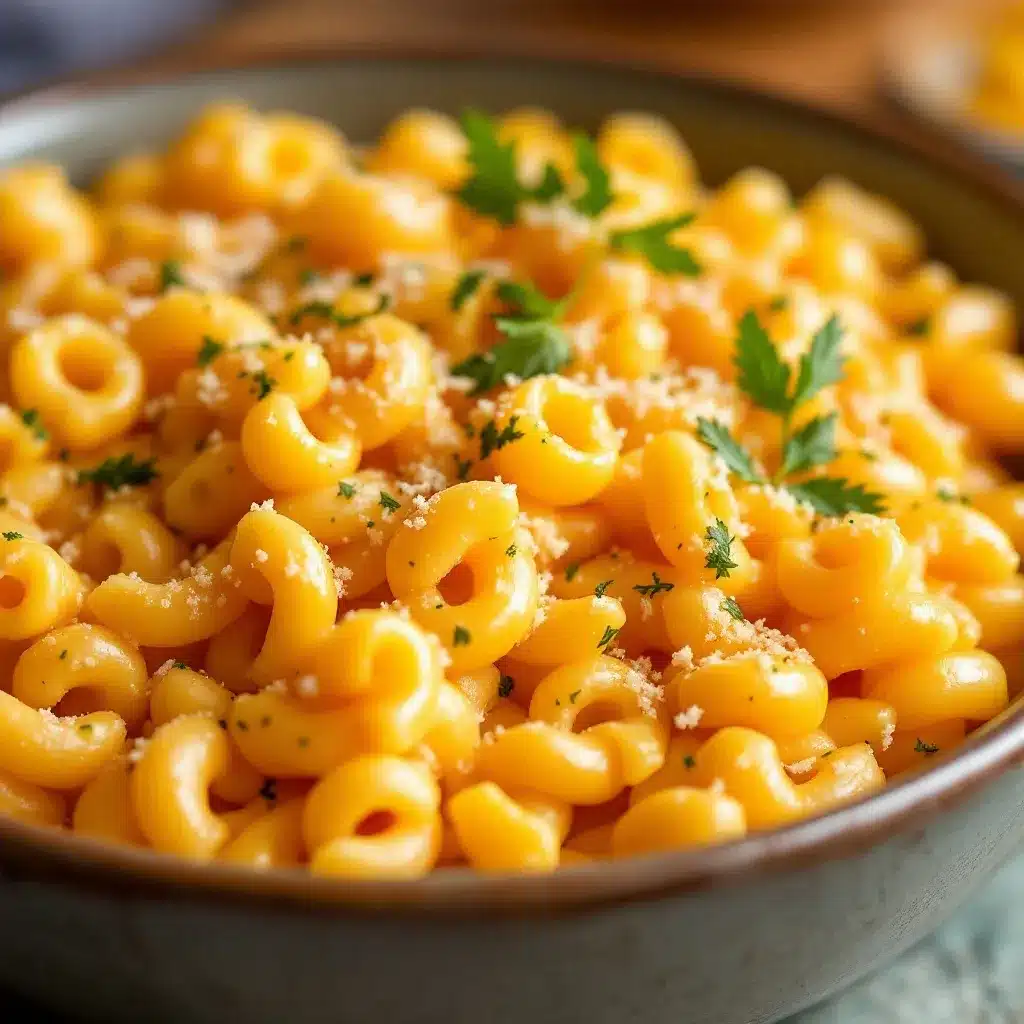
Here’s how to make this easy 15-minute microwave mac and cheese. I’ve tested these steps dozens of times, so trust the process—it works.
- Add pasta and water to the bowl – Place 1 cup of elbow macaroni in your microwave-safe bowl. Add 1 cup of water. Make sure the water covers the pasta completely. If it doesn’t, add a little more water until it’s about an inch above the pasta. This is important—too little water and the pasta won’t cook evenly; too much and it might bubble over.
- Microwave on high for 5 minutes – Place the bowl in the microwave and cook on high power for 5 minutes. Don’t cover the bowl. The pasta will start to soften and absorb the water. You’ll hear it bubbling—that’s a good sign.
- Stir and microwave again – After 5 minutes, carefully remove the bowl (it will be hot—use a towel or oven mitt). Stir the pasta with a fork. The water should be mostly absorbed, and the pasta should be tender but still a little firm in the center. Microwave on high for another 2-3 minutes, checking at the 2-minute mark. The pasta should be al dente—fully cooked but with a slight bite. If it’s still hard, microwave in 30-second increments until done.
- Drain any excess water – Once the pasta is cooked, carefully pour out any remaining water. Use a colander if you have one, or tilt the bowl with the lid slightly open to let the water drain. Be careful—the steam is hot! You want the pasta to be moist but not swimming in water.
- Add butter and stir – While the pasta is still hot, add 1 tablespoon of butter. Stir until the butter is completely melted and coats the pasta. This step adds richness and helps the cheese sauce come together smoothly.
- Add milk and cheese – Pour in 1/4 cup of milk and add 1/2 cup of shredded cheddar cheese. Stir everything together until the cheese is fully melted and the sauce is creamy. If the sauce seems too thick, add a splash more milk. If it’s too thin, let it sit for a minute—the pasta will absorb some of the liquid.
- Season and serve – Add 1/4 teaspoon of salt and 1/8 teaspoon of black pepper. Stir well. Taste and adjust seasoning if needed. The pasta should be creamy, cheesy, and perfectly seasoned. Serve immediately—this is best eaten fresh while the cheese is still melty and the pasta is warm.
Pro tip: If the cheese isn’t melting smoothly, pop the bowl back in the microwave for 30 seconds. This helps the cheese get fully incorporated. I learned this after a few batches that ended up with clumps of unmelted cheese—not the end of the world, but not as satisfying.
Sensory cues: The pasta should look plump and tender, not swollen or mushy. The sauce should be thick enough to coat the back of a spoon but still pourable. When you take a bite, the cheese should stretch slightly, and the pasta should have a gentle resistance—not crunchy, not falling apart.
Cooking Tips & Techniques
I’ve made this recipe more times than I can count, and I’ve learned a few things the hard way. Here are my best tips for perfect microwave mac and cheese every time:
- Don’t overcook the pasta – The biggest mistake I made early on was nuking the pasta for too long. Microwave wattages vary, so start with the shorter cooking time and add more if needed. Mushy pasta is sad pasta. You want it al dente—firm to the bite but fully cooked.
- Use a large enough bowl – Pasta expands as it cooks, and water can bubble over. I learned this lesson when my microwave looked like a science experiment after a particularly enthusiastic batch. Use a bowl that’s at least twice the volume of the pasta and water combined.
- Stir halfway through – This prevents the pasta from sticking together and ensures even cooking. Set a timer on your phone if you need to—I’ve definitely forgotten and ended up with a pasta brick at the bottom of the bowl.
- Add cheese off-heat – Adding cheese while the pasta is still hot but not under the microwave helps it melt smoothly without becoming greasy. If you microwave the cheese, it can separate and get oily. Trust me on this one—I’ve made that mistake more than once.
- Season the pasta water – Adding salt to the water before cooking seasons the pasta from the inside out. It makes a bigger difference than you’d think. I used to skip this step, and the mac and cheese always tasted a little flat.
One of my biggest failures? I once tried to make this with whole wheat pasta and no milk. It turned into a glue-like mess that even my dog wouldn’t eat. Stick with regular pasta and a splash of milk—it’s the winning combination.
Variations & Adaptations
This recipe is incredibly flexible. Here are some variations I’ve tried and loved:
- Spicy mac and cheese – Add 1/4 teaspoon of cayenne pepper or a dash of hot sauce when you add the cheese. I like Sriracha or Tabasco for a kick that doesn’t overpower the cheese flavor.
- Veggie-loaded version – Stir in a handful of frozen peas or steamed broccoli after the pasta is cooked. The heat from the pasta warms them up perfectly. I did this when I was trying to pretend I was eating healthy—it worked.
- Protein boost – Add a handful of cooked chicken, crumbled bacon, or a fried egg on top. Leftover rotisserie chicken from the dining hall works great. This turns it from a side dish into a full meal.
- Dairy-free option – Use unsweetened oat milk or almond milk instead of regular milk, and swap the cheddar for a dairy-free shredded cheese. Violife and Daiya both melt reasonably well. It won’t be exactly the same, but it’s surprisingly good.
- Gluten-free version – Use gluten-free elbow pasta (I like the Barilla gluten-free elbows). The cooking time might be slightly different, so check at the 4-minute mark. Everything else stays the same.
My personal favorite variation? Adding a pinch of smoked paprika and a handful of shredded mozzarella along with the cheddar. It gives the mac and cheese a smoky, slightly sweet flavor that feels fancy without any extra effort. I discovered this combo during a particularly boring study session and it’s been my go-to ever since.
Serving & Storage Suggestions
This mac and cheese is best served immediately while the cheese is still hot and melty. But here’s how to handle leftovers and make it work for your schedule:
- Serving temperature: Serve hot, straight from the microwave. The cheese should be bubbling and the pasta should be steaming. Let it sit for a minute before eating—it’s hot enough to burn your tongue (speaking from experience).
- Presentation: For a slightly fancier look, sprinkle a little extra shredded cheese on top and a pinch of paprika. It doesn’t change the taste much, but it looks like you tried.
- What to serve with it: This mac and cheese pairs well with a simple side salad, some steamed veggies, or even a piece of toast. If you’re feeling extra, try it alongside some easy lemon herb salmon sheet pan dinner for a complete meal that’s still simple to make.
- Storage: If you have leftovers, let the mac and cheese cool completely, then transfer to an airtight container. It will keep in the fridge for up to 3 days. The pasta will absorb some of the sauce overnight, so it won’t be as creamy the next day.
- Reheating: To reheat, add a splash of milk or water to the mac and cheese, stir, and microwave for 30-60 seconds. The extra liquid helps restore the creaminess. Don’t overdo it—30 seconds at a time until it’s hot is the sweet spot.
- Freezer option: You can freeze this mac and cheese for up to 2 months. Let it cool completely, then transfer to a freezer-safe container. Thaw overnight in the fridge and reheat with a splash of milk. The texture won’t be quite as good as fresh, but it’s still a solid meal option.
One thing I’ve noticed: the flavors actually develop a little overnight. The cheese gets more pronounced, and the pasta absorbs some of the sauce. It’s not better than fresh, but it’s different—and still delicious.
Nutritional Information & Benefits
Here’s a rough breakdown of the nutritional values for one serving of this easy 15-minute microwave mac and cheese (based on the basic recipe without add-ins):
| Nutrient | Amount |
|---|---|
| Calories | 420 |
| Protein | 16g |
| Carbohydrates | 48g |
| Fat | 18g |
| Saturated Fat | 10g |
| Fiber | 2g |
| Sugar | 4g |
| Sodium | 620mg |
This recipe provides a good amount of protein and calcium from the cheese and milk, which is helpful for busy students who might not be getting enough nutrients. The pasta offers complex carbohydrates for sustained energy—perfect for those long study sessions. If you’re watching your sodium, use unsalted butter and reduce the added salt.
For those with dietary concerns: this recipe contains gluten (from the pasta) and dairy (from the cheese and milk). For a gluten-free version, use gluten-free pasta. For a dairy-free version, use plant-based milk and dairy-free cheese. If you’re looking for a lighter option, try this alongside a refreshing cucumber mint green tea cooler for a balanced meal that won’t weigh you down.
Conclusion
Look, I know microwave mac and cheese sounds like a compromise. It sounds like something you make when you don’t have time, don’t have energy, or don’t have a real kitchen. But honestly? This recipe is none of those things. It’s a genuine, satisfying meal that happens to take 15 minutes and requires nothing more than a microwave and a bowl. It got me through college, and it still makes an appearance on busy weeknights when I just want something warm and comforting without a lot of fuss.
I’d love to hear how yours turns out. Did you add anything fun? Did it save you from a late-night hunger emergency? Drop a comment below and let me know. And if you’re looking for more easy recipes that work in small spaces, check out the full recipe collection—there’s plenty more where this came from. Happy cooking!
Frequently Asked Questions
Can I use a different type of pasta?
Absolutely! Any small pasta shape works—shells, rotini, fusilli, or even small penne. Just keep an eye on the cooking time since different shapes cook at slightly different rates. Start checking at the 5-minute mark and adjust as needed.
Why did my mac and cheese turn out dry?
This usually happens when the pasta absorbs too much water during cooking. Make sure you’re using enough water to cover the pasta by about an inch. If it’s still dry after cooking, add a splash of milk or water and stir well. The sauce will come back to life.
Can I make this without milk?
Yes, but the sauce won’t be as creamy. You can use water or broth instead, but the texture will be thinner and less rich. If you’re in a pinch, try adding an extra tablespoon of butter to compensate for the missing fat from the milk.
How do I prevent the cheese from clumping?
Make sure you add the cheese after the pasta is cooked and drained, not during the cooking process. Also, shredding your own cheese from a block (instead using pre-shredded) helps it melt more smoothly. If it still clumps, add a splash of milk and microwave for 15 seconds, then stir vigorously.
Can I double this recipe?
You can, but you’ll need a larger bowl and longer cooking time. Double the ingredients and cook the pasta for 7-8 minutes initially, then check and add time as needed. Just be careful—the bowl will be very hot, and the pasta might bubble over more easily.
Pin This Recipe!
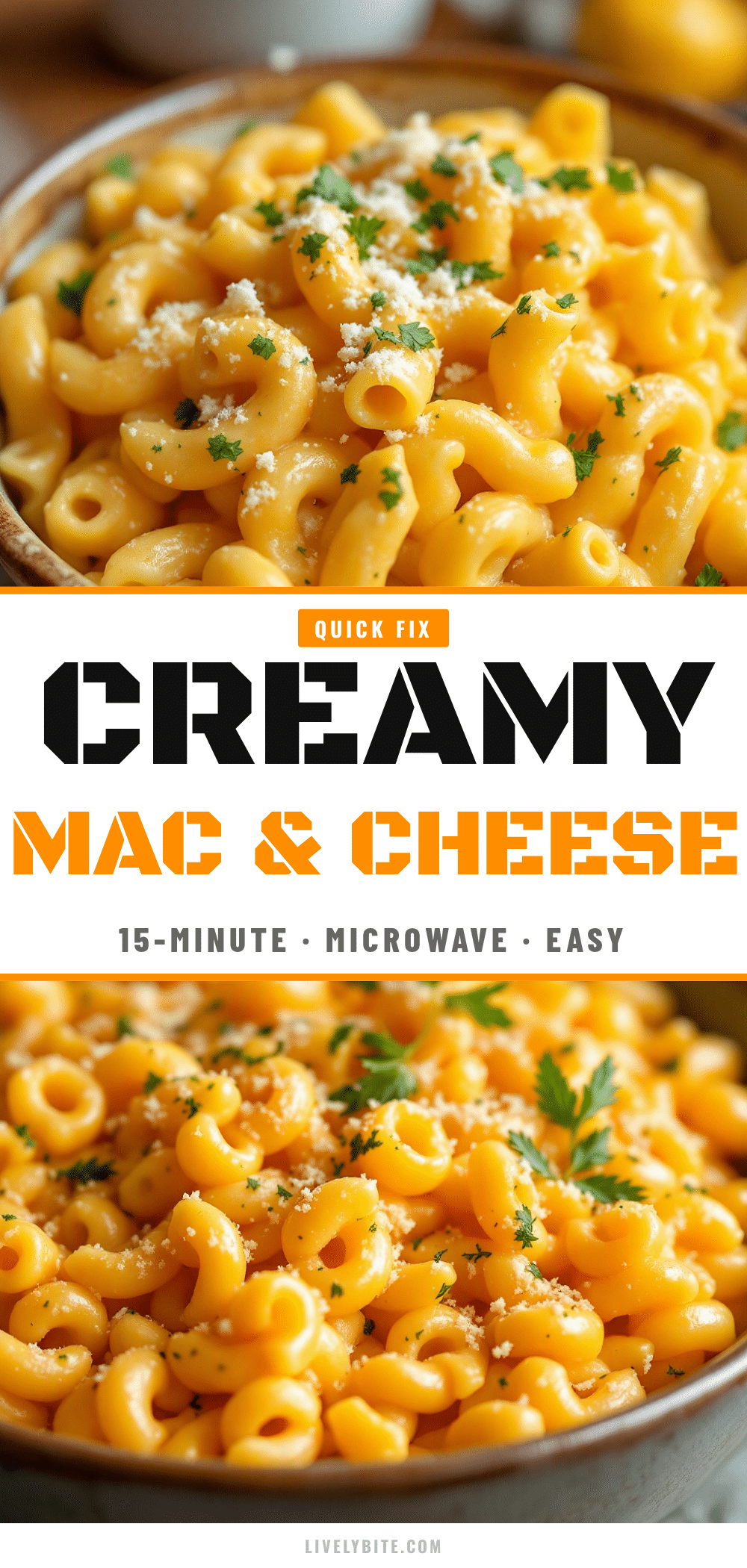
Easy 15-Minute Microwave Mac and Cheese (Best Dorm Recipe)

This easy 15-minute microwave mac and cheese is the ultimate dorm recipe—creamy, cheesy, and made with just a few simple ingredients. Perfect for late-night study sessions or when you need a quick, comforting meal without a stove.
- Prep Time: 2 minutes
- Cook Time: 13 minutes
- Total Time: 15 minutes
- Yield: 1 serving 1x
- Category: Main Course
- Cuisine: American
Ingredients
- 1 cup (100g) elbow macaroni
- 1 cup (240ml) water
- 1/4 cup (60ml) milk
- 1/2 cup (50g) shredded cheddar cheese
- 1 tablespoon (14g) butter
- 1/4 teaspoon salt
- 1/8 teaspoon black pepper
- Optional: pinch of garlic powder, paprika, or mustard powder
Instructions
- Add 1 cup of elbow macaroni and 1 cup of water to a microwave-safe bowl. Ensure water covers the pasta by about an inch.
- Microwave on high for 5 minutes. Do not cover the bowl.
- Carefully remove the bowl, stir the pasta, and microwave on high for another 2-3 minutes until al dente.
- Drain any excess water using a colander or by tilting the bowl with a lid slightly open.
- Add 1 tablespoon of butter to the hot pasta and stir until melted.
- Pour in 1/4 cup of milk and add 1/2 cup of shredded cheddar cheese. Stir until the cheese is fully melted and the sauce is creamy.
- Season with 1/4 teaspoon salt and 1/8 teaspoon black pepper. Stir well, taste, and adjust if needed. Serve immediately.
Notes
For a creamier sauce, cook the pasta with a little milk mixed in. If the cheese isn’t melting smoothly, microwave for an additional 30 seconds. Use a large bowl to prevent overflow. Season the pasta water for better flavor.
Nutrition
- Serving Size: 1 serving
- Calories: 420
- Sugar: 4
- Sodium: 620
- Fat: 18
- Saturated Fat: 10
- Carbohydrates: 48
- Fiber: 2
- Protein: 16
Keywords: microwave mac and cheese, easy mac and cheese, dorm recipe, quick mac and cheese, 15-minute mac and cheese